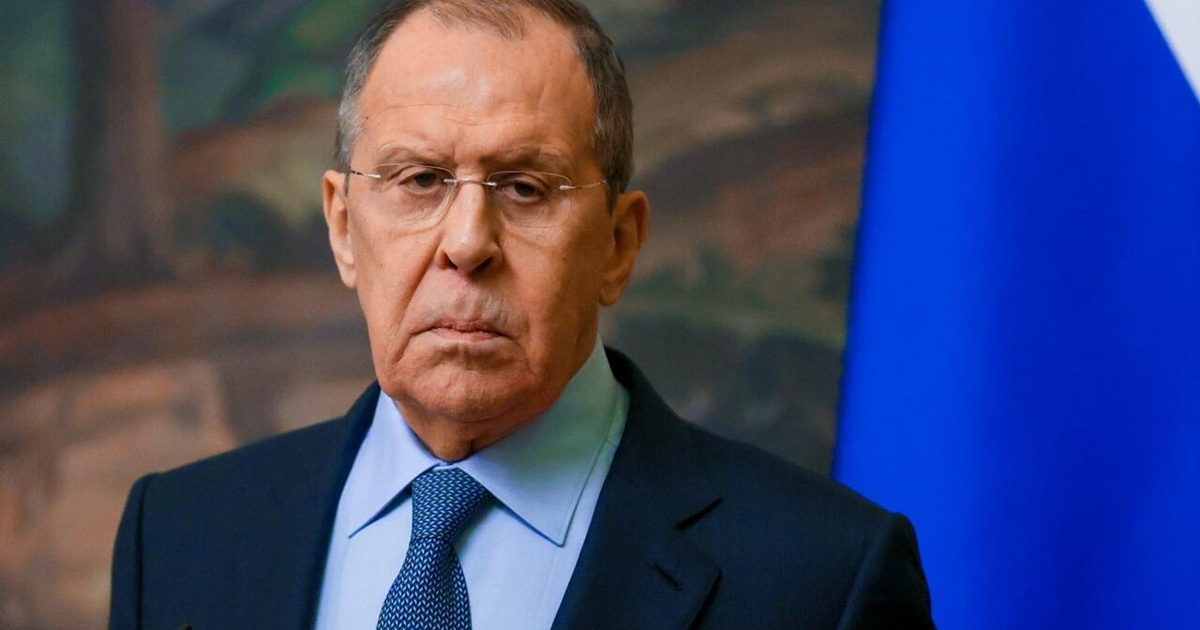
Renewed diplomatic hostility has erupted across the continent after Russian Foreign Minister Sergey Lavrov warned that any direct war between Russia and Europe would unfold as an entirely different, rapid conflict. Quoted by state-run agency TASS, Lavrov insisted that Moscow is neither preparing for nor seeking a military clash with Western nations, yet cautioned that an offensive initiated by European states would be met with an immediate, decisive military response. The aggressive rhetoric comes as Western capitals explore formal post-conflict security guarantees for Kyiv, including the potential deployment of an international peacekeeping contingent on Ukrainian territory.
Escalating threats between nuclear-armed powers introduce profound systemic friction across international supply chains, sovereign credit ratings, and defense industrial budgets. As governments allocate higher shares of gross domestic output to military readiness and strategic deterrence, geopolitical instability directly influences corporate capital expenditure. For defense executives, sovereign risk officers, and institutional analysts tracking how defense doctrines alter continental stability, continuous reporting on politics provides vital intelligence on changing European security architectures.
The Kremlin’s Red Line: Foreign Deployments as a Declaration of War
Addressing regional tensions, Lavrov reiterated Russian President Vladimir Putin’s standing position regarding third-party intervention, affirming that Moscow would view the physical deployment of foreign military personnel inside Ukraine as an explicit declaration of war. Western discussions regarding an international force aim to enforce future ceasefires, but Russian officials maintain that any foreign boots on the ground represent legitimate combat targets.
Lavrov also stated that any lasting diplomatic resolution requires fulfilling the original objectives of the Kremlin’s “special military operation”—the state term for its full-scale invasion launched in February 2022. While Moscow continues to use shifting definitions to justify territorial aggression, Lavrov blamed Western policies for the conflict and accused Ukrainian President Volodymyr Zelensky of attempting to suppress Russian language and culture. Kyiv has consistently rejected these accusations, maintaining that Moscow exploits cultural pretexts to rationalize illegal territorial annexation and unprovoked military aggression.
The persistent strain of wartime logistics and geopolitical confrontation heavily impacts regional labor markets, energy transit lines, and cross-border commercial shipping. Economists evaluating how sustained defense mobilization and infrastructure rebuilding influence long-term productivity can examine macro developments via comprehensive coverage of the broader economy.
Warsaw and the Baltic Flank: The 2-to-3 Day Annihilation Warning
The rhetoric surrounding a potential war between Russia and Europe expanded into direct warnings against Poland. Senior Kremlin aide Nikolai Patrushev claimed that Polish statehood would cease to exist within two or three days if Warsaw engaged in military actions against the Russian Federation.
“If Poland enters into military action against Russia, our country will use the entire arsenal of forces and means at its disposal, and Warsaw will cease to exist within two or three days,” Patrushev asserted. While Russia maintains the world’s largest deployed nuclear arsenal, Patrushev stopped short of explicitly naming atomic warheads, referencing instead the full operational capabilities of the Russian armed forces.
NATO’s Conventional Air Superiority: 2,500 Combat Aircraft
Patrushev’s comments served as a direct reaction to statements delivered by Polish Foreign Minister Radosław Sikorski during the Yalta European Strategy conference in Kyiv:
- Decisive Defeat Assessment: Sikorski declared that if Moscow attacked the Atlantic alliance, NATO forces would remove operational restrictions and defeat Russian military formations “quite quickly”.
- Aviation Dominance: The Polish minister emphasized NATO’s conventional air power, noting that European alliance members maintain an estimated fleet of 2,500 advanced military aircraft.
- Asymmetric Advantage: Sikorski described NATO’s air superiority, sensor fusion, and precision-strike capabilities as an overwhelming conventional advantage over Moscow’s air forces.
- Kremlin Pushback: Patrushev dismissed Sikorski’s assessment as amateurish, claiming that Russian military commands have deliberately withheld their full destructive potential in Ukraine.
These acute rhetorical exchanges between front-line NATO states and Moscow generate volatility across secondary markets. Shifts in sovereign defense guarantees and territorial integrity concerns trigger rapid capital realignments across sovereign debt, foreign currencies, and global markets.
Tactical Modernization, Electronic Warfare, and Asset Preservation
The prospect of a wider war between Russia and Europe has fundamentally transformed military engineering. Modern battlefields increasingly rely on autonomous aerial drone swarms, satellite communications telemetry, electronic warfare jamming systems, and tactical artificial intelligence for battlefield coordination. To evaluate how algorithmic reconnaissance, sensor networks, and edge computing are reshaping defense postures, technology professionals track technical developments via specialized coverage of tech.
Simultaneously, heightened risks of hybrid sabotage, financial asset seizures, and cross-border banking restrictions are prompting multinational institutions to re-evaluate capital preservation strategies. Corporate treasuries operating across high-risk European corridors increasingly explore decentralized settlement layers, tokenized treasury assets, and crypto rails to preserve balance sheet liquidity during sudden geopolitical crises.
Enterprise Implications for Listed Aerospace and Defense Equities
The reality that a war between Russia and Europe remains an active subject of state-level discourse has permanently accelerated European rearmament. Sovereign states across the alliance are committing record percentages of GDP to replenish ammunition reserves, acquire next-generation fighter aircraft, and upgrade air-defense missile batteries. Equity analysts continually monitor these multi-decade procurement pipelines across publicly traded aerospace, cybersecurity, and defense stocks.
According to formal documentation published by the North Atlantic Treaty Organization (NATO), maintaining credible collective deterrence under Article 5 represents the alliance’s foundational legal commitment to defend every inch of allied territory.
As long as Moscow conditions peace on expansive territorial concessions, the threat of a wider war between Russia and Europe will dominate continental security planning. Between NATO’s fleet of 2,500 combat aircraft and the Kremlin’s warnings of rapid devastation, the Baltic and Eastern European frontiers remain the most critical geopolitical fault line of the modern era.
Disclaimer:
The information provided in this article is for educational, journalistic, and informational purposes only and does not constitute defense, legal, geopolitical, financial, or investment advice.