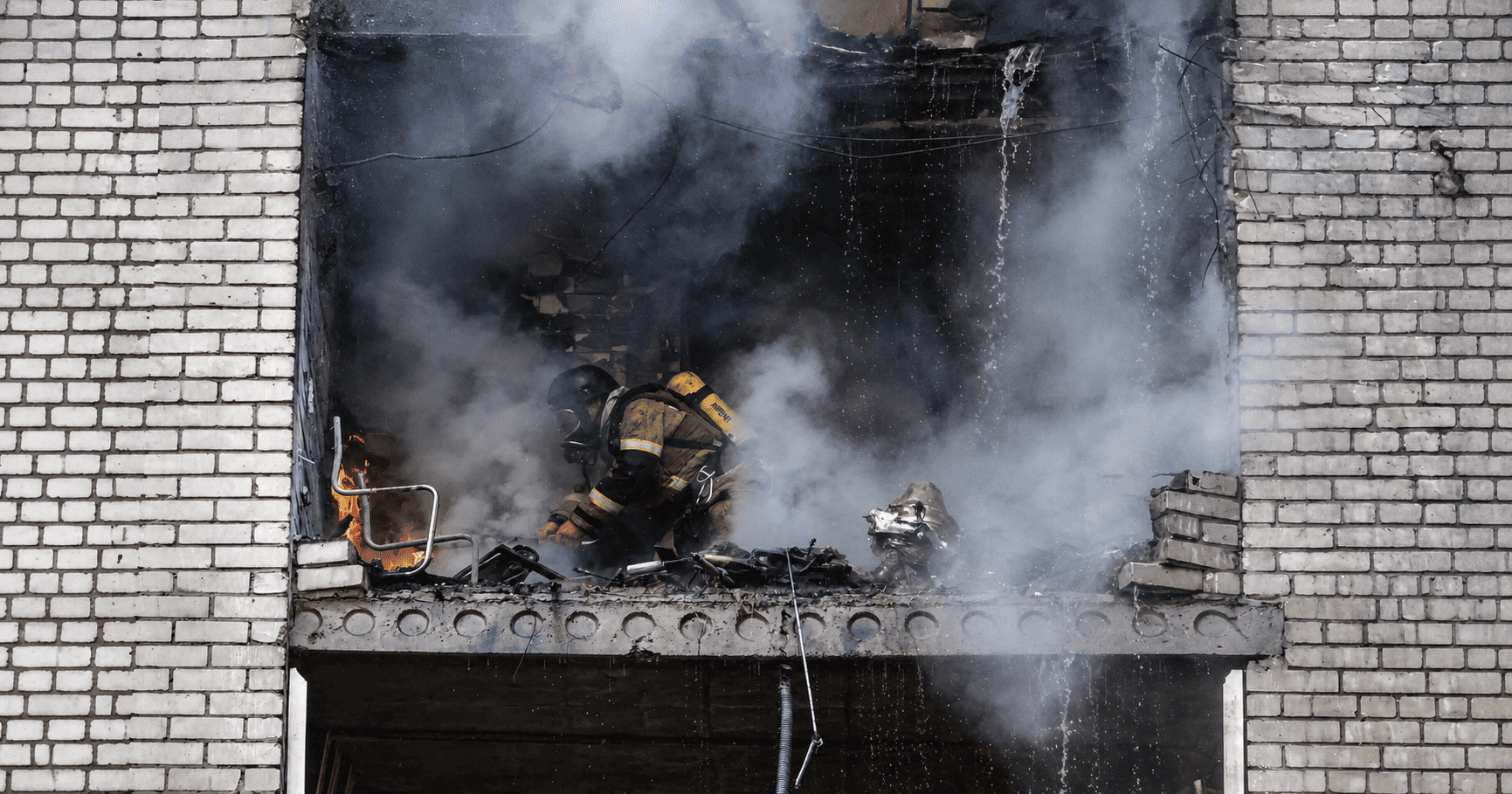
A devastating aerial assault shattered morning routines in Ukraine’s capital on Friday after a Russian drone hits central Kyiv, striking a high-rise residential apartment block, killing a child, and injuring at least seven other civilians. Local police and municipal emergency rescue personnel confirmed that a 14-year-old boy was killed when an uncrewed aerial vehicle directly impacted a 16-storey residential building in Kyiv’s central Pechersk district. The fatal morning strike coincided with a wave of attacks targeting urban centers across the country, including deadly strikes reported across the southern maritime region of Odesa.
The deadly escalation comes as Russian forces deploy swarms of faster, higher-flying jet-powered drones that present severe tracking challenges for metropolitan air defense batteries. As municipal emergency crews sift through charred debris across Kyiv’s governmental core, the humanitarian and strategic consequences of long-range aerial campaigns continue to reverberate across Eastern Europe. For defense planners, diplomats, and international analysts tracking how escalating warfare reshapes European security architectures and sovereign policy, comprehensive coverage on politics provides essential context on wartime governance.
Pechersk High-Rise Struck: Civilian Toll Mounts in Capital
The direct impact occurred in the heart of Kyiv’s Pechersk district, an administrative and residential zone, where the drone slammed into the building between the seventh and tenth floors, tearing through residential living quarters. Loud detonations reverberated across the central downtown corridor shortly after air raid sirens warned residents of incoming high-velocity targets.
Kyiv Mayor Vitali Klitschko reported that emergency medical crews hospitalized multiple victims, including individuals in critical condition suffering from shrapnel lacerations and blast trauma. Friday’s fatal blast followed overnight strikes across the broader capital territory:
- Solomianskyi District: Falling drone wreckage struck a 25-storey residential tower near the fourth floor, leaving at least one civilian injured and sparking blazes across nearby open grounds.
- Podilskyi District: Strike drones damaged non-residential structures and office premises, triggering localized structural fires.
- Kyiv Oblast: Regional military administration officials confirmed that drone impacts damaged at least nine facilities across the Brovary, Boryspil, and Obukhiv districts, hitting industrial warehouses and civilian vehicles.
- Odesa Casualties: In southern Ukraine, regional governor Oleh Kiper disclosed that massive drone barrages struck a residential neighborhood and postal logistics facilities, killing one person and wounding another.
The persistent targeting of civilian population centers, transport corridors, and regional warehousing inflicts immediate economic friction on local supply chains. Economists tracking how war-driven infrastructure degradation and emergency rebuilding allocations impact gross domestic output can follow structural developments through regular reporting on the wider economy.
Evolving Aerial Tactics: High-Speed Jet Drones and Defense Claims
The incident where a Russian drone hits central Kyiv underscores a marked evolution in Moscow’s aerial tactics. In recent weeks, Russian forces have escalated the frequency of mixed drone salvos, incorporating high-speed, jet-propelled drones capable of operating at elevated altitudes that compress interception windows for mobile air defense units.
While Ukrainian authorities documented widespread destruction across civilian apartment buildings and logistics facilities, the Russian Ministry of Defence claimed its overnight operations strictly targeted military assets. In a Friday briefing, Moscow asserted that its forces conducted precision strikes against Ukrainian defense-industrial manufacturing sites, logistics staging depots, and military naval vessels. Russian officials have repeatedly denied deliberately targeting non-combatants since launching their full-scale invasion in February 2022, despite documented residential casualties.
Air defense teams face continuous operational strain intercepting saturated drone waves before they reach densely populated districts. Technology specialists evaluating electronic countermeasure systems, automated acoustic sensors, and artificial intelligence-assisted radar tracking follow technical innovations via tech.
Concurrently, humanitarian and municipal reconstruction groups operating within conflict corridors increasingly explore transparent financial platforms. Forward-looking emergency logistics hubs evaluate decentralized payment networks and crypto rails to execute immediate cross-border micro-transfers for emergency medical supplies without clearing bottlenecks.
Geopolitical Fallout and Institutional Market Repercussions
The tragic reality as a Russian drone hits central Kyiv heightens pressure on Western allies to accelerate surface-to-air interceptor shipments. Ukrainian leadership has repeatedly urged international partners to supply additional Patriot, NASAMS, and IRIS-T missile batteries to establish a defensive shield over high-density urban areas.
Prolonged hostilities and strikes against regional logistics hubs continue to elevate sovereign risk premiums across Eastern European debt, commodities, and currency markets.
Global procurement managers and defense analysts continuously examine municipal protection mandates alongside contract updates from international defense agencies. Institutional investors assess sovereign defense budgets, drone countermeasures, and weapon manufacturing capacity across publicly listed aerospace and military equipment stocks.
According to humanitarian documentation published by the United Nations Human Rights Monitoring Mission in Ukraine (HRMMU), the persistent deployment of long-range aerial munitions against populated metropolitan areas continues to cause disproportionate harm to civilian populations and urban infrastructure.
Corporate treasuries and institutional risk officers also monitor broader balance sheet safeguards across business & finance channels.
As rescue teams clear the smoldering upper floors of the Pechersk apartment tower, the reality that a Russian drone hits central Kyiv reinforces the brutal daily exposure of the capital’s residents. With high-speed drone barrages testing air defense thresholds, the confrontation over Ukraine’s skies remains as intense and lethal as ever.
Disclaimer:
The information provided in this article is for educational, journalistic, and informational purposes only and does not constitute military, political, legal, or investment advice.