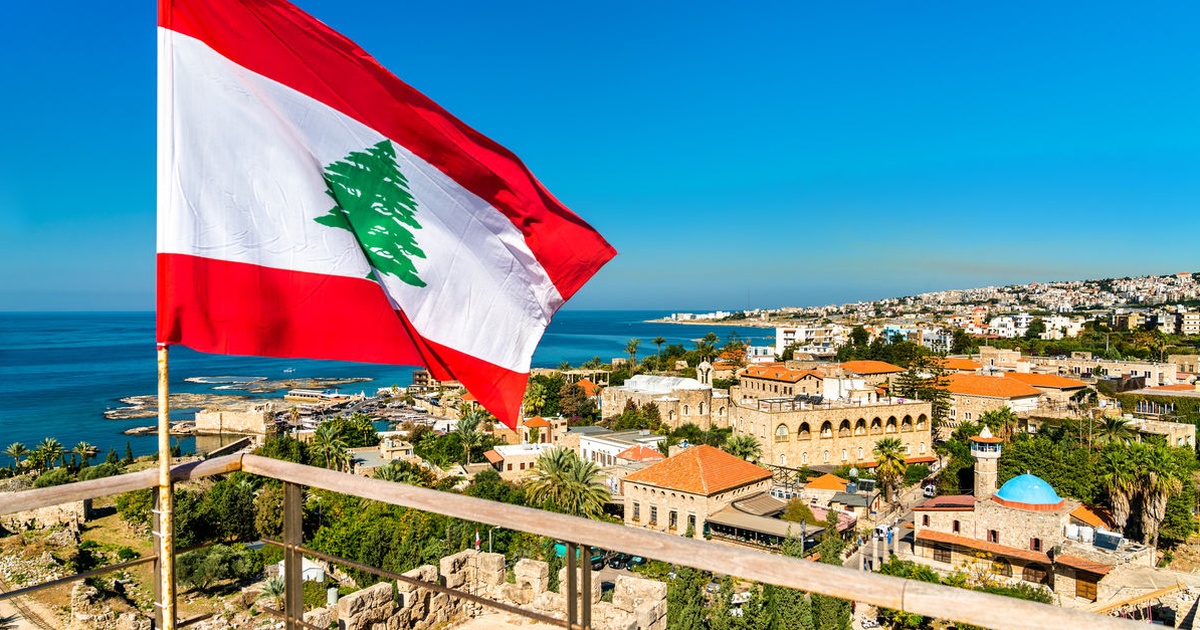
Lebanon Israel security deal negotiations have emerged as a central diplomatic priority following Lebanese President Joseph Aoun’s announcement that formal border arrangements are essential once Israeli troops withdraw. Characterizing this framework as an indispensable prelude toward broader regional stabilization, President Aoun emphasized that establishing firm border protocols is critical to protecting national sovereignty and ending decades of recurring cross-border violence.
The geopolitical ramifications of diplomatic shifts in the Levant carry considerable weight across the Mediterranean basin and the wider European neighborhood. Shifts in Middle Eastern defense corridors invariably alter regional stability matrices, influencing international trade flows, maritime security, and sovereign fiscal postures. As policy alignments and border negotiations evolve, following dedicated reporting on politics provides necessary depth for international observers monitoring developments across the Eastern Mediterranean.
Why the Lebanon Israel Security Deal Is Crucial for Stability
Addressing correspondents ahead of an official state departure to Paris, President Aoun made clear that comprehensive peace accords cannot be engineered in a single leap after years of entrenched hostility. Instead, a pragmatic, phased bilateral understanding focused on verified disengagement, cessation of hostilities, and lawful military deployment represents the core rationale behind pursuing a structured Lebanon Israel security deal.
“We have no choice but negotiations, because the alternative is war, which would be very costly for us,” Aoun stated. The president’s pragmatic stance reflects the immense economic strain that renewed armed conflict places upon an already vulnerable domestic infrastructure. Prolonged regional unrest historically disrupts trade corridors, port operations, and sovereign fiscal balances across the Levant. Observers following macroeconomic ripple effects and structural recovery efforts can monitor systemic trends through comprehensive coverage of the economy.
In Paris, President Aoun is slated to attend a multilateral summit convened by French President Emmanuel Macron, alongside King Abdullah II of Jordan. The diplomatic conference is designed to coordinate multinational logistical, financial, and material assistance for the Lebanese military, enabling it to assert unified defensive control across southern sectors and national border crossings.
Disarming Hezbollah: A Peaceful Internal Sovereign Mandate
A pivotal component of Beirut’s defense doctrine centers on the disarmament of non-state paramilitary factions, chief among them Iran-backed Hezbollah. President Aoun reaffirmed that bringing all weapons under exclusive state authority is a non-negotiable objective essential to restoring credible institutional governance. However, he was careful to delineate the state’s approach, emphasizing that national unity must not be compromised in the process.
“The objective is not a confrontation,” Aoun explained, noting that the administration is determined to achieve this transition through political negotiation and national consensus rather than coercive domestic warfare. Decades after past sectarian conflicts, Lebanon remains acutely vulnerable to internal rifts. For global portfolio managers and institutional funds sensitive to geopolitical developments, abrupt domestic turmoil frequently triggers volatility shocks across international markets, underscoring the vital need for a non-violent transition.
Regarding broader regional dynamics, Aoun highlighted that diplomatic communication with Tehran must reflect sovereign parity. The Lebanese head of state maintained that future bilateral relations with Iran must be anchored in mutual respect and strict non-intervention in Lebanon’s internal governance and national defense posture.
Averting a Southern Security Void Post-UNIFIL
Adding immediate urgency to Beirut’s diplomatic engagement is the scheduled conclusion of the UN peacekeeping mission mandate under UNIFIL at the end of the year. UNIFIL, which has deployed approximately 7,500 peacekeepers from dozens of partner countries since 1978, has long served as a vital buffer monitoring the Blue Line.
With the scheduled drawdown approaching, Lebanese officials are advocating for either an extension of the existing peacekeeping mandate or the temporary introduction of an international monitoring force—encompassing European, Arab, or broader multinational contingents—until the Lebanese army can complete its full national deployment.
Averting institutional power vacuums along southern supply routes is vital to sustaining commercial stability across the Levant. During periods of heightened cross-border instability, capital often seeks refuge outside traditional banking channels, leading institutional and private investors to explore digital assets and crypto as alternative reserves against local currency depreciation and systemic disruption.
Strategic Ramifications for European Energy and Commercial Corridors
The potential finalization of a Lebanon Israel security deal carries direct consequences for Mediterranean energy exploration, commercial transit routes, and European energy resilience. Unresolved security threats inflate regional marine insurance premiums, elevate sovereign borrowing costs, and introduce sudden volatility into European equities and industrial stocks exposed to regional supply chains and maritime infrastructure.
President Aoun underscored that durable peace requires shared political commitment across borders: “The question we want to ask the Israeli people, the State of Israel and all future governments is the following: do they want stability, security and no wars on their border, or not?”
As diplomatic efforts accelerate across European capitals to secure international backing for the Lebanese military, the forthcoming negotiations will serve as a bellwether for whether diplomatic frameworks can replace perpetual military confrontation in the Eastern Mediterranean.
Disclaimer:
The information provided in this article is for educational, journalistic, and informational purposes only and does not constitute legal, political, financial, or investment advice.