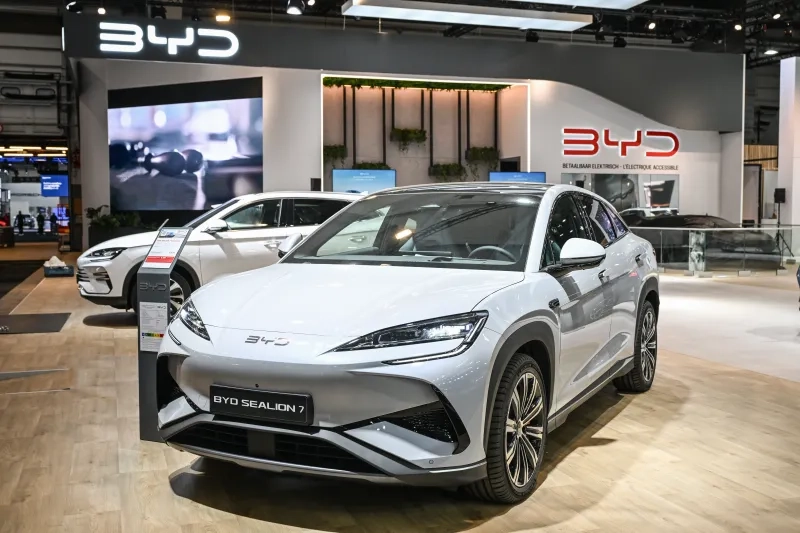
As trade restrictions tighten across the European Union, Chinese automakers scour Europe for factories to secure operational footholds before new domestic manufacturing mandates take effect. High-level executives are actively inspecting underutilized automobile assembly plants across the continent, aiming to bypass impending trade barriers. According to Alfredo Altavilla, European special adviser to China’s electric vehicle giant BYD, competition among Chinese original equipment manufacturers (OEMs) has grown so fierce that corporate scouting teams routinely cross paths in international airport lounges while evaluating prospective production sites.
This aggressive hunt for assembly facilities signals a major operational pivot away from vehicle exports toward localized European manufacturing. Establishing domestic manufacturing hubs enables foreign brands to insulate supply chains from geopolitical disruptions and shifting trade policies. For institutional allocators and industrial analysts tracking how cross-border trade friction impacts corporate operations, following targeted coverage of markets provides indispensable intelligence on automotive market volatility.
Why Chinese Automakers Scour Europe for Factories Ahead of Local Content Rules
The primary catalyst forcing this urgent corporate expansion is the European Commission’s pending “Made in Europe” regulatory framework. Expected to take effect as soon as next year, the proposed legislation modeled under the Net Zero Industry Act and the Industrial Accelerator Act—will enforce strict minimum local content requirements for electric vehicles sold throughout the 27-nation bloc. Under current legislative drafts, electric passenger cars may need to achieve up to a 70% domestic parts threshold (excluding battery cells) to qualify for consumer subsidies and access public procurement fleets.
To preserve commercial viability across European consumer sectors, Chinese OEMs cannot afford the multi-year timelines required to build greenfield facilities from scratch. Acquiring, retrofitting, and retooling existing automotive manufacturing facilities offers a significantly faster route to market compliance. Consequently, Chinese automakers scour Europe for factories that can be rapidly refurbished with manageable capital expenditures.
The restructuring of automotive manufacturing corridors exerts a direct macroeconomic influence on regional industrial output and manufacturing employment. Analysts assessing the wider effects of foreign direct investment on European labor markets can monitor shifts through dedicated reporting on the economy.
Contrasting Playbooks: Line-Sharing Partnerships vs. Outright Ownership
While the strategic objective remains uniform across the sector, Chinese automotive brands are adopting markedly different tactical models to establish continental production footprints:
- Joint Ventures and Line-Sharing: Competitors like Leapmotor and Dongfeng have entered production-sharing agreements with European automotive giant Stellantis in Spain and France. Similarly, Geely has coordinated manufacturing arrangements alongside Ford in Spain, while Chery Automobile partnered with a local Spanish firm to repurpose a shuttered Nissan assembly site.
- Full Asset Acquisition: In contrast to its domestic peers, BYD is pursuing outright asset ownership. The firm intends to acquire, own, and independently manage existing production facilities, ensuring total operational autonomy and proprietary process control over localized manufacturing.
As Altavilla noted during the launch of BYD’s premium Denza brand dealership in Turin, speed and capital discipline remain the decisive factors: “We have to find something to buy now and restore it with relatively little money… quickly.”
These shifting commercial models intersect directly with sovereign industrial policies and European Union state-aid rules. Corporate executives evaluating how regulatory interventions shape competitive parity can examine legislative developments via politics.
Geographic Realities: Spain and France Lead as Italy Becomes Plan B
In the current manufacturing landscape, Spain and France represent the “most actionable” target markets for BYD due to established automotive supply chains, favorable renewable power availability, and accessible industrial facilities. While BYD continues preliminary vehicle manufacturing at its first European passenger vehicle hub in Hungary, the company intends to finalize the site selection for its second European assembly plant by the end of the year.
Over the long term, BYD projects an operational requirement of three distinct vehicle assembly plants alongside a dedicated battery production gigafactory within Europe to sustain market share. Conversely, alternative markets like Italy have become secondary options. With Stellantis operating as the sole major legacy automaker in Italy and declining to sell its underutilized facilities, foreign acquisitions remain blocked. “I cannot buy something that is not for sale,” Altavilla emphasized.
As the race for localized electric vehicle manufacturing accelerates, technological dominance in software-defined vehicles, automated driver-assistance systems, and battery chemistry is defining brand competitiveness. Industry professionals can track technological breakthroughs across the mobility landscape through specialized reporting on tech. Furthermore, treasury executives navigating cross-border trade settlements and capital controls increasingly monitor decentralized liquidity solutions and crypto rails to preserve cross-border flexibility.
Market Ramifications for European Automotive Equities
The reality that Chinese automakers scour Europe for factories directly impacts the enterprise valuations of legacy European carmakers. As foreign competitors establish native manufacturing footprints, traditional automotive suppliers face fierce margin pressure while commercial real estate operators benefit from industrial acquisitions. Institutional portfolio managers tracking automotive manufacturing transformations continually monitor margin trends across publicly traded automotive and industrial stocks.
According to the official European Automobile Manufacturers’ Association (ACEA), the transition toward zero-emission mobility demands balanced regulatory frameworks that protect European employment while fostering competitive industrial ecosystems.
As the European Commission finalizes its local content mandates, the speed with which Chinese automakers scour Europe for factories will dictate the future competitive landscape of the continent’s electric vehicle market. The manufacturers that execute factory acquisitions swiftly will secure access to consumer subsidies, while those delayed by regulatory friction risk exclusion from Europe’s commercial fleet markets.
Disclaimer:
The information provided in this article is for educational, journalistic, and informational purposes only and does not constitute financial, investment, legal, or commercial advice.