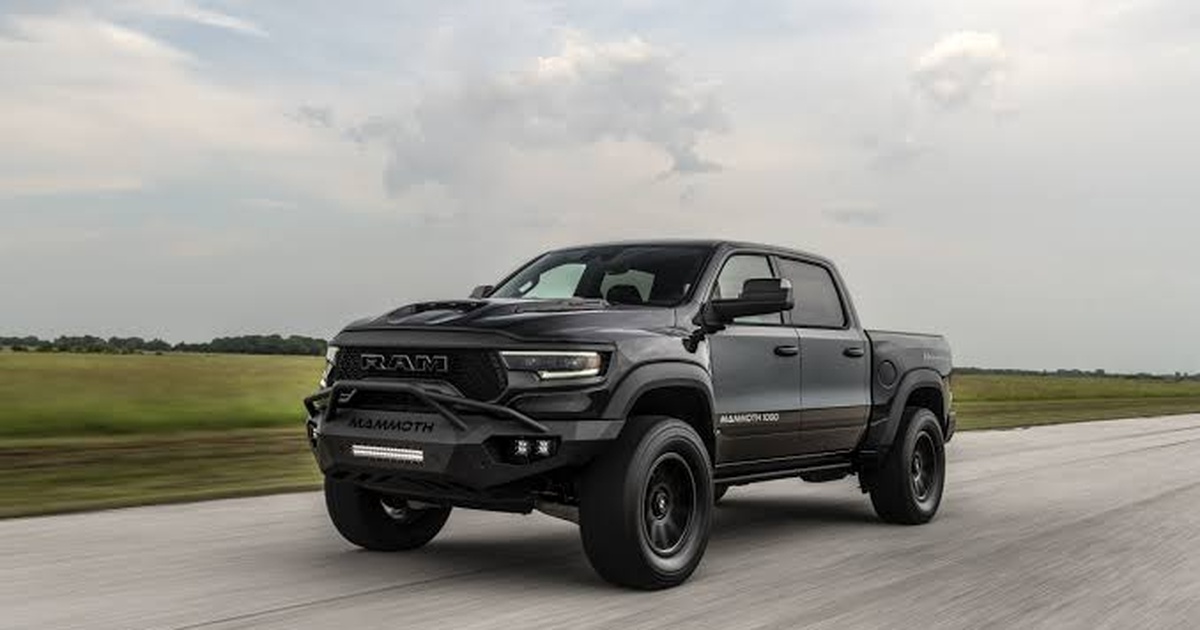
The persistent absence of commercial traction for pickup trucks in Europe illustrates one of the sharpest cultural and infrastructural divergences in the global automotive industry. In the United States, pickup trucks represent roughly 20% of total passenger vehicle sales, with models like the Ford F-150, Chevrolet Silverado, and Ram 1500 dominating annual delivery charts. In North America, the vehicle serves as a versatile status symbol, seamlessly blending everyday passenger comfort with rugged hauling capacity.
Across the Atlantic, however, that consumer enthusiasm evaporates. Across the European continent, pickup trucks in Europe command less than 1% of total automotive market share. Rather than embracing trucks as multifunctional lifestyle platforms, European consumers view open-bed haulers almost exclusively through a utilitarian commercial lens, treating them as specialized fleet assets alongside compact delivery vans. For automotive industry executives, mobility planners, and investors assessing how consumer preferences dictate automotive production lines, following real-time coverage across markets provides indispensable intelligence on changing consumer demand.
Structural and Urban Bottlenecks: Narrow Roads and Tight Spaces
The primary physical barrier suppressing demand for pickup trucks in Europe is urban geography. While modern American interstate corridors and commercial parking spaces are engineered with lanes spanning 10 to 12 feet, historic European roadways present an entirely different architectural reality. Many secondary avenues, historic town centers, and residential streets span just 8 to 10 feet in width.
Navigating a full-size pickup measuring more than six feet across through narrow cobblestone alleys, compact roundabouts, and multi-story underground parking garages creates daily operational friction. For most suburban motorists, the sheer dimensions of full-size imported trucks transform routine daily commutes into stressful maneuvers. Consequently, domestic automakers design regionally tailored options; for instance, Volkswagen develops the mid-size Amarok for international markets while deliberately declining to offer a pickup within the United States.
Urban planning restrictions and regional transit taxes actively shape automotive purchasing behavior. To examine how municipal transport rules and environmental zone fees influence regional consumer purchasing power, review ongoing reporting on the broader economy.
Economic Pressures: 2x Higher Fuel Costs and Stringent Emissions
Operating economics represent a second decisive factor limiting adoption. Retail gasoline and diesel prices throughout Western Europe regularly hover at twice the average rates paid by American motorists. Feeding a heavy, body-on-frame truck powered by an eight-cylinder internal combustion engine carries substantial recurring fuel costs, particularly when lightweight hatchbacks and compact station wagons can handle domestic cargo requirements at a fraction of the cost per kilometer.
The Rise of Modern Fleet Vans
Instead of buying open-bed utility vehicles, European tradespeople and logistics fleets overwhelmingly opt for enclosed commercial vans:
- Cargo Security: Enclosed vans provide weatherproof storage and superior anti-theft security in dense metropolitan environments.
- Volume Efficiency: Forward-control van architectures maximize cargo volume relative to exterior vehicle footprint.
- Operational Costs: Smaller turbodiesel and electrified commercial vans deliver substantial operational savings across high-mileage delivery routes.
European legislative frameworks also enforce aggressive fleet emission benchmarks under European Union corporate average fuel economy targets. Auto manufacturers face severe financial penalties if their aggregate vehicle deliveries exceed fleet-wide CO2 caps. To understand how regulatory directives and European Commission climate legislation alter manufacturing requirements, institutional analysts monitor legislative updates via politics.
Electrification, Hybridization, and Niche Market Expansion
Despite structural challenges, interest in pickup trucks in Europe has shown modest growth among specific consumer segments. Private registrations of imported Dodge Ram 1500 models grew by 20% in recent cycles, while durable mid-size models like the Toyota Hilux and Ford Ranger maintain steady followings among agricultural enterprises, forestry managers, and lifestyle sports enthusiasts.
Automakers are attempting to adapt the segment by introducing upscale interior trims, advanced driver-assistance platforms, and plug-in hybrid drivetrains. As automotive manufacturers integrate digital cockpits and cloud-connected telematics to appeal to younger drivers, technology analysts assess mobility innovations through specialized reporting on tech.
Simultaneously, multinational corporate fleets navigating fleet decarbonization must manage volatile battery metal raw material costs. Corporate treasuries tracking international hedging strategies and currency friction increasingly evaluate alternative digital liquidity options and crypto networks to manage cross-border capital settlements.
Valuation Trends for Automotive Equities
The geographic divergence defining pickup trucks in Europe carries direct consequences for multinational automakers. As documented by the European Automobile Manufacturers’ Association (ACEA), Europe’s passenger vehicle market is pivoting rapidly toward compact electric crossovers and urban battery-electric vehicles rather than oversized commercial haulers.
Automakers that over-allocate capital to heavy utility trucks risk margin erosion in Europe, while manufacturers that optimize compact modular platforms secure regulatory compliance. Institutional investors actively track these structural capital adjustments across global automotive and industrial stocks.
While upscale styling and hybrid efficiency may slightly broaden demand for pickup trucks in Europe, a cultural shift matching American popularity remains highly improbable. Until urban infrastructure expands and energy prices fall, Europe’s automotive heartland will remain firmly committed to compact, agile, and efficient vehicles.
Disclaimer:
The information provided in this article is for educational, journalistic, and informational purposes only and does not constitute automotive purchasing, commercial, financial, or investment advice.