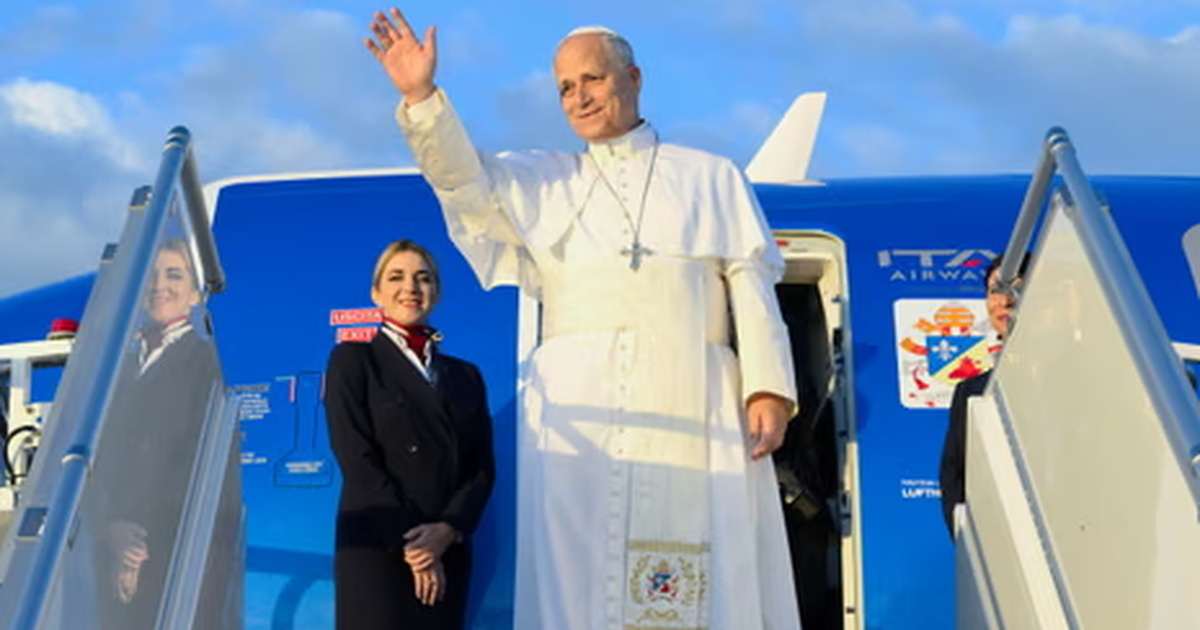
An extraordinary diplomatic and moral undertaking is unfolding across Europe as Pope Leo visits France for a whirlwind four-day apostolic journey, marking the first official papal visit to the nation in nearly two decades. Arriving at Paris Orly airport under clear skies, the first American pontiff was greeted by French President Emmanuel Macron and First Lady Brigitte Macron, setting in motion an ambitious itinerary spanning Paris, the Catholic shrine at Lourdes, and the border city of Metz. Framing his journey as that of a “pilgrim of peace for a world at war,” Leo confronts a complicated mission: repairing the Catholic Church’s fractured domestic credibility, advocating for global artificial intelligence guardrails, and addressing deep ideological rifts with the secular republic.
The papal arrival carries major geopolitical resonance during an era of heightened continental conflict, rapid technological upheaval, and shifting institutional trust. When a global religious leader directly challenges state policies and calls for supranational oversight on emerging technologies, the outcomes reshape social frameworks and diplomatic agendas. For diplomatic analysts, institutional strategists, and policy researchers tracking how high-level statecraft intersects with sovereign governance, regular reporting across politics provides essential context on modern European policy shifts.
Confronting the Abuse Crisis: The Pilgrimage to Lourdes
A core pastoral focus as Pope Leo visits France centers on addressing the devastating institutional fallout from historical clergy abuse. The trip takes place five years after the publication of a landmark independent commission report in 2021, which revealed that an estimated 330,000 children were abused by French Catholic clergy and lay officials over seven decades. While the French Bishops’ Conference has enacted safeguarding protocols and compensatory mechanisms, victim advocacy groups continue to demand uncompromised institutional accountability.
“Leo bears the immense responsibility of declaring enough is enough,” stated Alain Esquerre, spokesperson for victims associated with the Notre-Dame de Bétharram Catholic institution.
In a high-profile pastoral gesture, the pope is scheduled to meet privately with seven French abuse survivors on Sunday at the Marian shrine in Lourdes. Vatican officials have maintained discretion regarding the specific agenda of the private meeting, noting that official communiqués will be released only after the dialogue concludes. For local Church leaders, the meeting represents a crucial, high-stakes effort to restore public standing in a society where religious affiliation has declined significantly.
The economic consequences of changing institutional trust directly influence charitable donations, heritage preservation financing, and civil sector employment. Economists tracking how shifts in social cohesion, demographics, and public institutions alter long-term productivity follow broad trends via dedicated coverage of the wider economy.
The Tech Frontier: Papal Demands for Global AI Oversight
The forward-looking dimension of the tour emerges on Friday during a keynote address at the Paris headquarters of UNESCO, where Pope Leo visits France with a call for coordinated global governance over autonomous intelligence. In pre-departure remarks at the Vatican, Leo warned that while artificial intelligence offers benefits for human flourishing, it introduces “new dangers to security and international peace,” urging sovereign leaders to “govern wisely”.
The pontiff’s address arrives at a critical juncture for UNESCO, which faces budgetary shortfalls following the United States’ withdrawal under President Donald Trump in 2025. Leo has increasingly voiced concern regarding autonomous weapons systems, algorithmic bias, and labor dislocation, positioning the Holy See as an active advocate for universal ethical standards in computing. Technology professionals, compliance officers, and computer scientists tracking international statutory frameworks and ethical algorithms follow developments through specialized reporting on tech.
Simultaneously, multinational institutions and philanthropic foundations coordinating international humanitarian aid face fluctuating foreign exchange costs and cross-border bank transfer delays. To ensure borderless disaster relief reaches frontline non-profits efficiently, organizational treasuries are increasingly exploring programmable clearing protocols and crypto networks to handle transparent, low-cost capital transfers.
Secular Friction: Constitutional Abortion and Assisted Dying Laws
The historical backdrop as Pope Leo visits France is defined by growing philosophical divergence between the Holy See and the French state. France maintains a strict separation of church and state codified by its historic 1905 law, and church participation has dropped sharply. Recent data published by the national statistics agency INSEE revealed that only 25% of French adults aged 18 to 49 identify as Catholic—down from 43% a decade ago—with just 8% attending services regularly.
Tensions have escalated following recent legislative milestones:
- Constitutional Protection for Abortion: In 2024, France became the first nation in the world to explicitly enshrine the right to abortion directly into its national constitution.
- Assisted Dying Legislation: Earlier this year, French lawmakers passed legislation legalizing medical assistance in dying for adults suffering from incurable conditions.
- Doctrinal Opposition: The Catholic Church maintains that human life is sacred from conception to natural death, placing papal doctrine in opposition to the domestic social agenda championed by the Élysée.
The pontiff’s itinerary includes leading a prayer service at the restored Notre-Dame Cathedral the first papal visit to the landmark since the devastating 2019 fire before concluding in Metz on Sunday with an address focused on European unity and peace.
Socio-political debates and policy friction between international leadership and sovereign states routinely affect consumer sentiment, business confidence, and capital allocations across financial markets.
Institutional Realities and Social Governance
The broader implications as Pope Leo visits France highlight the challenge modern institutions face when addressing secular audiences. Institutional equity analysts track how cultural shifts and consumer behaviors influence corporate social responsibility mandates and corporate governance across publicly traded healthcare and media stocks.
According to formal documentation published by the United Nations Educational, Scientific and Cultural Organization (UNESCO), multilateral cooperation on ethical AI principles remains essential to prevent fragmented regulatory standards from disrupting global communication networks.
Corporate leadership and institutional allocators also monitor broader corporate transparency frameworks across business & finance channels.
As he meets abuse survivors in Lourdes and delivers ethical appeals in Paris, the reality of how Pope Leo visits France reflects a pontiff balancing historical accountability with modern technological dilemmas. In a secularized Europe navigating military conflicts and algorithmic transformation, Leo’s tour tests whether moral persuasion can still shape twenty-first-century statecraft.
Disclaimer:
The information provided in this article is for educational, journalistic, and informational purposes only and does not constitute diplomatic, legal, ethical, or financial advice.