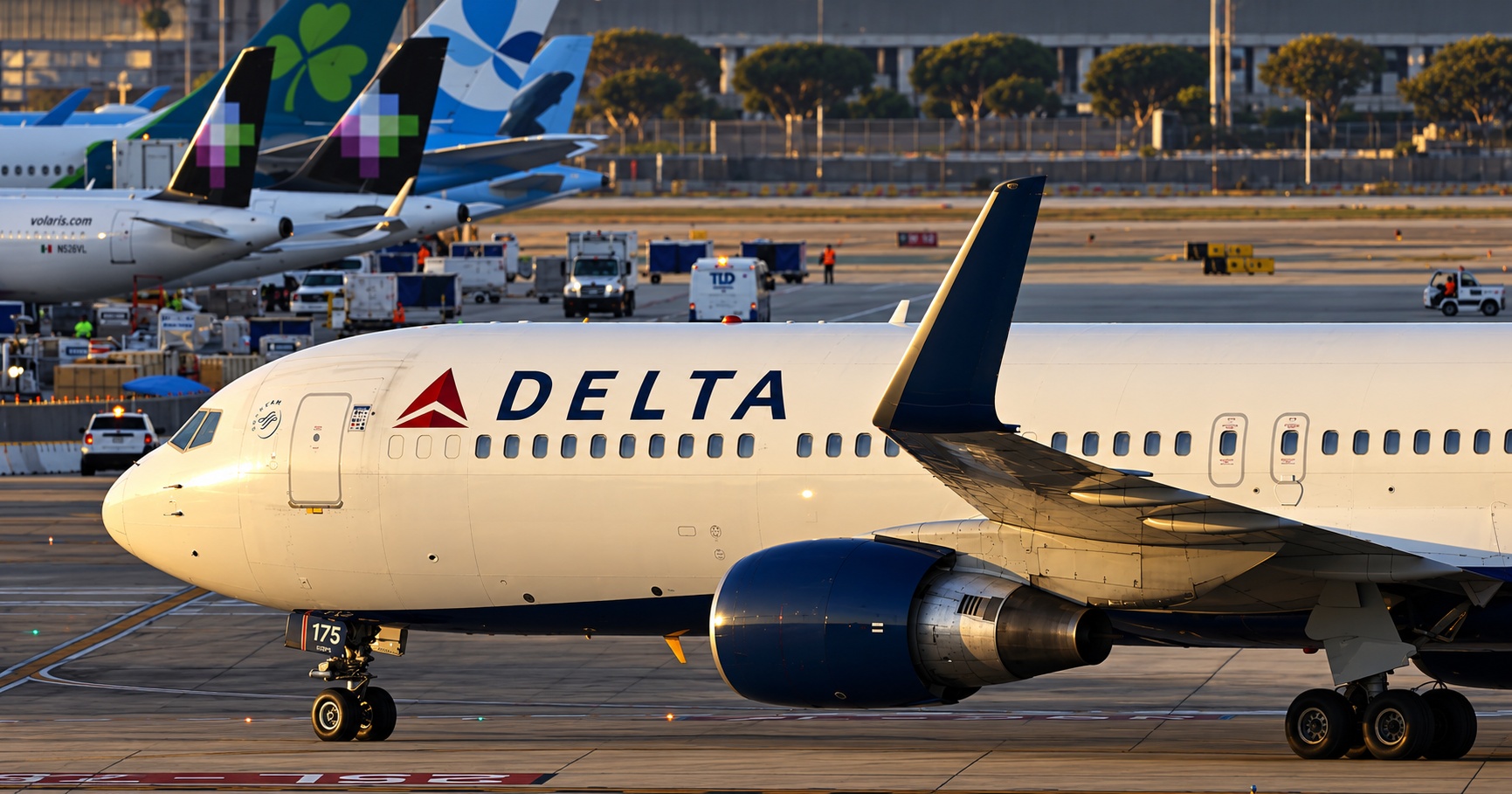
A critical mid-air operational emergency unfolded over the North Atlantic as a transatlantic airliner executed a sudden diversion, resulting in a Delta flight emergency landing Portugal response at Francisco Sá Carneiro Airport in Porto. Delta Air Lines Flight DL251, operated by a wide-body Airbus A330-300 carrying 296 passengers and crew bound from Barcelona–El Prat Airport to Boston Logan International Airport, was forced to declare an inflight emergency after dense smoke was detected inside the passenger cabin. Following standardized international aviation safety protocols governing uncontained cabin fires, the flight crew initiated an expedited oceanic turnback toward the nearest certified landfall, touching down safely in northern Portugal.
The emergency diversion highlights the operational vulnerabilities, insurance liabilities, and maintenance complexities confronting commercial aviation networks during peak international travel corridors. When long-haul wide-body airframes suffer cabin fume contamination or uncontained electrical smoke over oceanic flight lanes, rapid flight diversions protect human lives but impose significant operational expenses on commercial carriers. For corporate risk officers, airline fleet treasurers, and transport asset allocators evaluating how aviation reliability, fleet groundings, and airframe safety shape enterprise valuations across global carriers, comprehensive reporting across business & finance provides essential intelligence on industrial operational governance.
Inflight Smoke Detection and Emergency Response in Porto
The operational breakdown triggering the Delta flight emergency landing Portugal event commenced approximately two hours into the flight while cruising west of the Iberian Peninsula. Flight tracking telematics provided by Flightradar24 recorded that the Airbus A330 departed Barcelona at 3:15 p.m. local time (13:15 GMT). Upon encountering smoke inside the pressurized passenger cabin, flight deck personnel squawked transponder code 7700—signaling a general aviation emergency and requested priority clearance to divert to Porto.
The aircraft landed safely at Francisco Sá Carneiro Airport at 5:45 p.m. local time (16:45 GMT), where emergency services and tarmac fire crews were positioned to assist the aircraft:
- Tarmac Triage: First responders from Portugal’s emergency and civil protection authority treated eight passengers directly on the tarmac for mild smoke inhalation and respiratory distress.
- Hospitalizations: Three passengers sustained more pronounced respiratory irritation and were transported to an area hospital in Porto for precautionary evaluation.
- Crew Evaluations: Several cabin crew members were evaluated on-site after reporting dizziness and nausea resulting from exposure to toxic smoke.
- Official Statements: Delta confirmed the diversion was executed due to a reported mechanical issue, maintaining that the aircraft landed safely without structural airframe damage.
Sudden international flight diversions generate substantial economic ripple effects across regional transit economies, airport handling concessionaires, and airline passenger compensation liabilities. Economists tracking how international travel disruptions, fuel dump losses, and supply-chain logistics alter commercial transport productivity examine structural indicators via dedicated coverage of the broader economy.
Airframe Maintenance, ECS Failures, and Regulatory Oversight
The technical failure culminating in the Delta flight emergency landing Portugal incident is now under technical investigation by Portuguese civil aviation authorities and US federal regulators. While Delta has not published the specific mechanical root cause, aviation engineers point to air conditioning packs, environmental control systems (ECS), or auxiliary power wiring as typical sources of cabin smoke incidents.
Smoke in an aircraft cabin represents one of the most hazardous scenarios in commercial aviation because unverified internal fires can compromise flight control avionics or breach pressure hulls within minutes. Standard operating procedures require immediate landings at the nearest suitable airfield rather than continuing across oceanic routes. Following the diversion, subsequent scheduled international rotations for the affected Airbus airframe were canceled to allow technical teams to inspect the aircraft.
Transatlantic aviation treaties, Federal Aviation Administration (FAA) oversight directives, and passenger bill-of-rights regulations continue to dictate airline liability. Analysts tracking how statutory safety mandates and government transport ministries govern commercial airline operations can follow legislative shifts via politics.
Predictive Telematics, Fleet Analytics, and Automated Rails
Preventing crises such as the Delta flight emergency landing Portugal diversion relies increasingly on predictive fleet maintenance software. Global airline operators deploy automated engine health monitoring, automated environmental control telemetry, and cloud-based vibration sensors to identify overheating components before catastrophic in-flight failures occur. Software engineers and avionics developers tracking real-time aircraft sensor networks follow innovations through specialized reporting on tech.
Concurrently, international airline handling consortiums and multi-airport flight operations desks facing unscheduled diversions encounter significant foreign exchange and cross-border settlement hurdles. Airline treasuries are evaluating programmable liquidity systems and crypto networks to execute rapid, automated payments for emergency ground handling, passenger accommodation vouchers, and regional airport refueling without commercial banking clearing delays.
Unscheduled fleet groundings and aircraft maintenance schedules continue to drive volatility across commercial jet fuel crack spreads and transport markets.
Enterprise Balance Sheets and Publicly Listed Airline Equities
The operational and brand fallout surrounding the Delta flight emergency landing Portugal occurrence introduces distinct financial considerations for airline asset managers. While major carriers absorb diversion costs through operational reserves, recurring mechanical incidents elevate regulatory scrutiny, increase aircraft insurance premiums, and compress passenger load yields. Institutional equity research desks continuously track these maintenance expenditures, passenger revenue per available seat-mile (PRASM), and cash-flow resilience across publicly traded airline stocks.
According to formal air safety protocols and global flight audit documentation published by the International Civil Aviation Organization (ICAO), strict cockpit response protocols for cabin smoke events remain essential to preserving commercial aviation’s stellar global safety record.
As technical maintenance teams in Porto inspect the grounded Airbus A330, the Delta flight emergency landing Portugal diversion underscores the uncompromising reality of international aviation. In modern oceanic travel, technical redundancy, rapid cockpit execution, and prompt emergency response remain the ultimate safeguards against catastrophe.
Disclaimer:
The information provided in this article is for educational, journalistic, and informational purposes only and does not constitute financial, investment, legal, or aviation technical advice.