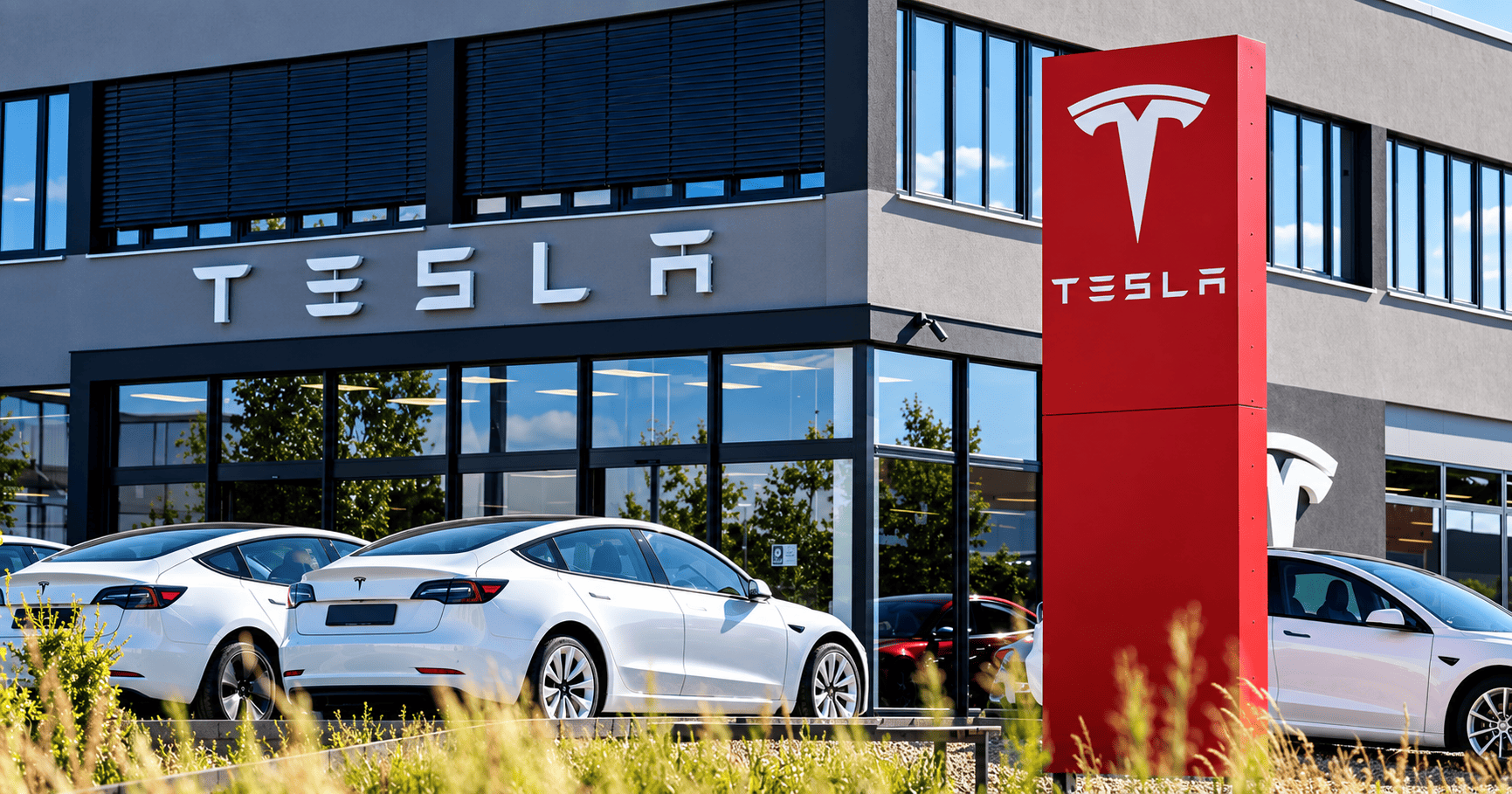
An aggressive commercial recovery across Western Europe’s battery-electric vehicle (BEV) market gained substantial traction on Thursday as the latest Tesla September registrations Europe figures confirmed double-digit sales surges in core national jurisdictions. Data released by automotive trade bodies across Scandinavia and Western Europe revealed that consumer deliveries for the Austin-based electric vehicle pioneer expanded rapidly compared to the previous year. Registrations a reliable leading indicator and proxy for retail consumer deliveries climbed 61.9% in France, 38.4% in Sweden, and 2.2% in mature electric market Norway, signaling that the American carmaker is reversing a two-year commercial downturn across the single market.
The volume recovery carries major ramifications for legacy automotive manufacturing margins, zero-emission credit trading, and charging infrastructure deployment throughout Europe. Following consecutive years characterized by severe price discounting, heightened regulatory scrutiny, and competitive saturation from emerging Asian original equipment manufacturers (OEMs), Tesla’s renewed delivery pace reflects robust consumer demand for refined model lines. For automotive equity researchers, corporate credit officers, and institutional industrial treasurers evaluating how structural electric mobility transitions reshape corporate cash flows, comprehensive reporting across business & finance provides essential intelligence on industrial operational governance.
Scandinavian and French Deliveries Spearhead Regional Turnaround
The quantitative metrics driving Tesla September registrations Europe highlight an accelerating divergence between dominant market players and struggling regional competitors. According to verified automotive filings released by the French industry body Plateforme Automobile (PFA), Norway’s Opplysningsrådet for Veitrafikken (OFV), and Mobility Sweden, buyers returned in force to standardized electric vehicle architectures:
- French Volume Acceleration: Deliveries in France jumped 61.9% year-on-year, driven by structured municipal subsidies, regional fleet renewals, and attractive purchase financing packages.
- Swedish Market Expansion: New registrations across Sweden surged 38.4%, underscoring corporate fleet uptake of electric crossovers despite higher corporate borrowing costs.
- Norwegian Saturation Highs: In Norway, where battery-electric vehicles represent over 90% of new passenger sales, registrations climbed 2.2% over record 2025 volumes.
- Broader European Momentum: Through August 2026, data from the European Automobile Manufacturers’ Association (ACEA) showed Tesla registrations across the European Union, the United Kingdom, and the European Free Trade Association (EFTA) grew 43.3% year-to-date, comfortably outpacing the wider BEV industry’s 38.8% expansion rate.
Automotive factory run-rates, showroom delivery volumes, and regional charging investments directly determine consumer goods production, industrial employment levels, and aggregate consumer spending. Economists analyzing how electrification targets, fossil fuel disincentives, and corporate equipment purchases shape gross domestic output track long-term indicators through dedicated reporting on the wider economy.
Catalysts Behind the Rebound: Fuel Pressures and Policy Subsidies
Several structural catalysts explain why Tesla September registrations Europe experienced a sharp revival. Favorable baseline comparisons from 2024 and 2025 when assembly lines adjusted for refreshed model tooling and supply chain disruptions set an accessible bar for year-on-year growth.
Simultaneously, persistent geopolitical volatility in the Middle East has kept retail petrol and diesel prices elevated across continental filling stations, steering fleet purchasers toward electrified mobility. Government incentives, corporate environmental tax perks, and improved total cost of ownership (TCO) calculations have reinforced this transition.
Trade barriers, European Union carbon emission reduction penalties, and national tax write-offs remain vital drivers of executive decision-making. Observers monitoring how legislative assemblies and government transport ministries govern green vehicle incentives follow statutory developments via politics.
Automotive market analysts are currently awaiting registry disclosures from Germany and the United Kingdom Europe’s two largest passenger vehicle markets due later this week, which will determine whether the current sales rebound is continental or regional.
Software Platforms, Automated Telematics, and Infrastructure Rails
The core product appeal supporting Tesla September registrations Europe remains anchored to advanced automotive software and vehicle connectivity. Proprietary over-the-air (OTA) operating system updates, centralized vehicle telematics, and advanced driver-assistance software suites continue to provide high user retention relative to legacy infotainment platforms. Technology specialists and software engineers tracking autonomous fleet computing, vehicle-to-grid telemetry, and edge-AI computer vision follow developments through specialized reporting on tech.
Concurrently, international charging station networks and commercial fleet operators managing thousands of high-output DC fast chargers face complex energy settlement challenges. Forward-looking mobility infrastructure developers are increasingly evaluating programmable payment systems and tokenized micro-metering on crypto networks to execute transparent, automated, machine-to-machine billing for high-voltage electricity dispensations without banking clearing delays.
Automotive sales shifts and volatile consumer credit environments continue to drive capital flows across continental equity markets.
Valuation Implications for Publicly Listed Automotive Equities
The delivery growth demonstrated by Tesla September registrations Europe presents significant competitive considerations for institutional equity allocators. Established European legacy manufacturers including Volkswagen Group, Stellantis, and BMW face intensifying margin pressure as Tesla recaptures market share in key continental markets without sacrificing unit profitability. Equity research desks continuously track price cuts, gross automotive margins, and warranty provisions across publicly traded global automotive stocks.
According to formal market surveillance and registration audit data published by the European Automobile Manufacturers’ Association (ACEA), sustained expansion in private electric vehicle uptake remains vital if member states are to meet mandatory 2030 continental fleet decarbonization milestones.
As automotive registries across Britain and Germany prepare their monthly figures, the Tesla September registrations Europe release confirms that the electric vehicle pioneer has stabilized its regional footprint. Combining software leadership with aggressive manufacturing execution, the company has proven that electric vehicle consumer demand remains resilient when supported by competitive total ownership costs.
Disclaimer:
The information provided in this article is for educational, journalistic, and informational purposes only and does not constitute financial, automotive procurement, investment, or legal advice.