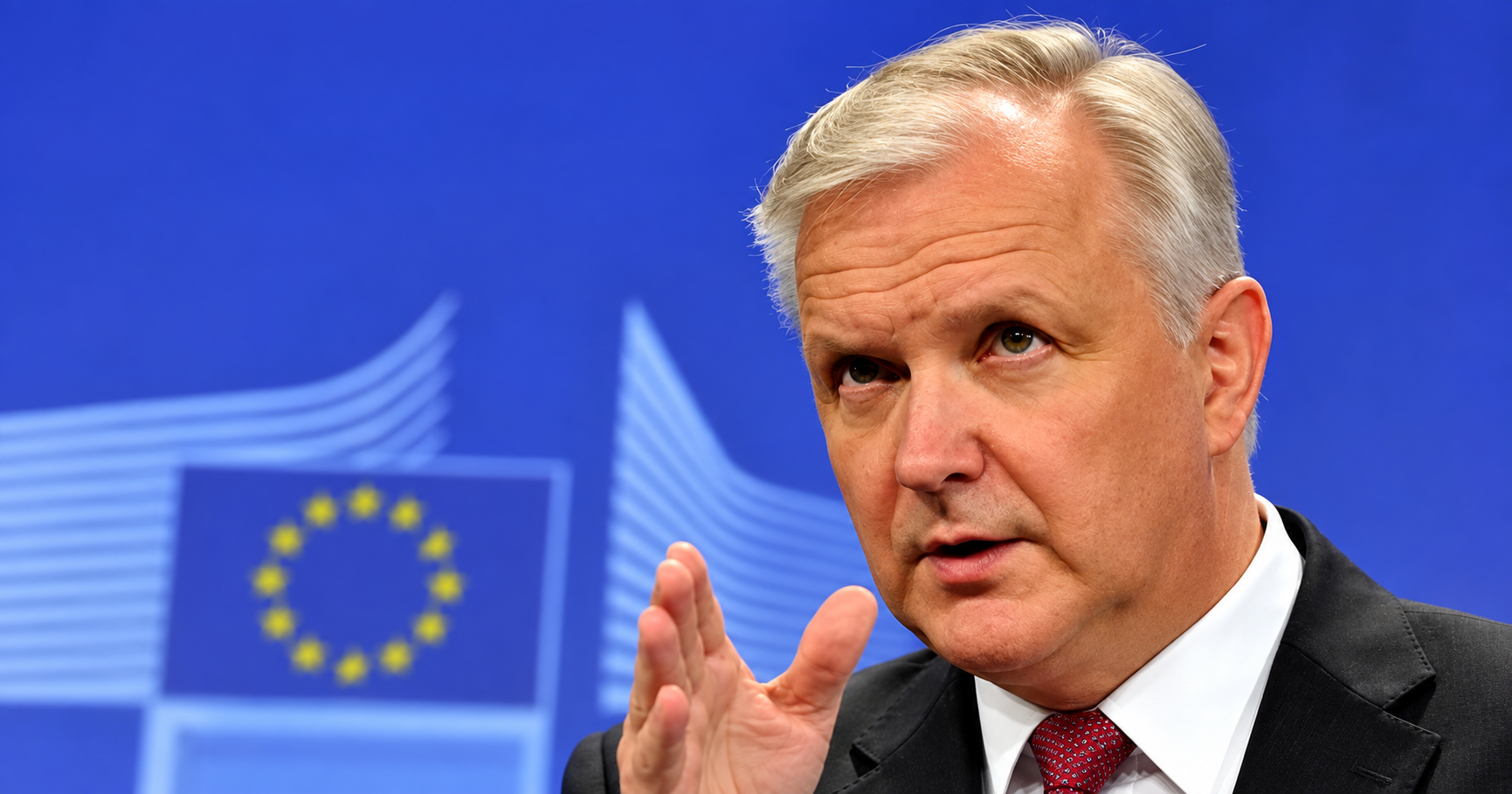
A critical macro-prudential evaluation of European monetary policy emerged from Frankfurt on Friday as Finnish central bank governor Olli Rehn argued that soaring yields curb inflation ECB pass-through by dampening growth, even as expensive fossil fuels approach official stress scenarios. Speaking at an annual conference hosted by the European Systemic Risk Board (ESRB), the European Central Bank Governing Council member addressed the acute friction between surging headline energy costs and tightening financial conditions. While recent geopolitical supply shocks in the Middle East threaten to push headline inflation near 4% by year-end double the central bank’s 2% objective Rehn explained that elevated capital costs across global bond markets are working to suppress domestic demand and slow the broader transmission into wages.
The intervention provides essential context for institutional capital allocators and treasury desks navigating volatile credit conditions. As central banks evaluate whether additional policy rate increases are necessary following two hikes delivered earlier in the summer, market-driven yield spikes are already doing part of the tightening work. For debt capital markets bankers, corporate treasurers, and sovereign risk directors evaluating how elevated borrowing costs alter balance-sheet resilience, comprehensive reporting on the wider economy provides essential intelligence on European macro-prudential trends.
The Dual-Shock Reality: Energy Pressures vs. Yield Constraints
The central thesis explaining how soaring yields curb inflation ECB risk models rests upon countervailing economic forces. Headline consumer inflation across the single-currency bloc has accelerated beyond 3%, driven by higher crude oil benchmarks and regional natural gas volatility. While the ECB’s baseline models acknowledge that short-term price risks remain tilted toward higher readings, Rehn emphasized that the macroeconomic outlook faces risks in both directions:
- The Adverse Scenario Threshold: Sustained wholesale energy cost increases are pushing eurozone price trends closer to the ECB’s official “adverse” economic scenario, requiring strict central bank vigilance.
- The Financial Tightening Counterweight: Concurrently, surging long-term borrowing costs act as an automatic economic brake, reducing the pass-through of import shocks into core wages and secondary consumer prices.
- Pervasive Macro Uncertainty: Rehn highlighted that forward-looking economic projections for output growth and price stability continue to face elevated structural uncertainty.
- Underlying Resilience: Despite restrictive capital markets and expensive energy, the broader eurozone economic framework continues to display unexpected resilience, holding up better than initial stress tests anticipated.
Restricted commercial credit lines, elevated corporate overdraft facilities, and compressed profit margins directly alter enterprise capital spending. Institutional risk officers tracking corporate balance sheets, treasury solvency, and loan covenants can evaluate comprehensive data through business & finance reporting.
Crowding Out Sovereigns: US Deficits and the AI Debt Boom
The structural backdrop explaining why soaring yields curb inflation ECB expectations extends beyond European borders. Sovereign borrowing costs have climbed sharply in recent weeks, driven largely by benchmark US Treasury yields rising to 5.32% amid growing market unease over Washington’s fiscal trajectory.
Compounding this sovereign debt selloff, the world’s largest enterprise technology conglomerates are issuing record volumes of corporate debt to finance massive artificial intelligence infrastructure buildouts. This debt surge has effectively crowded other borrowers—including sovereign states—out of global capital markets. In Europe, Germany’s 10-year Bund yield, historically viewed as one of the world’s safest sovereign benchmarks, climbed to 3.57%, reaching its highest level in 17 years.
National debt servicing burdens, sovereign fiscal frameworks, and legislative deficit limits remain critical points of contention across European parliaments. Analysts tracking how statutory directives and legislative bodies manage sovereign accounts follow regulatory developments via politics.
AI Valuation Fragility, Automated Settlement, and Digital Rails
A key warning delivered alongside the observation that soaring yields curb inflation ECB mechanisms focused on corporate balance-sheet exposure to artificial intelligence. Rehn cautioned that massive corporate borrowing to fund AI hardware poses systemic financial stability risks if market expectations outpace revenue generation. “A sharp correction in AI-related valuations could spread through equity and credit markets,” Rehn warned, noting that history demonstrates financial markets often overestimate immediate returns from technological revolutions. Technology specialists and enterprise software engineers tracking datacenter capital spending, enterprise cloud infrastructure, and computing hardware follow sector developments through specialized reporting on tech.
At the same time, institutional fixed-income liquidity providers and primary dealers managing multi-currency sovereign syndications face significant operational friction. Forward-looking corporate treasuries and private credit syndicates are increasingly exploring programmable settlement platforms and crypto networks to execute transparent, delivery-versus-payment bond clearing, bypassing traditional settlement bottlenecks during volatile market swings.
Record bond yield spikes and shifting credit spreads continue to influence liquidity depth across international debt and equity markets.
Equity Realities for Publicly Listed Tech and Banking Equities
The realization that soaring yields curb inflation ECB momentum creates complex cross-currents for public equity portfolios. While commercial lenders benefit from wider net interest margins as sovereign curves steepen, capital-intensive technology firms face compressed valuation multiples and higher refinancing costs on corporate bonds. Institutional equity research desks continuously evaluate free cash flow yields, corporate debt maturity profiles, and enterprise multiples across publicly traded technology and industrial stocks.
According to formal financial stability assessments published by the European Systemic Risk Board (ESRB), preserving order across sovereign debt markets and monitoring corporate debt issuance remain vital to preventing systemic credit contagion across European financial institutions.
As central bank policymakers evaluate incoming autumn economic releases, the reality that soaring yields curb inflation ECB pass-through offers a potential policy buffer. While expensive energy threatens price stability, tightening financial conditions are already constraining demand, giving central bankers room to assess whether further policy rate increases are truly warranted.
Disclaimer:
The information provided in this article is for educational, journalistic, and informational purposes only and does not constitute financial, macroeconomic, investment, or legal advice.