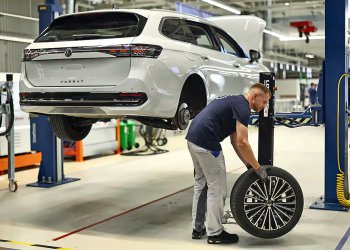
A sharp contradiction between global consumer prestige and underlying corporate profitability has surfaced in Stuttgart as the Porsche luxury brand financial crisis challenges the operational stability of Europe’s premier performance marque. According to the 2026 annual index published by valuation consultancy Brand Finance, Porsche retained its title as the world’s most valuable luxury brand with an estimated brand valuation of $35.2 billion, outpacing French couture houses Chanel, Louis Vuitton, and Hermès. However, despite this commercial cachet, the company’s operating income and cash flows have deteriorated significantly, forcing emergency management overhauls and dragging down the broader balance sheet of its majority owner, the Volkswagen Group.
The structural downturn reveals the financial strain facing European automotive manufacturers navigating overlapping macroeconomic headwinds. Heavy capital expenditures dedicated to battery electric vehicle (BEV) architectures, compounding transatlantic tariff friction, and severe demand contraction across China have combined to compress margins that were once the envy of the global automotive sector. For corporate finance officers, portfolio strategists, and industrial credit underwriters examining how automotive restructuring impacts continental capital flows, comprehensive European financial intelligence provides indispensable insight into industrial balance sheets and corporate governance.
[TOC]
Valuation Prestige Versus Earnings Reality: The Core Paradox
The fundamental question framing the Porsche luxury brand financial crisis is why an enterprise maintaining the world’s most valuable luxury brand equity is simultaneously suffering from acute cash outflows. Brand Finance calculates brand valuation by benchmarking perceived customer loyalty, pricing power, and long-term future revenue potential, which remains exceptionally resilient among affluent global consumers.
However, operating earnings reflect immediate cost realities:
- Operating Margin Collapse: Historic operating margins between 15% and 18% have fallen drastically, dropping to levels below Volkswagen’s mass-market Czech division, Škoda.
- Valuation Erosion Since IPO: When Porsche listed on the Frankfurt Stock Exchange in 2022 at a €75 billion valuation, the landmark offering generated €9 billion for Volkswagen’s modernization funds; today, Volkswagen’s 75% stake has fallen to roughly $6.9 billion.
- Asset Disposals: To shore up working capital and cover legacy balance-sheet obligations, Porsche finalized the divestment of its stake in Bugatti in September, directing a quarter of the $1 billion proceeds directly into internal pension reserves.
- Slumping Equity Multiples: Institutional credit desks have lowered net return forecasts across the corporate structure, details regularly monitored through InvestorBytes.
The compression of operating cash flows across premier manufacturing divisions ripples through municipal supplier contracts, specialized engineering employment, and regional corporate tax revenues. Macroeconomists assessing how industrial restructuring affects European gross output track long-term economic trends via InvestorBytes corporate analysis.
The Electrification Burden: Transition Costs Outpace Buyer Demand
An aggressive push into full electrification represents a primary driver of the Porsche luxury brand financial crisis. The automaker committed billions of euros to develop high-performance electric architectures, deploying the Taycan, the Macan Electric, and the recently debuted Cayenne Electric, while engineering work on an all-electric successor to the 718 Boxster and Cayman platform continues to stall.
The commercial challenge lies in customer adoption disparities across global regions:
- The U.S. Sales Split: In the United States market, combustion models outsold electric variants by a two-to-one ratio before Porsche discontinued the internal combustion Macan in primary markets to meet stringent European fleet emissions caps.
- Tariffs and Market Exits: Escalating U.S. tariffs created severe logistical headaches, adding $1 billion in direct trade surcharges to an annual expense load exceeding $4.5 billion.
- Softening Chinese Luxury Demand: Chinese retail volumes dropped significantly as domestic buyers migrated toward regional electric marques, eliminating an essential high-margin cash contributor.
Automotive supply chain managers and dealership networks evaluating vehicle inventory financing follow updates through European automotive reporting.
Executive Restructuring: Michael Leiters Takes the Helm
Attempting to stem operational losses underpinning the Porsche luxury brand financial crisis, the supervisory board replaced chief executive Oliver Blume with former McLaren Automotive CEO and Ferrari chief technology officer Michael Leiters. Returning to the company where he previously oversaw the hybrid Cayenne program, Leiters has implemented a disciplined margin-recovery target of 10% to 15%.
Managing structural turnaround mandates requires stringent cost reduction, component standardization, and targeted factory realignments across the manufacturing network, an effort documented through InvestorBytes market coverage.
The Parent Contagion: Volkswagen Group’s €10B Profit Shock
The Porsche luxury brand financial crisis does not exist in isolation; it directly threatens the Volkswagen Group. Because Porsche historically generated a disproportionate share of group profits, its earnings drop contributed to a massive €10 billion ($11.5 billion) group profit warning.
Volkswagen is now executing its “Future Plan 2030,” which targets up to 140,000 workforce reductions across management and factory lines, alongside the planned closure of the 125-year-old Osnabrück production facility in 2027. Further closures between 2031 and 2034 threaten up to 40,000 jobs across plants in Emden, Zwickau, Hanover, and Neckarsulm. Readers tracking broad European corporate consolidations follow restructuring developments on the InvestorBytes homepage.
International trade disputes, carbon emissions fines, and domestic labor disputes continue to challenge continental boardrooms, themes evaluated in international trade intelligence.
Telematics, Production Architecture, and Advanced Clearing Systems
Resolving the manufacturing bottlenecks associated with the Porsche luxury brand financial crisis requires advanced automotive and operational software. Contemporary assembly lines rely on automated production telematics, AI-driven digital twins, and computerized parts tracking to reduce manufacturing waste. Technology researchers following smart factory automation and automotive software architectures monitor breakthroughs on the InvestorBytes daily briefing.
Simultaneously, international automotive suppliers and logistics syndicates managing multi-currency parts shipments face transaction fees and banking latency. Automotive trade consortia are assessing programmable settlement rails and smart contracts to manage cross-border inventory payments efficiently, as explored in European equity research.
Shifting capital spending and manufacturing revisions continue to impact credit markets monitored through the InvestorBytes publication.
Capital Market Implications for Listed Automotive Equities
The developments surrounding the Porsche luxury brand financial crisis provide a cautionary framework for equity investors. While brand equity and heritage command customer loyalty, they cannot completely offset rising supply chain expenses and slowing sales in critical export markets. Institutional asset managers continue to adjust forward price-to-earnings multiples, dividend safety ratios, and capital allocation frameworks across publicly traded European automotive equities.
As Michael Leiters initiates cost restructuring across Stuttgart’s assembly lines, the Porsche luxury brand financial crisis demonstrates that even the world’s most prestigious luxury brand must adapt to shifting global markets. Navigating geopolitical tariffs, realigning electric vehicle timelines, and stabilizing operating margins remain crucial if Porsche is to reclaim its status as Europe’s premier automotive profit driver.
Disclaimer:
The information provided in this article is for educational, journalistic, and informational purposes only and does not constitute financial, investment, automotive trade, or legal advice.