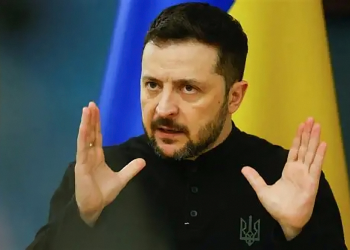
A critical diplomatic and financial push unfolded across Brussels on Friday as discussion surrounding Taoiseach Ukraine budget shortfall options dominated the European Council summit, with Irish Prime Minister Micheál Martin urging European Union member states to consider every fiscal mechanism to secure Kyiv’s wartime finances through 2028. Arriving at the summit alongside Ukrainian President Volodymyr Zelenskyy, Martin emphasized that Europe must act quickly to prepare a coordinated “pan-European financial injection” capable of closing a projected €70 billion ($76 billion) funding deficit next year. The high-level talks follow severe fractures in Kyiv’s relationship with Washington, marked by US President Donald Trump’s bilateral Russian fuel arrangements, public criticism of Ukrainian leadership, and the reported curtailment of intelligence cooperation.
The urgency of the Brussels summit highlights the compounding fiscal and military challenges confronting Ukraine as it enters a fifth winter of full-scale conflict. Confronted by severe munitions deficits, damaged energy grids, and depleted sovereign coffers, Kyiv has drawn down external funds faster than anticipated. While the European Union previously engineered a landmark €90 billion syndicated loan facility backed by immobilized Russian state assets, ongoing legal disputes over confiscating sovereign central bank reserves have forced finance ministers to seek alternative borrowing structures. For sovereign debt analysts, foreign exchange desks, and multi-asset portfolio allocators monitoring public finance allocations, comprehensive European financial news provides critical perspective on institutional treaties, fiscal policy, and macro stability.
The Pan-European Injection: Martin Calls for Decisive Action Through 2028
The core operational stance driving the Taoiseach Ukraine budget shortfall options agenda centers on accelerating joint financing solutions across the 27-country bloc:
- The Long-Term Horizon: Micheál Martin urged European leaders to structure a predictable financing horizon extending through 2027 and 2028, ensuring that Ukraine’s state institutions and defense procurement lines do not face sudden cash shortfalls.
- Openness to Funding Vehicles: Expressing flexibility regarding capital structures, Martin stated: “We would look at all options in terms of how we can support Ukraine… In terms of the medium term, over 2027 and 2028, I think we need to focus on that, whether it’s the immobilised assets or other mechanisms, I’m open.”
- Defending National Contributions: Responding to remarks by Dutch Prime Minister Rob Jetten suggesting some nations were underperforming on contributions, Martin defended Ireland’s net-contributor position: “We are net contributors to the EU budget and through any European mechanism and facility, we will be higher contributors than most… That’s the proper and effective way.”
- Transatlantic Diplomacy: Martin underscored that European capitals must maintain persistent diplomatic engagement with Washington to reinforce international legal principles regarding territorial integrity and aggression.
Sovereign bond spreads, statutory deficit caps, and secondary market yields directly shape corporate credit conditions. Economists evaluating European fiscal governance follow sovereign debt trajectories through InvestorBytes macro reports.
Cabinet deliberations and pan-European fiscal treaties continue to guide continental capital distributions, an area examined in European policy updates.
The €70 Billion Chasm: Depleted Loans and Immobilized Asset Deadlocks
The acute fiscal pressure underscoring the Taoiseach Ukraine budget shortfall options debate is driven by structural exhaustion of existing loan facilities:
- Rapid Liquidity Burn: The €90 billion loan package approved by European leaders late last year has been rapidly consumed due to escalating frontline intensity, Russian infrastructure attacks, and declines in US bilateral assistance.
- The Legal Impasse on Russian Reserves: While the €90 billion facility was intended to be backstopped by €200 billion in frozen Russian central bank assets held in European depositories, plans to monetize the underlying capital stalled after Belgium and financial institutions raised legal liabilities.
- Past Efforts Stalled: Martin noted that previous attempts to tap the core sovereign assets directly “came to naught in the end,” concluding that Europe must now pursue faster and more legally viable financing structures.
- The Looming Deficit: Ukrainian finance authorities estimate that without fresh multilateral transfers, the wartime budget deficit will approach €70 billion for 2027, threatening currency stability.
Official summit declarations cataloged by the European Council confirm that heads of state are exploring pooled supranational debt issuances and expanded guarantees to bridge the financing gap.
Supranational bond issuances, regional development grants, and statutory fiscal boundaries directly dictate European corporate operating environments. Financial analysts evaluating European Union subsidies and sovereign risk metrics monitor structural developments through the InvestorBytes financial portal.
Transatlantic Frictions and the Winter Defense Crisis
The geopolitical tension framing the Taoiseach Ukraine budget shortfall options review follows sudden policy shifts in Washington:
- The Trump-Kyiv Fracture: Relations reached a historic low following Trump’s sharp public criticism of Volodymyr Zelenskyy and Washington’s agreement to purchase Russian diesel under sanctions waivers.
- Defense Intelligence Curtailment: Diplomatic reports indicate Washington suspended aspects of operational satellite intelligence sharing, heightening Kyiv’s reliance on European surveillance assets.
- Winter Infrastructure Vulnerability: Ukrainian power grids are operating under severe capacity deficits following sustained missile barrages, leaving millions of civilians vulnerable ahead of freezing winter temperatures.
- European Reassurance: European Council President António Costa firmly rebuffed suggestions of easing sanctions, declaring: “This is no time to withdraw support to Ukraine, this is no time to relieve Russian sanctions.”
Corporate treasurers and tax compliance directors assessing continental corporate levies follow revenue policy on the InvestorBytes homepage.
The complex relationship between corporate taxation, cross-border fiscal treaties, and industrial competitiveness is analyzed in InvestorBytes corporate analysis.
Financial Telematics, Sovereign Debt Syndication, and Asset Custody
Implementing the emergency funding mechanisms envisioned under the Taoiseach Ukraine budget shortfall options framework requires sophisticated financial telematics. Supranational borrowing desks and central debt management offices deploy algorithmic syndicated auction platforms, real-time liquidity matching engines, and collateral rehypothecation tools to structure multi-billion-euro bond issuances. Technology specialists tracking electronic debt management systems follow software architectures through InvestorBytes digital finance.
Concurrently, European central securities depositories (CSDs) and clearing syndicates managing frozen sovereign reserves face strict legal-custody oversight. Financial intermediaries are implementing automated escrow ledgers and programmable smart-contract tracking to safely quarantine sanctioned balances while directing generated windfall interest into Ukrainian stabilization accounts, an operational shift documented in international capital analyses.
Shifting capital distributions and sovereign regulatory changes continue to influence liquidity across private debt and equity desks tracked in continental market coverage.
Capital Market Implications for European Sovereign Bonds and Equities
The policy decisions emerging from the Taoiseach Ukraine budget shortfall options summit carry substantial implications for institutional allocators. Mobilizing an additional €70 billion through collective EU debt issuance would expand the supply of top-rated sovereign eurobonds, providing safe-haven yield options for European pension funds and sovereign wealth allocators. Concurrently, accelerated financial stabilization for Ukraine supports stability across European banking, defense, and power engineering equities supplying grid equipment. Institutional equity research desks continuously evaluate sovereign expenditure trends, defense appropriations, and industrial margins through InvestorBytes equity intelligence.
Corporate treasurers, public debt underwriters, and institutional portfolio managers track sovereign budget talks via the InvestorBytes publication.
As European Council leaders conclude their summit deliberations in Brussels, the emphasis placed on Taoiseach Ukraine budget shortfall options confirms Europe’s intent to lead Western financial support. By committing to evaluate every fiscal tool, the European Union is working to build a predictable, multi-year funding bridge that secures Ukraine’s economy against external political shocks.
Disclaimer:
The information provided in this article is for educational, journalistic, and informational purposes only and does not constitute financial, investment, legal, or fiscal policy advice.