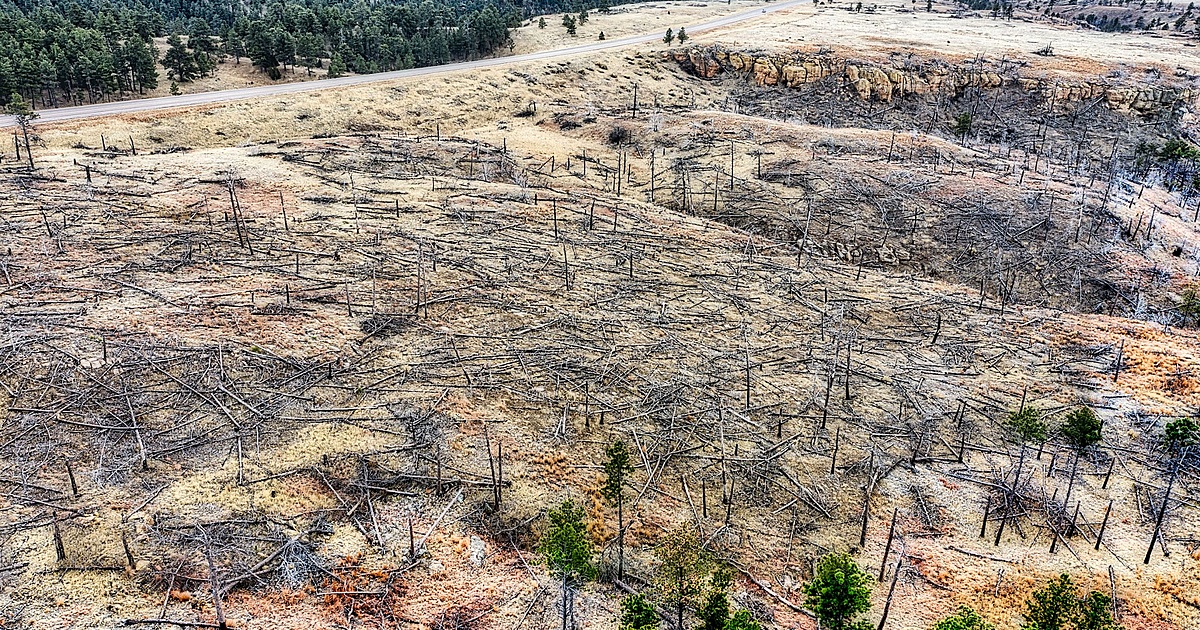
An impassioned global call for economic restructuring resonated across Yerevan on Friday as Guterres action financing biodiversity loss warnings exposed a profound disconnect between multinational conservation rhetoric and actual capital deployment. Delivering a keynote address to world leaders ahead of the COP17 UN Biodiversity Conference, United Nations Secretary-General António Guterres cautioned that humanity is systematically destabilizing the biosphere, noting that “humankind saws another branch off the tree of life.” With more than one million animal and plant species facing imminent extinction due to chemical pollution, overgrazing, industrial agriculture, and accelerated climate disruption, the UN chief cautioned that the world is edging dangerously close to ecological collapse unless governments fundamentally realign global finance toward nature preservation.
The stark warning arrives at a decisive operational milestone four years after the adoption of the historic Kunming-Montreal Global Biodiversity Framework. While nearly 90% of participating sovereign states have formulated national conservation targets and an additional 7.3 million square kilometers of combined land and marine territory have received legal protection since 2022, Guterres stressed that implementation remains dangerously off course. Current projections reveal that terrestrial protection will reach only 26% and marine conservation just 12% by 2030 falling well short of the statutory “30 by 30” global conservation threshold. For sustainable finance underwriters, ESG portfolio managers, and institutional green bond desks tracking international environmental covenants, comprehensive European financial news provides critical perspective on multilateral climate accords, nature-related financial disclosures, and macro fiscal stability.
The Conservation Deficit: Falling Short of the 30 by 30 Global Milestone
The operational crisis driving the Guterres action financing biodiversity loss address centers on uneven implementation of international biodiversity treaties:
- The Target Mismatch: Despite broad diplomatic participation, current sovereign pledges will protect only 26% of land and 12% of oceans by 2030, failing the Kunming-Montreal Framework’s binding 30% baseline.
- The Species Extinction Threshold: Over one million plant and animal species remain on the precipice of extinction, accelerated by unsustainable industrial chemical use, soil degradation, and deforestation.
- The Yerevan Declaration: Guterres welcomed the adoption of the Yerevan Declaration at the Leaders’ Summit, which establishes binding political commitments to embed natural capital accounting into national budgeting systems.
- Interconnected Planetary Crises: The UN Secretary-General emphasized that environmental degradation cannot be isolated from armed conflicts, agricultural crop failures, or global epidemic outbreaks, warning that systemic solutions require cross-sectoral policy harmonization.
Statutory conservation targets, environmental risk parameters, and multilateral reporting standards cataloged by the United Nations require member states to align domestic regulatory statutes with verified ecological preservation metrics.
Sovereign bond ratings, domestic fiscal deficit parameters, and natural capital liabilities directly influence cross-border debt performance. Institutional asset allocators tracking green bond issuances and sovereign ESG criteria monitor market trends through the InvestorBytes financial portal.
The $7.3 Trillion Paradox: Subsidizing Environmental Destruction
A devastating financial indictment highlighted during the Guterres action financing biodiversity loss speech focused on harmful public subsidies:
- Distorted Capital Inflows: For every single dollar deployed toward preserving ecological habitats worldwide, an estimated $30 is spent on commercial activities that directly degrade nature.
- The $7.3 Trillion Nature-Negative Flow: In 2023 alone, global financial syndicates and state treasuries directed $7.3 trillion into destructive industries, including fossil fuels, intensive monoculture agribusiness, and polluting heavy metallurgy.
- Ending Fiscal Handouts: Guterres called on national treasuries to eliminate environmentally damaging subsidies, demanding that governments reallocate these public savings directly toward climate-resilient community programs.
- The 2030 Investment Target: Achieving international biodiversity and land restoration goals requires scaling annual investments in nature-based solutions to $571 billion by 2030, representing roughly 0.5% of global gross domestic product.
Sovereign credit ratings, debt servicing costs, and secondary capital market yields shape cross-border sustainable development flows. Observers evaluating multinational ESG governance follow structural developments via InvestorBytes macro reports.
Cabinet deliberations and pan-European fiscal treaties continue to guide continental capital allocations, an area examined in European policy updates.
Mobilizing Private Capital: The Cali Fund and Clean Energy Parity
The operational roadmap articulated through the Guterres action financing biodiversity loss presentation requires scaling private enterprise participation:
- The Cali Fund Framework: Guterres urged multinational corporations that commercialize genetic resources and natural products to contribute systematically to the UN-backed Cali Fund to support host nations.
- The Renewable Energy Paradigm: Highlighting structural transformation, Guterres noted that solar energy installation costs have plunged by nearly 90% since 2010, driving global clean tech capital spending to almost double fossil fuel investments.
- Mitigating Carbon Emissions: Renewable energy deployments avoided emissions last year equal to the combined annual output of the United States, the European Union, and Japan.
- The Sovereign Debt Barrier: High borrowing costs and heavy sovereign debt service loads prevent developing nations from funding both ecological preservation and basic poverty alleviation programs.
Corporate procurement executives and treasury risk managers monitoring environmental liability rules follow compliance updates on the InvestorBytes homepage.
The complex relationship between corporate environmental compliance, supply-chain transparency, and enterprise valuation is analyzed in InvestorBytes corporate analysis.
Natural Capital Telematics, Remote Sensing, and ESG Verification
Implementing the monitoring mandates envisioned under the Guterres action financing biodiversity loss framework depends heavily on advanced ecological telematics. Conservation agencies deploy satellite spectral imaging, acoustic biodiversity sensor arrays, and algorithmic land-use tracking to verify habitat restoration benchmarks. Technology specialists tracking electronic environmental data systems follow innovations via InvestorBytes digital finance.
Concurrently, international development banks and green finance syndicates managing sustainability-linked debt facilities face rigorous compliance audits. Financial institutions are adopting automated ESG verification ledgers and programmable smart-contract disbursement rails to verify reforestation and wetland conservation milestones before capital is released, an operational evolution documented in international capital analyses.
Shifting capital distributions and sovereign regulatory changes continue to influence liquidity across environmental commodities and debt desks tracked in continental market coverage.
Capital Market Implications for European Sustainable Equities and Carbon Desks
The financial realities underscored as Guterres action financing biodiversity loss debates accelerate carry major valuation consequences for institutional equity allocators. Tightening environmental disclosure mandates—such as the EU’s Corporate Sustainability Due Diligence Directive (CSDDD) and Taskforce on Nature-related Financial Disclosures (TNFD)—will penalize corporations dependent on deforestation-linked supply chains. Conversely, certified forestry operators, regenerative agricultural developers, and ecological restoration contractors are positioned to capture expanding institutional capital allocations. Institutional equity research desks continuously evaluate carbon allowance pricing, biodiversity credit margins, and corporate ESG compliance through InvestorBytes equity intelligence.
Corporate treasurers, sovereign debt traders, and multilateral investment directors track international environmental diplomacy via the InvestorBytes publication.
As delegates prepare for tense negotiations at COP17 in Yerevan, the principles defining Guterres action financing biodiversity loss initiatives show that ecological conservation is an economic necessity. By ending harmful subsidies, establishing transparent accounting standards, and bridging the global biodiversity financing gap, international policymakers can protect natural capital and ensure a sustainable foundation for the global economy.
Disclaimer:
The information provided in this article is for educational, journalistic, and informational purposes only and does not constitute financial, investment, legal, or environmental consulting advice.