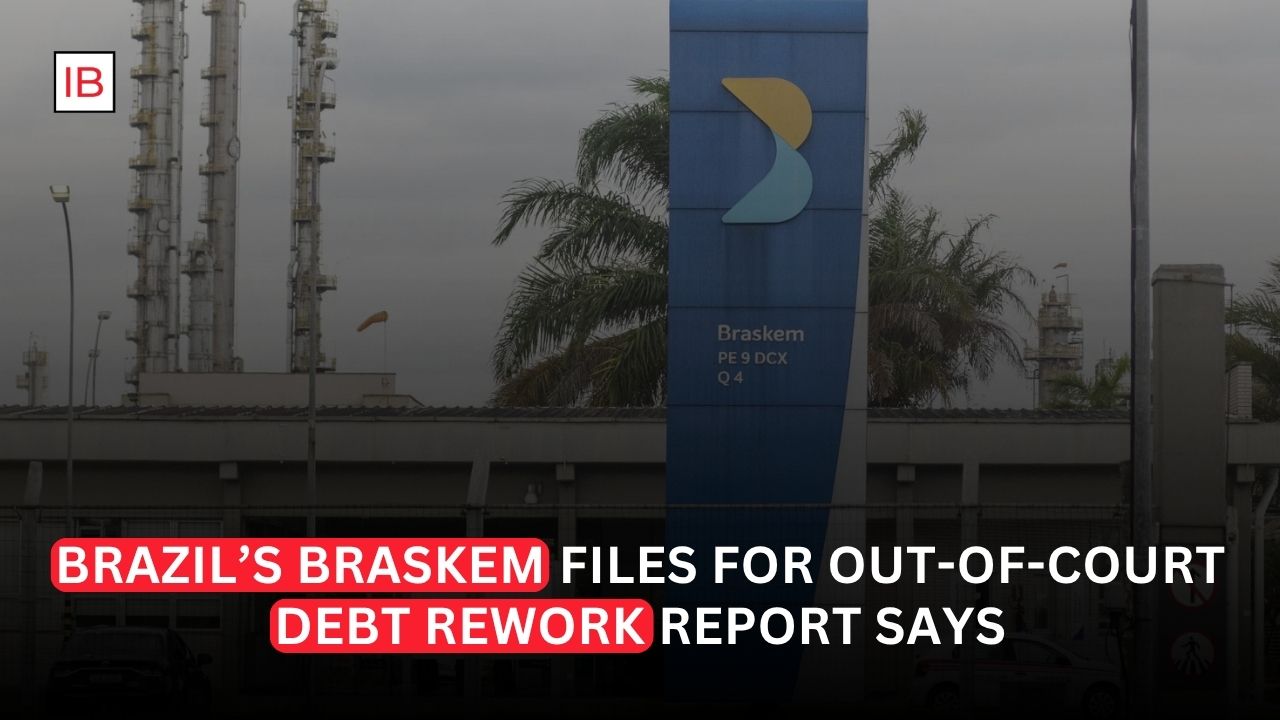
Brazilian petrochemical giant Braskem is moving toward an out-of-court restructuring of its debt as the company faces mounting financial pressure and the expiration of temporary protection from creditors. The development marks a critical moment for one of Brazil’s most strategically important industrial companies.
Braskem has been negotiating with creditors for months over how to reorganize its capital structure. The company has received non-binding proposals that include potential capital injections and the use of assets as collateral, but the final terms remain unresolved.
The immediate challenge is Braskem’s enormous debt burden. As of June 30, the company reported $10.4 billion in gross corporate debt, with adjusted net debt of about $9.5 billion and leverage of 6.74 times net debt to EBITDA.
Debt Restructuring Becomes Increasingly Urgent
Braskem’s financial difficulties are not new.
The company has been dealing with a prolonged downturn in the global petrochemical industry, where weak margins, excess capacity and intense international competition have made it difficult for producers to generate enough cash to comfortably service their debt.
The situation became more urgent in 2026.
Braskem obtained temporary legal protection from creditors in Brazil in June, giving the company time to negotiate a broader solution. The protection was scheduled to expire on Aug. 24, increasing pressure on the company to reach an agreement with creditors.
Instead of immediately entering a traditional court-supervised restructuring, Braskem has been exploring an out-of-court restructuring, which could allow the company and its creditors to negotiate directly.
What Is an Out-of-Court Restructuring?
An out-of-court restructuring generally allows a company to renegotiate its obligations with creditors without going through the full process of judicial bankruptcy protection.
For Braskem, that could provide several advantages.
Faster negotiations
A consensual restructuring can potentially be completed more quickly than a lengthy court process.
Greater flexibility
The company and creditors can negotiate customized terms covering debt maturities, interest payments, collateral and new financing.
Operational continuity
Braskem can continue operating while its financial structure is reorganized.
Lower disruption
Avoiding a full court process could reduce uncertainty for customers, suppliers and employees.
However, the approach depends on creditors reaching sufficient agreement.
If negotiations fail, Braskem could face substantially more complicated restructuring proceedings.
Braskem Has Already Received Creditor Proposals
The company has acknowledged receiving indicative and non-binding proposals from creditor groups.
Those proposals reportedly include two major possibilities:
- Capital injections
- Using company assets as collateral
Neither option has been finalized.
Braskem said it remains committed to finding a consensual and orderly solution that preserves business continuity.
The distinction between a proposal and an agreement is important.
Creditors may want stronger protections before accepting any restructuring.
Braskem, meanwhile, needs enough flexibility to preserve liquidity and continue investing in its operations.
That creates a difficult negotiation over who absorbs the financial pain.
The Company Is Heavily Leveraged
Braskem’s debt problem becomes clearer when compared with its earnings.
The company reported an impressive $1.043 billion in EBITDA during the second quarter of 2026, helped by stronger chemical and petrochemical spreads.
It also reported net income of approximately $664 million for the quarter.
On the surface, those figures suggest that Braskem is capable of generating significant earnings.
But the problem is that the second-quarter improvement was partly driven by temporary market conditions.
The company itself said international spreads improved because the Middle East conflict restricted feedstock supplies, particularly in Asia.
That means investors cannot simply assume that second-quarter profitability will continue at the same level.
The Petrochemical Industry Is Under Pressure
Braskem’s financial problems cannot be separated from the broader petrochemical cycle.
Petrochemical producers around the world have faced excess capacity and weak margins.
When supply grows faster than demand, producers have less pricing power.
That squeezes profitability.
Braskem has significant operations in Brazil, the United States and Europe, exposing it to several different markets but also making it vulnerable to global industry conditions.
The company has acknowledged that the sector is experiencing increased volatility, margin pressure and stronger global competition.
China Is an Important Part of the Problem
One of the biggest structural challenges facing global petrochemical producers is excess capacity in China.
Chinese producers have expanded capacity across numerous chemical products, putting pressure on international prices.
That affects producers such as Braskem even when their own operations are efficient.
Lower global prices can reduce margins throughout the industry.
For a highly leveraged company, weaker margins create a particularly serious problem because debt payments remain relatively fixed even when earnings fall.
Braskem’s Second Quarter Was Better
There is a counterargument to the restructuring story.
Braskem’s latest financial results were considerably stronger than earlier periods.
The company generated more than $1 billion of EBITDA and returned to a quarterly profit of about $664 million.
That improvement provides creditors with evidence that the underlying business remains valuable.
But it does not eliminate the debt problem.
The company’s net debt remains extremely large, and leverage is still high.
The restructuring is therefore less about whether Braskem has a viable business and more about whether its existing financial structure is sustainable.
New Ownership Could Change the Strategy
Braskem is also entering this restructuring process under a changing ownership and governance structure.
In June, Braskem announced a new phase involving IG4 Capital and Petrobras, with greater involvement from both groups.
The company appointed Hélcio Tokeshi as CEO and said the new structure would focus on financial reorganization, operational efficiency, liquidity preservation and improved cash generation.
That is significant.
IG4 brings restructuring experience, while Petrobras has deep technical and industrial knowledge of Brazil’s petrochemical sector.
The combination could give Braskem greater capacity to manage the restructuring.
Petrobras Has a Strategic Interest
Petrobras’ involvement matters because Braskem is not simply another Brazilian corporation.
The company is strategically important to Brazil’s chemical and industrial supply chains.
Petrochemicals are used in plastics, packaging, construction materials, automotive components and numerous other products.
A disorderly collapse would therefore create consequences beyond Braskem’s shareholders and bondholders.
Petrobras has an interest in preserving the company’s industrial capacity while ensuring that Braskem becomes financially sustainable.
That does not necessarily mean Petrobras will simply absorb Braskem’s debt.
Instead, the objective is likely to combine financial restructuring with operational improvement.
Braskem Idesa Adds Another Complication
Braskem’s financial problems also extend beyond Brazil.
Its Mexican subsidiary, Braskem Idesa, recently filed for Chapter 11 bankruptcy protection in the United States as part of a plan to restructure more than $920 million of debt.
The subsidiary’s senior debt is expected to be reduced from roughly $2.5 billion to $1.6 billion, while Braskem plans to invest $476 million to maintain majority control.
That restructuring demonstrates how broad the financial challenge has become.
Braskem is therefore dealing with restructuring issues across multiple jurisdictions.
Creditors Face a Difficult Choice
Braskem’s creditors also have competing interests.
They want to maximize recoveries.
But pushing the company too hard could damage the underlying business and reduce the value available to creditors.
That creates a classic restructuring dilemma.
A creditor might theoretically demand immediate repayment.
But if doing so forces Braskem into a disorderly bankruptcy, asset values could fall and recovery rates could be worse.
A negotiated restructuring may therefore offer creditors a better outcome even if it requires them to accept longer maturities, reduced interest or other concessions.
What Happens If Talks Fail?
The expiration of creditor protection makes the coming days critical.
If Braskem reaches sufficient agreement with creditors, an out-of-court restructuring could provide a path toward financial stability.
If negotiations fail, the company could face stronger creditor action and potentially a more formal judicial restructuring.
That would increase uncertainty for shareholders and bondholders.
It could also complicate the company’s relationships with suppliers, customers and other stakeholders.
Shareholders Face Significant Risk
For Braskem shareholders, the restructuring represents a major warning.
Debt restructuring often shifts value from existing equity holders toward creditors.
If creditors agree to extend maturities or inject new capital, they may demand new equity or other concessions.
That can dilute existing shareholders.
In a more severe restructuring, existing equity could potentially be left with very little value.
The company’s recent return to profitability does not eliminate this risk because the central problem remains the size and structure of its debt.
Operational Continuity Is the Priority
One positive factor is that Braskem has emphasized that its operations continue normally.
The company says the restructuring process is intended to preserve business continuity rather than disrupt manufacturing and commercial activities.
That distinction matters.
Braskem’s factories, employees and customer relationships are valuable assets.
A restructuring that preserves those operations gives creditors a much better chance of recovering their money than a sudden shutdown.
The Company Wants to Improve Cash Generation
Braskem’s management has identified cash generation as one of its key priorities.
That means reducing unnecessary spending, improving operational efficiency and focusing investment on projects that generate attractive returns.
The company also plans to accelerate its transformation program and capture identified efficiency opportunities.
The objective is straightforward:
Generate more cash, reduce financial pressure and create enough flexibility to manage the debt burden.
Conclusion
Braskem’s move toward an out-of-court debt restructuring represents one of the most important financial developments for Brazil’s petrochemical industry this year.
The company has a valuable industrial business, significant operations and strategic importance to Brazil. Its second-quarter results showed that the underlying business can still generate substantial earnings, with EBITDA reaching $1.043 billion.
But strong quarterly earnings do not solve a balance-sheet problem.
Braskem ended June with approximately $10.4 billion of gross debt and $9.5 billion of adjusted net debt, while leverage remained elevated.
The immediate objective is therefore to restructure the debt without damaging the operating business.
The involvement of Petrobras and IG4 could help provide both industrial expertise and restructuring experience. But creditors will ultimately determine how much financial flexibility Braskem receives.
The biggest risk is that negotiations fail and the company is pushed into a more disruptive court-supervised process.
The best-case scenario is very different: creditors accept a negotiated restructuring, Braskem preserves its operations, improves cash generation and benefits from a recovery in global petrochemical margins.
For now, the company is caught between those two outcomes.
Braskem does not appear to have an operational crisis. It has a balance-sheet crisis—and the success of its restructuring will determine whether its underlying business is strong enough to survive it.