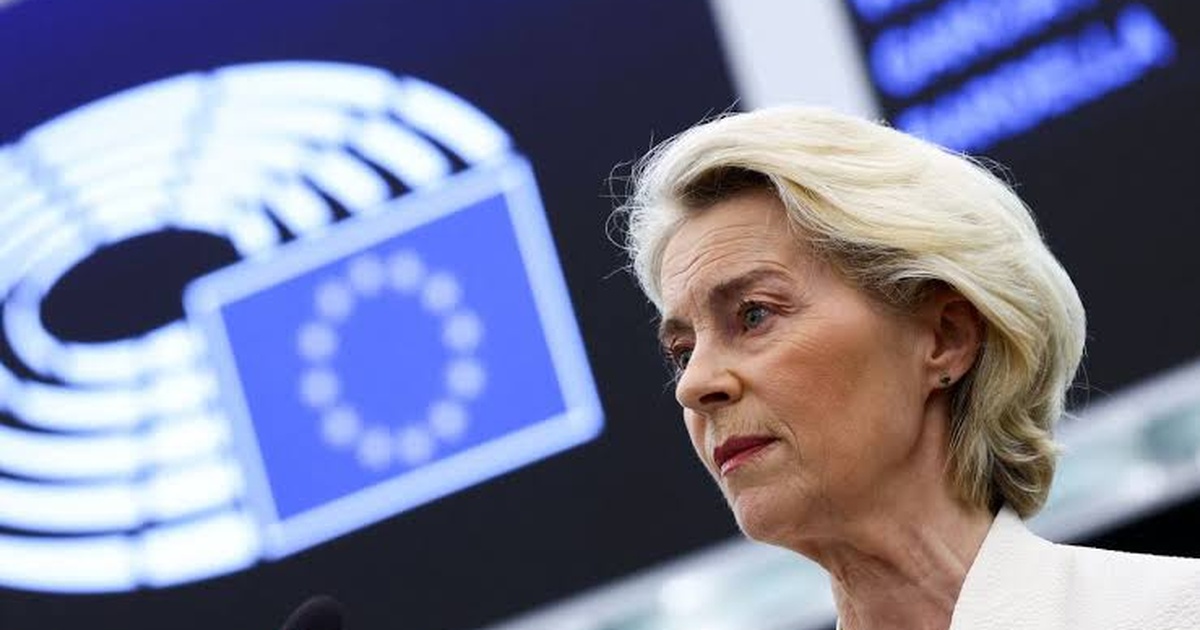
The formal establishment of a European Security Council has emerged as the centrepiece of Brussels’ strategy to counter mounting geopolitical aggression across the continent. Delivering her annual State of the European Union address to the European Parliament in Strasbourg, European Commission President Ursula von der Leyen warned that Europe is navigating an openly hostile global environment. Outlining the strategic necessity of a European Security Council, von der Leyen insisted that territorial security, critical infrastructure resilience, and industrial autonomy must be managed collectively by democratic allies rather than left vulnerable to foreign interference.
The geopolitical realignments proposed in Strasbourg will carry massive ramifications for cross-border capital allocations and regulatory architectures. Shifts in European military priorities and supply chain protections directly shape trade flows across the Atlantic. For institutional participants tracking how regulatory mandates impact European governance, following real-time reporting on politics provides essential context for navigating global policy developments.
Why the European Security Council Is Essential for Collective Defence
Addressing EU lawmakers, von der Leyen warned that a territorial war of aggression continues on the continent while secondary conflicts simmer nearby. A core objective of the European Security Council is to unite the European Union with close external allies, including Britain, Canada, Norway, and Ukraine. Rather than relying entirely on legacy consensus mechanisms, this forum would establish an immediate coordination platform to counter asymmetric sabotage, cyber warfare, and infrastructure interference.
A Counter-Hybrid Playbook and Coordinated Response
Under the operational blueprint, any participating state targeted by external aggression or grey-zone sabotage could activate an emergency consultation mechanism. This protocol would prompt all member states to convene instantly to deploy joint countermeasures and contain systemic escalation. “Europe needs its own counter-hybrid playbook,” von der Leyen stated, emphasizing that consensus cannot stall when state-sponsored cyberattacks threaten sovereign infrastructure.
These persistent cross-border disruptions impact fiscal planning, defense procurement budgets, and state deficits. Macroeconomic analysts can assess the wider structural fallout of these security investments through dedicated coverage of the economy.
The Transatlantic Pivot: Canada’s Role in the European Security Council Framework
A historic dimension of the Strasbourg address was the physical presence of Canadian Prime Minister Mark Carney, attending as a guest of honor. Von der Leyen proposed exploring an associate partnership status with Ottawa—a bespoke model of bilateral cooperation previously unseen under European Union governing treaties.
Defence Integration and Critical Mineral Alliances
While Carney emphasized that Canada seeks a unique security and economic alliance rather than full EU integration, the collaboration aims to align manufacturing, defence industrial bases, and Arctic governance. Joint procurement initiatives are poised to reduce strategic dependencies on unilateral suppliers while establishing reliable corridors for critical minerals and rare earths. By embedding Canadian natural resources into continental manufacturing, the European Security Council strategy directly reinforces Western energy and raw material independence.
Such structural defense alignments send ripple effects across institutional portfolios. As sovereign defence spending expands toward long-term domestic commitments, volatility surfaces across major financial markets, altering investor appetite for transatlantic defense assets.
Strategic Autonomy, Ukrainian Air Defence, and Industrial Scaling
The proposal for a European Security Council directly complements increased material assistance for Ukraine ahead of the winter season. While acknowledging the urgent requirement for US Patriot interceptor batteries, von der Leyen stressed that Europe must develop an indigenous, modular missile-defence architecture in conjunction with Ukrainian industrial engineers to eliminate reliance on external sole suppliers.
This focus on sovereign technological dominance extends directly to digital assets and computational autonomy. As central banks review capital stability amid digital modernization, institutional actors continually evaluate whether decentralized settlement frameworks and crypto networks will play a structural role during heightened cross-border capital controls.
Rebalancing Trade Deficits, Climate Insurance, and Artificial Intelligence
Beyond military coordination, the strategic doctrine underpinning the European Security Council addresses structural economic vulnerabilities, including a trade deficit in goods with China that reached €1 billion per day last year. Brussels plans to establish a dedicated raw materials corporation to purchase and stockpile essential inputs, protecting domestic manufacturers from supply chain extortion.
Industrial recalibrations directly influence equity valuations, particularly among heavy industrial conglomerates and technology stocks exposed to changing import tariffs and critical mineral restrictions.
Climate Risk Backstops and Algorithmic Protections
To mitigate economic shocks from persistent droughts and wildfires, von der Leyen introduced plans for a climate insurance alliance backed by European resilience agencies. With private policies currently covering only 25 percent of catastrophic weather losses across the continent, public budgets have historically borne the cost as insurers of last resort.
Simultaneously, the European Commission is tightening regulations governing advanced digital technology, summoning frontier artificial intelligence developers for mandatory risk assessments. The initiative includes comprehensive child protection measures aimed at restricting minors under 13 from social platforms, algorithmic chatbots, and unmonitored online ecosystems.
Ultimately, the proposed European Security Council establishes a decisive pivot from decentralized diplomacy toward structured, militarized interdependence. Whether Brussels and its transatlantic partners can operationalize this framework will dictate Europe’s geopolitical leverage over the coming decade.
Disclaimer:
The information provided in this article is for educational, journalistic, and informational purposes only and does not constitute legal, political, financial, or investment advice.