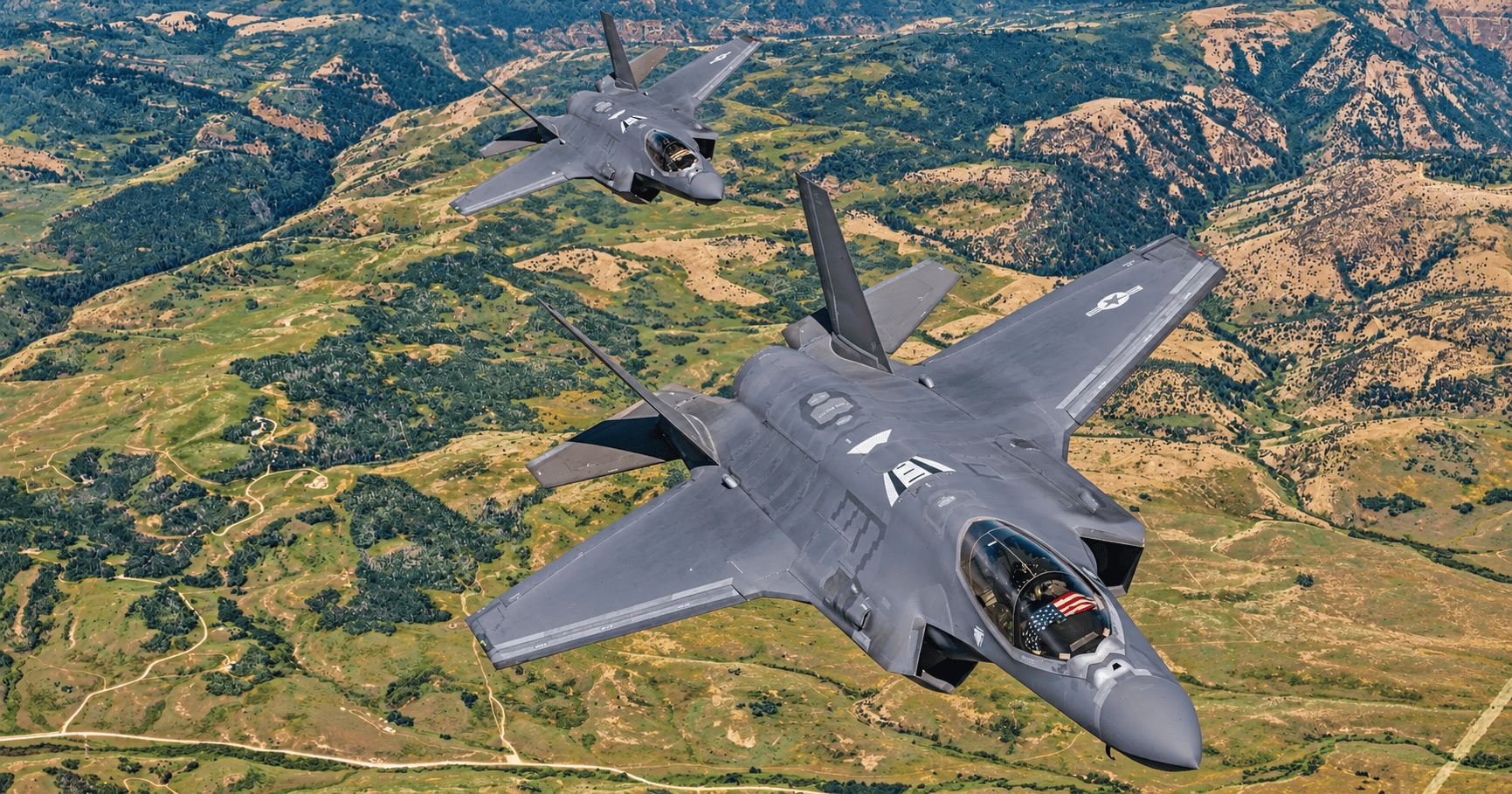
A monumental strategic recalibration in European military procurement unfolded in Lisbon as the Portugal F-35 fighter jet replacement program officially reopened serious consideration of the Lockheed Martin F-35A Lightning II. Speaking alongside United States Secretary of State Marco Rubio, Portuguese Foreign Minister Paulo Rangel confirmed that the government is evaluating the American fifth-generation stealth platform alongside three leading continental competitors: the Eurofighter Typhoon, Dassault Rafale, and Saab Gripen E. The high-stakes procurement competition aims to replace Lisbon’s aging fleet of 28 upgraded F-16M Fighting Falcons under a planned multibillion-euro capital commitment valued at approximately €5 billion ($5.5 billion).
The sudden reopening of the transatlantic defense tender represents a significant diplomatic shift after Portuguese defense leaders expressed reservations regarding long-term United States defense commitments in early 2025. With national defense expenditures expanding from 1.6% of gross domestic product (GDP) to meet statutory 2% targets, the upcoming Military Programming Law scheduled for legislative enactment before December 31, 2026 will formally define the financial and delivery structure of the procurement. For sovereign debt specialists, aerospace equity researchers, and defense private equity desks tracking industrial spending across Europe, comprehensive European financial news provides critical perspective on international defense budgets, industrial offset agreements, and NATO force modernization.
The €5B Fleet Modernization: Replacing the Monte Real F-16M Fleet
The structural baseline driving the Portugal F-35 fighter jet replacement requirement is the operational exhaustion of Lisbon’s legacy combat inventory. Operating out of Monte Real Air Base (BA5), the Portuguese Air Force currently maintains 28 upgraded F-16M aircraft—with recent operational audits counting 25 active airframes comprising 21 single-seat F-16AMs and four twin-seat F-16BMs:
- The Procurement Scope: Lisbon plans to acquire between 27 and 28 advanced multirole fighters, maintaining nominal squadron numbers while upgrading technical capability.
- Capital Outlay: The estimated €5 billion programmatic budget implies an expenditure of approximately €178.6 million per aircraft for 28 jets, encompassing airframes, mission systems, weapons integration, pilot transition, and specialized ground infrastructure.
- Alliance Responsibilities: The Monte Real squadron sustains domestic Quick Reaction Alert (QRA) air sovereignty while deploying expeditionary detachments to support North Atlantic Treaty Organization Baltic Air Policing rotations across Lithuania, Poland, Romania, and Iceland.
- Fleet Attrition Realities: Replacing 28 legacy jets with an identical number represents only 62.2% of Portugal’s original 45-aircraft Peace Atlantis inventory, requiring careful fleet management to prevent readiness shortfalls during pilot conversion.
Defense capital budgets, sovereign military appropriations, and sovereign bond issuances directly shape national debt sustainability. Institutional fixed-income analysts evaluating European public defense expenditures track fiscal developments via the InvestorBytes financial portal.
The F-35A Value Proposition: Sensor Fusion and Stealth Dominance
The primary military rationale anchoring the Portugal F-35 fighter jet replacement campaign is the leap in survivability delivered by fifth-generation stealth technology. Emphasizing commonality across transatlantic forces during his Lisbon delegation, US Secretary of State Marco Rubio highlighted the operational interoperability of operating the same platform as frontline allied air forces:
- Low-Observable Penetration: The F-35A combines internal weapons bays and low radar cross-section shaping to operate within contested anti-access/area-denial (A2/AD) airspace.
- Integrated Sensor Fusion: Equipped with the AN/APG-81 Active Electronically Scanned Array (AESA) radar, distributed aperture infrared sensors, and advanced electronic warfare suites, the platform functions as an aerial intelligence node.
- Pricing Dynamics: With estimated Lot 18 and 19 flyaway costs hovering near $92 million per airframe, 28 F-35A jets represent approximately $2.58 billion in base hardware expenses, with the Pratt & Whitney F135 engine accounting for $20.4 million per unit before sovereign maintenance packages are calculated.
- Sovereignty Reassurances: Lockheed Martin executives formally addressed Portuguese concerns regarding software controls, rejecting claims of remote operational kill-switches while acknowledging that core mission code remains managed through centralized multinational architecture.
Aerospace supply chains, sovereign weapon licensing, and cross-border defense acquisitions remain critical drivers of industrial cash flows. Readers tracking transatlantic defense contracts follow regular updates via InvestorBytes macro reports.
Cabinet directives and national military programming legislation continue to shape European industrial policy, an area examined in European policy updates.
European Contenders: Typhoon, Rafale, and Gripen E Industrial Offers
The re-evaluation shaping the Portugal F-35 fighter jet replacement race has prompted European defense conglomerates to assemble competitive industrial proposals designed to keep defense capital within the European single market:
- Eurofighter Typhoon: Airbus confirmed plans to submit an unsolicited bid combining financing arrangements and deep industrial collaboration, promoting the Typhoon’s twin EJ200 engines, Mach 2 speed, and Captor-E repositionable AESA radar.
- Dassault Rafale: France’s Dassault Aviation formally submitted an offer in July 2026 centered on the twin-engine Rafale, highlighting combat-proven SPECTRA electronic warfare suites and autonomous weapons certification without third-country export vetoes.
- Saab Gripen E and OGMA: Saab’s single-engine Gripen E provides low operating costs and high operational readiness. The Swedish proposal includes aerostructures manufacturing at OGMA in Alverca controlled by Embraer linking Portuguese facilities directly to global Gripen supply chains.
Corporate defense executives and aerospace finance directors assessing military contract margins monitor procurement developments on the InvestorBytes homepage.
The complex interaction between domestic defense offsets, aerospace employment, and sovereign procurement budgets is reviewed in InvestorBytes corporate analysis.
Military Telematics, Fleet Logistics, and High-Sortie Maintenance
Successfully executing the operational transition of the Portugal F-35 fighter jet replacement program requires sophisticated logistics telematics. Contemporary combat wings deploy predictive maintenance algorithms, automated spare-parts tracking, and secure cloud diagnostics to maintain high mission-capable rates. Technology specialists tracking defense IT infrastructure and algorithmic avionics systems follow updates through InvestorBytes digital finance.
Concurrently, multinational defense consortia and international banking syndicates managing multi-currency procurement contracts face currency fluctuation risks and payment milestones. Sovereign defense procurement agencies are deploying multi-currency hedging platforms and automated milestone-clearing rails to handle multi-year installment disbursements, an operational shift documented in international capital analyses.
Shifting sovereign capital distributions and defense expenditure mandates continue to influence liquidity across aerospace and industrial desks tracked in continental market coverage.
Capital Market Implications for European Aerospace Equities
The competitive bidding driving the Portugal F-35 fighter jet replacement process provides key valuation signals for institutional aerospace equity allocators. An award favoring the F-35 reinforces Lockheed Martin’s market leadership across NATO members, which already account for substantial transatlantic defense revenues. Conversely, an upset selection of the Eurofighter, Rafale, or Gripen E would deliver major multi-year backlog expansion for European aerospace champions including Airbus, BAE Systems, Leonardo, Dassault, and Saab. Institutional equity research desks continuously evaluate program backlogs, aftermarket sustainment cash flows, and operating margins through InvestorBytes equity intelligence.
Corporate treasurers, sovereign debt underwriters, and defense sector equity portfolio managers monitor national defense spending bills via the InvestorBytes publication.
As Portuguese defense planners finalize the upcoming Military Programming Law, the Portugal F-35 fighter jet replacement evaluation highlights the complex trade-off between fifth-generation stealth technology and European industrial sovereignty. With four proven aircraft competing for Lisbon’s €5 billion fleet investment, the ultimate decision will define Portugal’s air defense capabilities and industrial alliances for decades to come.
Disclaimer:
The information provided in this article is for educational, journalistic, and informational purposes only and does not constitute financial, investment, legal, or defense procurement advice.