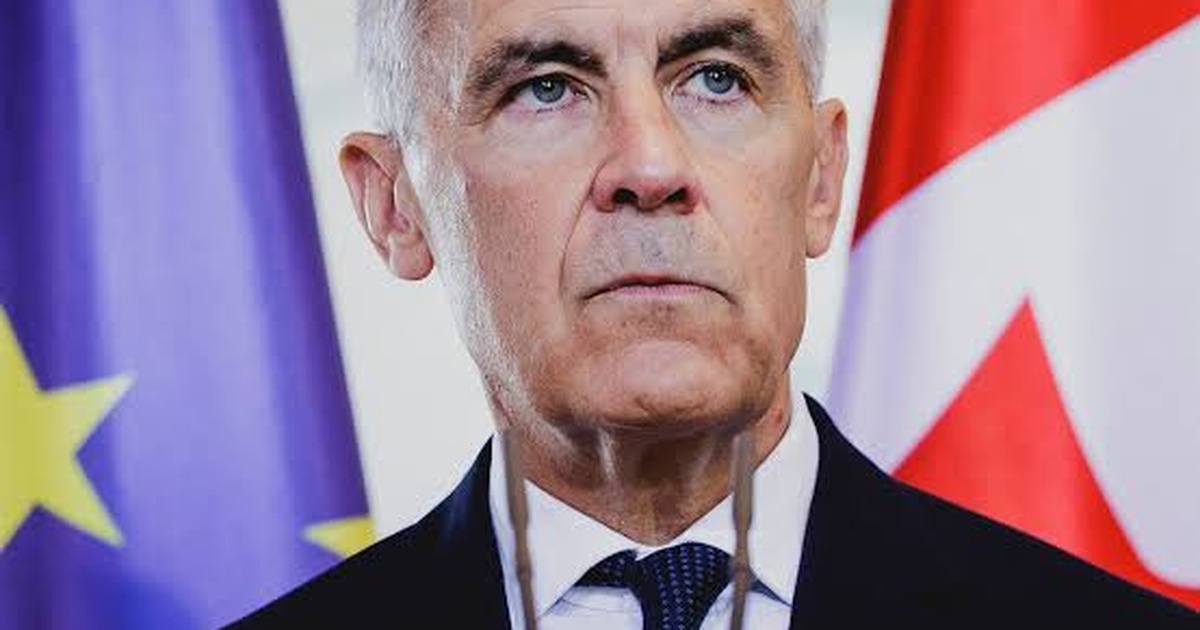
The growing diplomatic momentum toward Canada EU associate membership has triggered sharp warnings from veteran economic commentators who caution that pivoting toward Brussels may introduce more liabilities than benefits. Writing on the heels of Canadian Prime Minister Mark Carney’s address to the European Parliament in Strasbourg, financial analyst William Watson argues that pursuing Canada EU associate membership risks entanglement in European regulatory sclerosis while needlessly provoking retaliatory confrontation with the United States. While European Commission President Ursula von der Leyen celebrated the prospect of opening the bloc’s doors to Ottawa, domestic skeptics contend that a truly sovereign Canada would maintain its strategic independence rather than seeking external institutional shelters.
The geopolitical dynamics shaping transatlantic commerce carry direct implications for multinational supply chains, sovereign debt issuance, and energy transition mandates. Shifting away from regional integration toward intercontinental treaties introduces unpredictable trade friction and altered capital allocations. For institutional portfolio managers and enterprise planners analyzing cross-border governance shifts, continuous coverage of politics offers indispensable perspective on shifting legislative priorities.
The Ratification Trap: Why CETA Exposes the Limits of EU Expansion
The core structural critique leveled against Canada EU associate membership centers on Brussels’ notoriously slow legislative machinery. Proponents herald an expanded “Alliance for the Future,” yet the history of the Comprehensive Economic and Trade Agreement (CETA) illustrates the reality of European ratification bottlenecks:
- Protracted Timelines: Bilateral discussions for CETA originated in 2007, formal negotiations commenced in 2009, and the treaty was officially signed in 2016.
- Persistent Member State Vetoes: A decade after its initial signature, 10 out of 27 European Union member states have still failed to ratify the treaty due to localized domestic disputes.
- Unrealistic Expectations: Expanding beyond CETA into deep regulatory harmonization could take decades of diplomatic wrangling across member state parliaments.
As Watson notes, if herd-like consensus among domestic provinces is considered demanding, achieving unanimous approval across 27 distinct European capitals on a bespoke association framework represents an even steeper uphill climb.
Such systemic delays directly affect commercial execution. As long-term trade accords stall in diplomatic committee rooms, macroeconomic growth across primary industrial sectors slows. Observers assessing these structural hurdles can track fiscal fallout through comprehensive reporting on the broader economy.
Symbolic Eye-Poking: The Cost of Antagonizing Washington
Skeptics emphasize that if Canada EU associate membership serves merely as symbolic posturing, it carries immense downside. Framing closer ties with Europe as a counterweight to United States President Donald Trump’s protectionist rhetoric risks triggering punitive countermeasures against Canadian exporters.
While von der Leyen framed the alliance as a partnership rooted in shared values where power does not belong to “the loudest,” the diplomatic subtext directly targets the White House. Retaliatory measures from Washington could hit bilateral commerce hard, especially given that roughly 70% of Canadian exports flow across the southern border. Rather than adhering to a patient strategy regarding the Canada-United States-Mexico Agreement (CUSMA), a premature rush toward Brussels risks undermining long-term stability with Canada’s primary trading partner.
When trade rhetoric escalates into punitive tariff disputes, cross-border equity indices and sovereign yields react rapidly. Market analysts track these sudden institutional repricing events through dedicated analysis across financial markets.
Inheriting Eurosclerosis and Regulatory Burdens
If Canada EU associate membership develops into an authentic treaty framework, critics caution that Ottawa will inevitably import European bureaucratic overreach. Von der Leyen outlined ambitious plans to coordinate policy across artificial intelligence, quantum computing, cybersecurity, defense industrial integration, and battery supply chains a sector in which Canada has already deployed over $54 billion in state subsidies.
However, historical precedent suggests that access to the European single market cannot be decoupled from expansive European regulatory directives. Drawing comparisons to Margaret Thatcher’s famous 1988 Bruges address warning against a dominant European super-state, Watson suggests that binding Canadian commerce to European standards forfeits national agility.
These systemic regulatory burdens mirror broader corporate trends toward decentralized asset protection. As institutional treasuries confront tightening state controls and currency constraints, capital allocators increasingly evaluate non-traditional reserves and crypto networks to preserve cross-border balance sheet liquidity.
Commercial Realities for Export-Reliant Enterprises
A shift toward Canada EU associate membership carries tangible consequences for international capital allocations and industrial manufacturing. Imposing dual regulatory compliance frameworks complicates supply chain operations for domestic aerospace, natural resource, and automotive stocks attempting to serve both North American and European buyers.
As documented by the European Commission Directorate-General for Trade, deepening bilateral ties requires extensive harmonization across labor, environmental, and state-aid rules. For Canadian enterprises accustomed to flexible continental supply chains, the administrative cost of alignment may outweigh the theoretical market access.
The ongoing debate surrounding Canada EU associate membership poses a fundamental sovereign question. Rather than exchanging North American proximity for European administrative oversight, critics maintain that authentic national strength requires domestic productivity reforms and direct commercial realism over foreign entanglement.
Disclaimer:
The information provided in this article is for educational, journalistic, and informational purposes only and does not constitute legal, trade policy, financial, or investment advice.