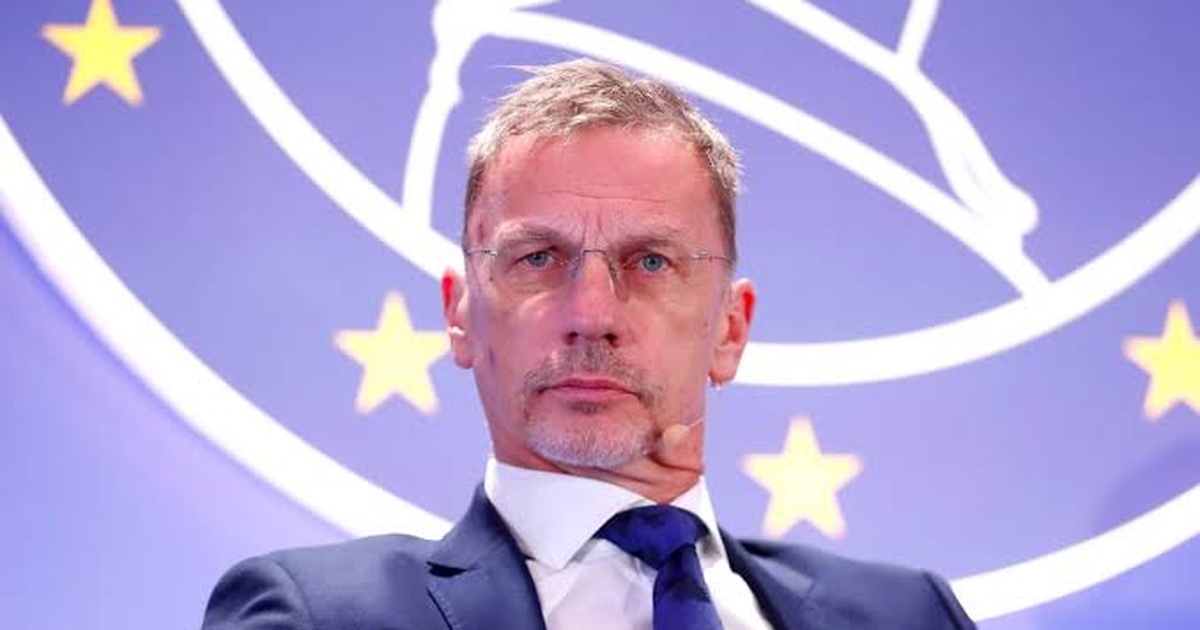
The urgent necessity for European banks scale and deeper capital markets has become the central focus of financial leadership across the European Union. Meeting in Dublin, EU finance ministers and central bank governors reviewed a landmark European Commission report urging member states to dismantle protectionist barriers to cross-border consolidation and halt domestic political interference in institutional bank mergers. European Central Bank (ECB) Vice President Boris Vujčić warned that without significant consolidation, the continent’s commercial institutions will continue losing ground to Wall Street powerhouses.
This financial restructuring carries major consequences for corporate lending, sovereign debt absorption, and corporate tech underwriting across the European Union. In an increasingly polarized global economy, regional fragmentation restricts financial depth and suppresses innovation. For institutional allocators, treasury managers, and financial executives evaluating how institutional banking shifts impact monetary stability, continuous reporting on the broader economy provides essential context on fiscal resilience.
Why European Banks Scale and Deeper Capital Markets Are Essential to Rival the US
Addressing financial journalists in Dublin, Vujčić acknowledged that while EU lenders remain robust in core balance-sheet fundamentals—including liquidity coverage, Tier 1 capitalization, profitability, and operational efficiency they face deep disadvantages in wholesale market activities. The strategic justification for pursuing European banks scale and deeper capital markets lies in modern capital market plumbing, specifically institutional trading, debt syndication, and clearing operations.
“If European banks want to compete directly with large US banks in that area, they need to be able to operate on a much larger scale in a deeper capital market,” Vujčić stated, emphasizing that “scale really matters” in secondary market liquidity and automated post-trade infrastructure.
The 2.5x Tech Spending Deficit in Artificial Intelligence and Cloud Systems
Eurozone finance ministers’ chair Kyriakos Pierrakakis underscored the competitive divide separating European lenders from American counterparts:
- IT Investment Deficit: Top US banks allocate more than 2.5 times as much capital to information technology relative to their balance-sheet assets compared to European lenders.
- Next-Gen Capabilities: This chronic expenditure gap weakens Europe’s standing in mission-critical technologies, including generative artificial intelligence, real-time digital payment rails, and enterprise cybersecurity systems.
- Global Champions: Pierrakakis stressed that the continent requires pan-European banking champions capable of deploying billions into software modernization and enterprise credit.
To examine how automated computing frameworks and machine-learning risk engines are reshaping modern financial infrastructure, financial analysts follow technological advances through specialized coverage of tech.
Political Interference: The Commerzbank-UniCredit Precedent
The ongoing push for European banks scale and deeper capital markets faces deep political resistance within national capitals. Cross-border integration suffered a prominent setback when the German government actively intervened to block Italian banking giant UniCredit from acquiring Frankfurt-based Commerzbank. Despite UniCredit initiating its commercial pursuit in September 2024, Berlin’s vocal opposition highlighted the persistent nationalist resistance hampering single-market integration.
The European Commission’s latest report explicitly warns that protectionist vetoes prolong market division and prevent domestic lenders from attaining continental scale. Corporate leaders point out that differing corporate tax regimes, local insolvency laws, and discrete regulatory regimes create administrative friction that inflates overhead costs and diminishes capital efficiency.
Legislative reforms, antitrust mandates, and national treasury directives will determine whether cross-border mergers can proceed. Analysts assessing how public policy and ministerial decisions shape European single-market integration monitor legislative developments via politics.
Pushing Back on Deregulation: Banking Union vs. Share Buybacks
Vujčić strongly dismissed appeals from commercial banking executives lobbying for relaxed capital reserve requirements. The ECB Vice President cautioned that diluting prudential capital buffers would not necessarily stimulate domestic business lending, warning that surplus capital would likely be redirected into corporate share buybacks rather than productive commercial underwriting.
Instead, the ECB maintains that policymakers must finalize the long-delayed Banking Union and complete the Savings and Investments Union. Unifying European depositor protections and standardizing capital markets would pool roughly €33 trillion in retail deposits, allowing European capital to fund domestic enterprises directly rather than flowing across the Atlantic to Wall Street asset managers.
This persistent fragmentation has also accelerated institutional interest in modern liquidity rails. Corporate treasuries seeking frictionless cross-border settlement and real-time collateral verification increasingly explore decentralized clearing protocols and crypto rails to mitigate currency friction and administrative delays.
Market Valuation Realities for Listed European Financial Equities
The ongoing debate over European banks scale and deeper capital markets has an immediate impact on institutional equity valuations. Without genuine consolidation, European lenders trade at persistent price-to-book discounts compared to American rivals like JPMorgan Chase and Morgan Stanley. Asset managers track these structural shifts and net interest margin dynamics across publicly traded financial and commercial stocks.
According to formal documentation from the European Central Bank Banking Supervision, cross-border mergers are legally permitted and operationally encouraged under single-rulebook supervisory guidelines, provided acquiring institutions satisfy strict stress-test standards.
Whether Brussels and Dublin can overcome national resistance to advance European banks scale and deeper capital markets will determine the future of Europe’s financial architecture. By addressing the 2.5x technology deficit and eliminating domestic political vetoes, the EU can transition its banking sector from defensive regional lending to global competitiveness.
Disclaimer:
The information provided in this article is for educational, journalistic, and informational purposes only and does not constitute banking, financial, legal, or investment advice.