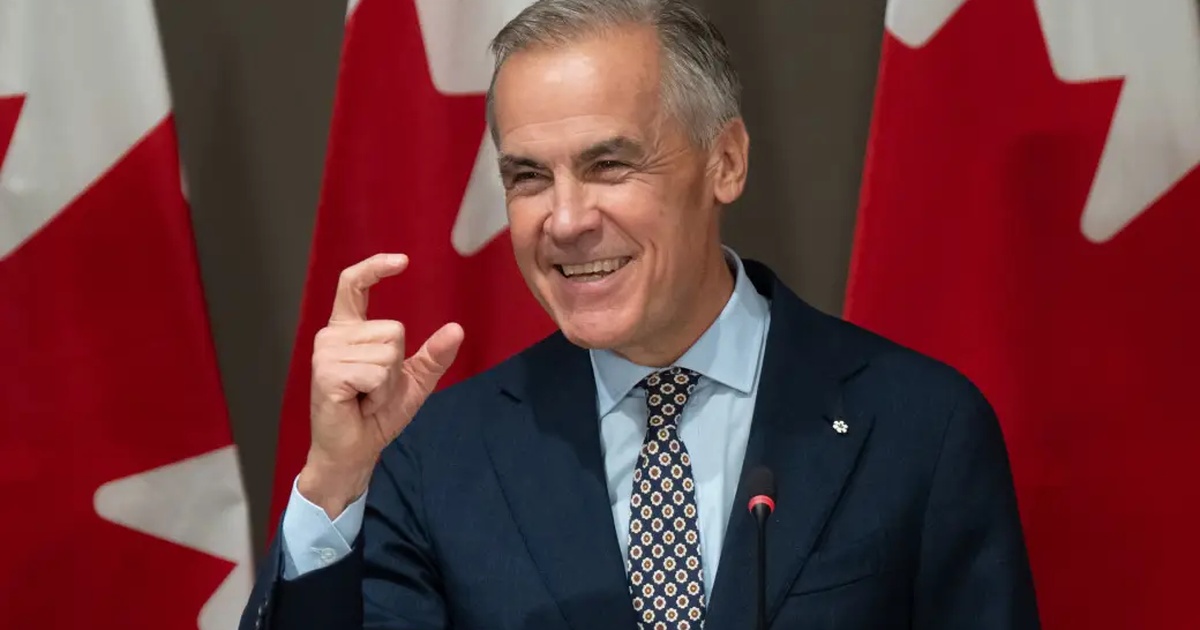
The fiscal mechanics governing the proposed Canada EU budget plan have been clarified as Ottawa outlines the exact parameters of its unprecedented partnership with Brussels. Speaking from Strasbourg ahead of his official swearing-in, Canada’s incoming Ambassador to the European Union, Jonathan Wilkinson, explicitly confirmed that Canada will not make direct, across-the-board contributions to the 27-nation bloc’s central treasury. Addressing domestic fiscal concerns, Wilkinson emphasized that the proposed “unique alliance” championed by Prime Minister Mark Carney does not constitute full European Union membership, but rather a targeted framework built on strategic reciprocity.
This diplomatic clarification arrives at a pivotal moment for transatlantic relations. As governments seek to insulate their domestic industries from protectionist shifts in Washington, defining the balance between sovereign fiscal independence and multilateral integration is essential. For institutional analysts, international corporate counsel, and trade strategists assessing how evolving diplomatic pacts alter continental governance, regular reporting on politics offers essential insight into emerging legislative frameworks.
Why the Canada EU Budget Plan Rejects Direct Central Contributions
The budgetary position outlined under the Canada EU budget plan establishes a clear boundary between full institutional accession and functional partnership. “We would be very selective,” Wilkinson stated during an interview with CBC’s The House. “This is not across the board. It’s certainly not membership in the European Union”.
Selective Co-Financing: SAFE Defence and Horizon Innovation
Rather than contributing unconditionally to the EU’s multi-year financial framework, Ottawa intends to deploy capital exclusively into opt-in initiatives that yield clear strategic returns:
- Security Action for Europe (SAFE): Canada stands as the sole non-European sovereign state integrated into the EU’s flagship SAFE defense program, which structures low-interest loans and joint defense procurement for allied defense capabilities.
- Next-Generation Horizon Integration: Ottawa aims to transition its partial access to Horizon Europe which concludes at the end of 2027 into full participation in the subsequent multi-billion-euro scientific research program.
- Critical Minerals Corridors: Securing direct European industrial capital into Canadian extraction projects for rare earths, lithium, and nickel to establish resilient supply chains.
- Sovereign Non-Agricultural Trade: Developing frictionless, paperless digital trade for goods and services while evaluating mutual market access across international financial services.
Wilkinson emphasized that these target sectors represent vital strategic capabilities where modern democracies require guaranteed access to maintain sovereign decision-making authority. Macroeconomic observers tracking how targeted public capital deployments influence trade balances can monitor fiscal indicators through comprehensive coverage of the broader economy.
Migration Sovereignty and European Political Friction
Addressing political pushback from domestic opposition parties in Ottawa, Wilkinson dismissed concerns that the Canada EU budget plan would force Canada to adopt European asylum directives or open-border agreements. “Are we talking about mass ability to move across the two areas? No,” Wilkinson stated, noting that Canada’s distinct geographical realities insulate it from European irregular migration issues. “Canada will retain fully its sovereignty”.
European politicians have voiced mixed perspectives regarding the structure of the alliance. Thomas Byrne, Ireland’s Minister of State for European Affairs and Defence, supported the initiative, pointing out that shifting trade postures in the United States necessitate alternative trade conduits between equal transatlantic partners.
Conversely, French Member of the European Parliament Arash Saeidi expressed caution, warning that creating complex treaty frameworks risks dragging both sides into a ten-year bureaucratic impasse. Saeidi argued that Brussels and Ottawa should prioritize immediate bilateral cooperation across academic research, digital connectivity, and diplomatic coordination rather than orchestrating protracted constitutional negotiations.
As sovereign treasuries adjust capital commitments to these strategic frameworks, shifting cross-border risk premiums ripple across international debt and equity holdings. Market analysts monitor these capital adjustments through dedicated updates on financial markets.
The Trump Factor and Transatlantic Financial Leverage
The implementation of the Canada EU budget plan faces significant opposition from the White House. United States President Donald Trump labeled closer Canadian-European integration laughable and threatened severe trade tariffs against European exports if Washington deems the agreement an adversarial move.
However, trade policy experts note that North American and European economic leverage is deeply intertwined with the domestic American economy. Fen Osler Hampson, co-chair of the Expert Group on Canada-U.S. Relations, observed that European entities and Canadian institutional funds represent massive holders of United States Treasury debt and Wall Street equities. Consequently, executing sweeping trade embargos against historic trading partners would inflict substantial self-harm on American capital markets.
In response to potential tariff barriers and clearing restrictions, multinational corporate treasuries increasingly examine non-traditional settlement networks. Institutional allocators actively evaluate how permissionless liquidity rails and crypto networks can safeguard operational cash reserves against geopolitical friction and arbitrary capital controls.
Enterprise Implications for Listed Equities
The selective investment strategy under the Canada EU budget plan will directly influence research and development pipelines and capital goods providers. By participating in advanced computing initiatives, quantum encryption research, and joint artificial intelligence safety protocols, Canadian and European technology firms gain expanded cross-border procurement channels. Equity analysts continuously assess these collaborative milestones across multinational aerospace, defense, and technology stocks.
According to formal documentation from the European Commission Official Register, participation by third countries in dedicated EU funding programs requires strict cost-allocation auditing to prevent cross-subsidization. Mark Carney confirmed that any finalized treaty text will be submitted to the Canadian Parliament for formal debate and a binding vote.
The forthcoming Canada-EU summit in Montreal will set the baseline for the Canada EU budget plan. By demonstrating that middle powers can construct shared defense umbrellas and technology alliances without relinquishing budgetary sovereignty, Ottawa and Brussels are outlining a new paradigm for twenty-first-century multilateral statecraft.
Disclaimer:
The information provided in this article is for educational, journalistic, and informational purposes only and does not constitute financial, legal, trade policy, or investment advice.