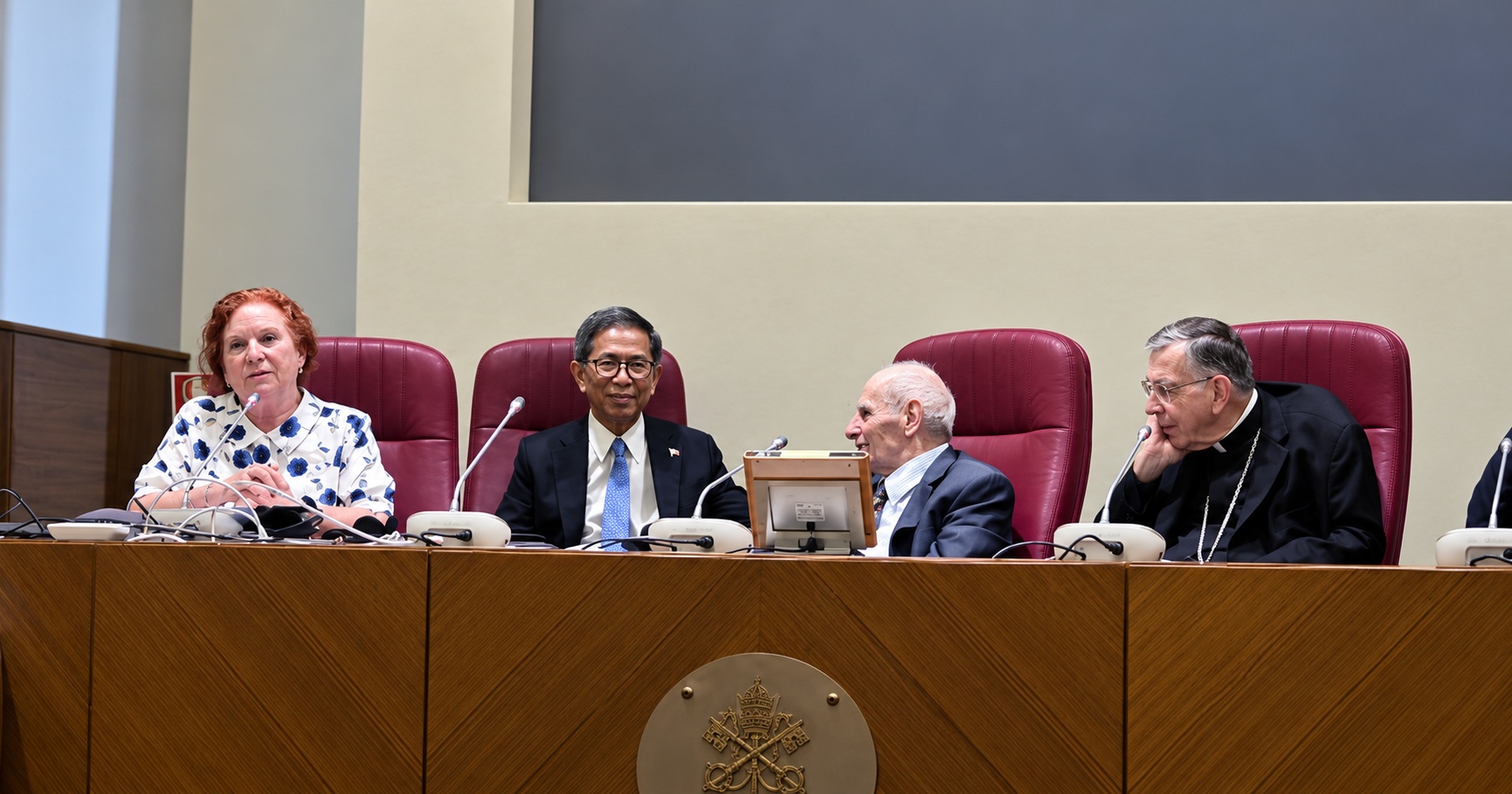
A profound diplomatic and spiritual imperative was articulated in Rome as the prefect of the Holy See’s primary ecumenical dicastery declared that Churches peace responsibility Europe must serve as the foundation for broader social and political stability across the continent. Delivering keynote remarks at the high-level “Religions and Diplomacy” conference hosted at Palazzo San Calisto to commemorate the 30th anniversary of the International Association Political Charity, Cardinal Kurt Koch addressed ambassadors, religious dignitaries, and international delegates. The Swiss prelate, who directs the Dicastery for Promoting Christian Unity, warned that religious institutions cannot credibly advocate for international conflict resolution while remaining divided by domestic polarization and doctrinal discord.
The cardinal’s intervention arrives at a pivotal juncture for European institutional governance, as conventional armed conflict along the continent’s eastern perimeter, demographic realignments, and accelerated secularization challenge post-war legal frameworks. When diplomatic mechanisms struggle to resolve military standoffs and ideological fractures, the demand for coherent moral frameworks within public discourse intensifies. For diplomatic analysts, institutional strategists, and international policy researchers examining how religious heritage intersects with contemporary statecraft, comprehensive newsroom coverage on politics provides essential context on European sovereign governance.
Healing Internal Fractures: The Precondition for Public Diplomacy
The core thesis defining the Churches peace responsibility Europe mandate is that Christian communities must model reconciliation internally before attempting to heal external civil divisions. Speaking to Vatican News on the sidelines of the three-day summit, Cardinal Koch stressed that religious communities cannot offer effective diplomatic contributions if they mirror the factionalism gripping secular politics.
“First, we must rediscover peace within the Church and among all the Churches,” Cardinal Koch explained. “Ecumenism can help us live in balance amid diversity.”
The prelate noted that contemporary ecumenical dialogue must directly confront existing misunderstandings and polarizations. Citing the Augustinian motto invoked by Pope Leo XIV In illo uno unum (“In that one, one”) Cardinal Koch framed genuine ecumenism as a functional template for pluralistic civil coexistence, demonstrating that diversity of tradition need not obstruct the shared pursuit of institutional harmony and peace.
The deterioration of social cohesion and communal trust carries direct consequences for civic engagement, regional non-profit capacity, and local economic resilience. Economists evaluating how shifting social stability and institutional participation shape long-term consumer confidence and regional productivity track structural indicators through dedicated reporting on the wider economy.
Beyond Market Mechanics: Reclaiming Europe’s Cultural Foundations
A central component of the Churches peace responsibility Europe address challenged the perception that the European project is defined exclusively by statutory directives and financial integration. While acknowledging the European Union, the single market, and the euro as historic achievements forged to prevent recurring continental wars, Cardinal Koch insisted that Europe’s identity extends beyond its economic and regulatory architecture:
- The Metaphor of Three Hills: The prelate referenced the classic formulation of European heritage: Golgotha in Jerusalem (biblical faith and ethics), the Acropolis in Athens (philosophical inquiry and democratic reason), and the Capitoline Hill in Rome (legal tradition and civic governance), echoing Pope Benedict XVI’s historic 2011 address to the German Bundestag.
- The Rational Pursuit of Truth: Cardinal Koch observed that democracy requires objective criteria of justice that do not rely solely on transient majority rule, a principle inherited through the synthesis of Christian revelation and Greek philosophical inquiry.
- Separation of Powers: The Roman legal legacy enabled dialogue between religious faith and political authority, laying the groundwork for the modern distinction between Church and State that safeguards individual freedom of conscience.
The prelate emphasized that acknowledging the Churches peace responsibility Europe dynamic is not an effort to demand ecclesiastical privileges within the European Union, but an invitation to assess whether continental institutions can remain resilient if they abandon their civilizational roots.
Shifting ideological boundaries, state regulatory policies, and institutional trust metrics directly influence macroeconomic sentiment, foreign direct investment, and trade stability across European markets.
Technological Acceleration, Ethics, and Programmable Systems
The diplomatic dialogue surrounding Churches peace responsibility Europe coincided with presentations examining how rapid advancements in artificial intelligence and automation challenge existing ethical norms. Conference participants, including former Italian Buddhist Union president Maria Angela Falà, noted an urgent demand for moral anchor points as autonomous decision-making algorithms reshape governance. Technology professionals and compliance officers tracking statutory AI guardrails and ethical algorithmic architectures follow systemic developments through specialized coverage of tech.
Simultaneously, international humanitarian non-governmental organizations and ecumenical relief agencies operating across cross-border crisis corridors face administrative hurdles with traditional banking channels. To ensure emergency financial assistance reaches displaced populations without delay or high transaction costs, forward-looking charitable foundations are increasingly exploring programmable settlement systems and crypto networks to execute transparent, direct-aid disbursements.
Corporate Governance, Ethical Standards, and Public Equities
The values emphasized under the Churches peace responsibility Europe framework carry tangible relevance for institutional asset managers and corporate boardrooms. As corporate governance and social responsibility criteria expand beyond compliance into core enterprise strategy, institutional allocators increasingly evaluate corporate ethics, labor rights, and executive transparency across publicly traded European stocks.
According to formal diplomatic and legal declarations from the Holy See’s Secretariat of State, multilateral peace initiatives require an ongoing defense of human dignity, social solidarity, and ethical governance within public administration.
Corporate treasurers, institutional risk analysts, and fund managers also examine balance-sheet governance and ethical capital allocation across broader business & finance channels.
As the Rome symposium concluded, the call for Churches peace responsibility Europe underscored a clear challenge for secular and religious leaders alike. In an era marked by geopolitical confrontation, technological upheaval, and cultural fragmentation, restoring authentic peace requires reconnecting modern political institutions with their foundational ethical roots.
Disclaimer:
The information provided in this article is for educational, journalistic, and informational purposes only and does not constitute diplomatic, legal, ethical, or financial advice.