A decisive geopolitical crossroads has arrived in Brussels this autumn as the EU China economic coercion decoupling framework tests European resilience against severe trade imbalances and state-backed retaliation. Facing a staggering bilateral trade deficit expanding at roughly €1 billion per day alongside domestic industrial contraction, the European Union must determine whether to negotiate managed trade terms or enforce unilateral defensive market restrictions. As EU Trade Commissioner Maroš Šefčovič travels to Beijing for high-stakes trade negotiations, a joint policy declaration published by Paris and Berlin demands aggressive measures to shield continental industries from asymmetric competition and mineral supply blackmail.
The unfolding dilemma highlights how major industrial powers navigate geoeconomic friction while preserving critical supply-chain stability. Learning from the United States’ retaliatory cycles in 2025 where sharp tariff spikes triggered Chinese rare earth export curbs that disrupted Western defense output European leaders are pursuing a strategy of “stable decoupling.” This operational doctrine pairs targeted negotiations with unilateral defense tools across trade access, domestic manufacturing standards, and critical infrastructure networks. For institutional sovereign risk analysts, corporate trade compliance officers, and global portfolio allocators tracking cross-border commercial policy, comprehensive European financial news provides critical perspective on international trade diplomacy and single-market regulation.
What China Sells: Moving Beyond Narrow Automotive Truces
The initial operational challenge within the EU China economic coercion decoupling debate centers on defining terms for foreign goods entering the single European market. Bilateral discussions have focused heavily on automotive trade, evaluating voluntary quotas or “price undertakings” that establish minimum import prices for electric and hybrid vehicles:
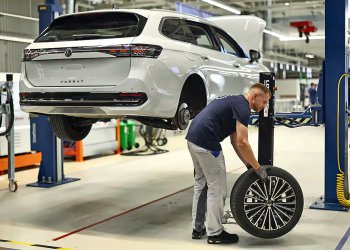
- The Automotive Precedent: Volkswagen Anhui, the German automaker’s China-based joint venture, agreed to voluntary entry conditions earlier this year, establishing a potential blueprint for electric vehicle imports.
- The Systemic Danger: Restricting accommodations strictly to passenger vehicles risks leaving other vital industries exposed to heavy state subsidies, including lithium-ion batteries, wind turbines, industrial robotics, precision machine tools, specialty chemicals, and advanced biotechnologies.
- Preserving Defensive Remedies: According to policy analysis published by the European Council on Foreign Relations, striking a narrow settlement on vehicles must not prevent Brussels from launching anti-subsidy probes across adjacent supply tiers.
- Anti-Circumvention Enforcement: The European Commission must enforce trade defense instruments to stop exporters from bypassing tariffs through third-country routing or reclassified component shipments.
Managed trade agreements, anti-dumping duties, and import tariffs alter corporate profit margins and cross-border commercial transactions. Institutional investors evaluating how industrial trade remedies affect international balance sheets follow fundamental developments through the InvestorBytes financial portal.
Where China Produces: Preventing “Screwdriver Factories”
The second strategic pillar of the EU China economic coercion decoupling doctrine governs foreign direct investment (FDI) within the single market. Chinese investment across Europe rebounded to nearly €17 billion in 2025—accounting for almost 25% of Beijing’s global outward FDI—with 45% concentrated in the automotive and clean technology sectors.
However, European policymakers warn that without strict safeguards, investment risks becoming purely superficial:
- The Assembly Factory Risk: Lacking robust conditions, foreign companies may establish low-value “screwdriver factories” that assemble imported modules while retaining software, engineering, and battery intellectual property domestically.
- The Industrial Accelerator Act: Under negotiation among member states, the legislation requires investments above €100 million to satisfy performance criteria, including local joint ventures, intellectual property sharing, and domestic supply procurement.
- Mandatory Criteria Gaps: Analysts argue that current legislative drafts make only local job creation mandatory, creating an optional system that allows foreign capital to bypass meaningful technology transfer.
Sovereign investment screening, local content mandates, and public procurement rules remain central themes across European capitals. Observers tracking how statutory industrial policies influence corporate capital allocation follow updates via InvestorBytes macro reports.
Cabinet negotiations and trade directives continue to guide industrial investment, an issue examined across European policy updates.
What China Controls: Guarding Critical Infrastructure Networks
The third crucial front in the EU China economic coercion decoupling strategy addresses foreign presence across vital public assets. Beyond the 5G telecom bans implemented in recent years, state-linked technology and logistical footprints remain deeply embedded in European systems:
- Maritime Port Logistics: State-owned enterprise COSCO holds significant equity stakes across major European container terminals, while ZPMC manufactures a dominant share of global ship-to-shore container cranes.
- Energy Inverter Risks: Chinese manufacturers supply over 80% of all newly installed solar inverters across the European Union, connecting into more than 200 gigawatts of regional electrical capacity.
- Undersea Cables and Cloud Infrastructure: Suppliers such as HMN Technologies are increasingly involved in European submarine telecommunications cable networks, alongside expanding cloud service deployments.
- The EU Cybersecurity Act Revision: The ongoing statutory revision aims to establish binding screening mechanisms to audit technical vulnerabilities and assess potential foreign state interference across transport, energy, and digital grids.
Corporate treasurers and enterprise risk officers assessing operational security across utilities follow infrastructure updates on the InvestorBytes homepage.
The complex relationship between national security reviews and cross-border commercial supply chains continues to inform balance-sheet models reviewed in InvestorBytes corporate analysis.
Economic Defense Telematics, Supply Diversification, and Modern Clearing
Executing the defensive mechanisms of the EU China economic coercion decoupling roadmap relies on specialized trade tracking infrastructure. Customs authorities and trade compliance teams utilize digital supply-chain mapping, algorithmic origin verification, and automated import screening to identify circumvention attempts in real time. Technology specialists tracking trade software architectures and enterprise compliance engines follow innovations via InvestorBytes digital finance.
Concurrently, multinational import syndicates managing multi-currency trade letters of credit face foreign exchange volatility and payment friction. Forward-looking commodity clearing consortia are evaluating programmable liquidity rails and smart contracts on distributed ledgers to automate conditional cross-border payments, an operational evolution documented in international capital analyses.
Shifting capital distributions and sovereign regulatory changes continue to influence liquidity across private debt and equity desks tracked in continental market coverage.
Capital Market Implications for European Listed Equities
The policy choices defining the EU China economic coercion decoupling agenda carry substantial consequences for European capital markets. If Brussels implements aggressive anti-subsidy duties and tightens foreign investment controls, domestic automotive suppliers, renewable component manufacturers, and industrial automation firms stand to benefit from a protected single market. However, export-heavy conglomerates facing potential mineral export restrictions must navigate supply disruption risks. Institutional equity research desks continuously evaluate revenue exposures, input cost volatility, and operating margins across InvestorBytes equity intelligence.
Corporate financial executives and institutional fund managers monitor sovereign bond spreads, trade negotiations, and corporate ratings through the InvestorBytes publication.
As European leaders convene for the upcoming European Council summit, the EU China economic coercion decoupling debate marks a historic turning point for continental industrial strategy. By pairing managed commercial negotiation with robust defense instruments across trade, investment, and infrastructure, Europe is working to establish a stable and autonomous economic future.
Disclaimer:
The information provided in this article is for educational, journalistic, and informational purposes only and does not constitute financial, investment, legal, or trade policy advice.