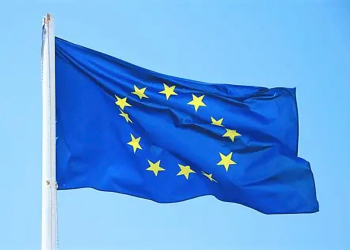
A contentious battle has erupted in Brussels as European Union leaders voiced intense opposition to the latest proposal for the EU long-term budget, casting significant doubt on whether a final deal can be reached before the end of the year. The disagreement threatens to delay key fiscal commitments spanning defense, regional infrastructure, and agriculture.
Formally known as the Multiannual Financial Framework (MFF), the EU long-term budget establishes spending caps across the 27-member bloc for a seven-year cycle covering 2028 through 2034. As domestic fiscal strain grows across Europe, major net contributing nations are pushing back against elevated financial commitments, asserting that the current framework is simply untenable.
Net Contributors Revolt Against Rising Demands
Leading the resistance are Europe’s primary net contributors the roughly 10 nations that consistently pay more into the bloc’s shared purse than they receive in return. During a high-stakes Brussels summit, leaders made it clear that the current baseline numbers must be reined in.
Swedish Prime Minister Ulf Kristersson was among the most vocal critics, pointing out the disproportionate burden facing his country. Under the current trajectory, the plan would increase Sweden’s net contribution by almost 60%—a shift Kristersson characterized as totally unacceptable.
Echoing that resistance, German Chancellor Friedrich Merz stressed that Europe’s largest economy cannot shoulder limitless increases. Merz noted that no EU member state can afford contributions at such elevated levels, casting doubt on whether leaders could bridge the divide during the ongoing summit talks.
The €1.62 Trillion Compromise and the Deepening Divide
Ireland, currently holding the rotating EU Council presidency, attempted to craft a viable compromise by proposing a revised EU long-term budget of €1.62 trillion ($1.81 trillion). This draft shaved approximately €141 billion ($158 billion) off the European Commission’s original opening offer.
However, the Irish proposal managed to draw criticism from nearly all sides:
- Net Contributors: Continue to see the top-line number as far too expansive.
- Friends of Cohesion: An alliance of 17 southern and eastern member states that strongly resist cuts to farm subsidies and regional structural funds, which together make up roughly two-thirds of the entire spending package.
- The European Commission: Argues that shrinking the funding pool directly impairs Europe’s global standing.
For deeper analysis on how shifting regulatory and fiscal agendas affect continental capital, read our latest InvestorBytes Politics Coverage.
Strategic Ambitions Collide With Fiscal Reality
The impasse over the EU long-term budget comes at a pivotal historical moment. The bloc faces massive geopolitical and financial responsibilities, including continued financial assistance for Ukraine, high domestic energy expenses, and rising trade competition with the United States and China.
EU Budget Commissioner Piotr Serafin warned that proposed cuts risk leaving the Union with less capacity to act collectively when geopolitical developments require unprecedented unity. Irish Prime Minister Micheál Martin acknowledged the friction, noting that any compromise on the EU long-term budget requires navigating an intricate balancing act where satisfying every capital is impossible.
If member states refuse to contribute more capital, the bloc faces painful trade-offs: either scale back traditional cohesion and agricultural aid, or trim ambitions across defense, competitiveness, and technology.
Stay informed on European currency and debt markets by exploring our InvestorBytes Economy Hub and tracking market shifts via the InvestorBytes Markets Analysis.
Tight Deadlines and Shifting Political Landscapes
With Ireland’s compromise facing mounting friction, European Council President António Costa is set to take over direct stewardship of negotiations among heads of state. Costa has emphasized the urgency of securing an agreement to ensure the EU long-term budget remains fully operational by January 2028, preventing disruptions for farmers, researchers, and enterprise programs.
Further complicating the negotiation calendar is an upcoming wave of national elections. With high-stakes political contests scheduled across France, Italy, and Poland in 2027 alongside snap elections in Spain, incoming administrations could attempt to unravel any fragile consensus on the EU long-term budget.
While missing the year-end target would not trigger an immediate funding freeze, passing all necessary secondary legislation through all 27 national capitals and the European Parliament requires substantial runway. Official negotiations will resume when EU leaders reconvene in late November and for their decisive year-end summit in mid-December.
Disclaimer
The information provided in this article is for educational, journalistic, and informational purposes only and does not constitute formal financial, legal, or investment advice.