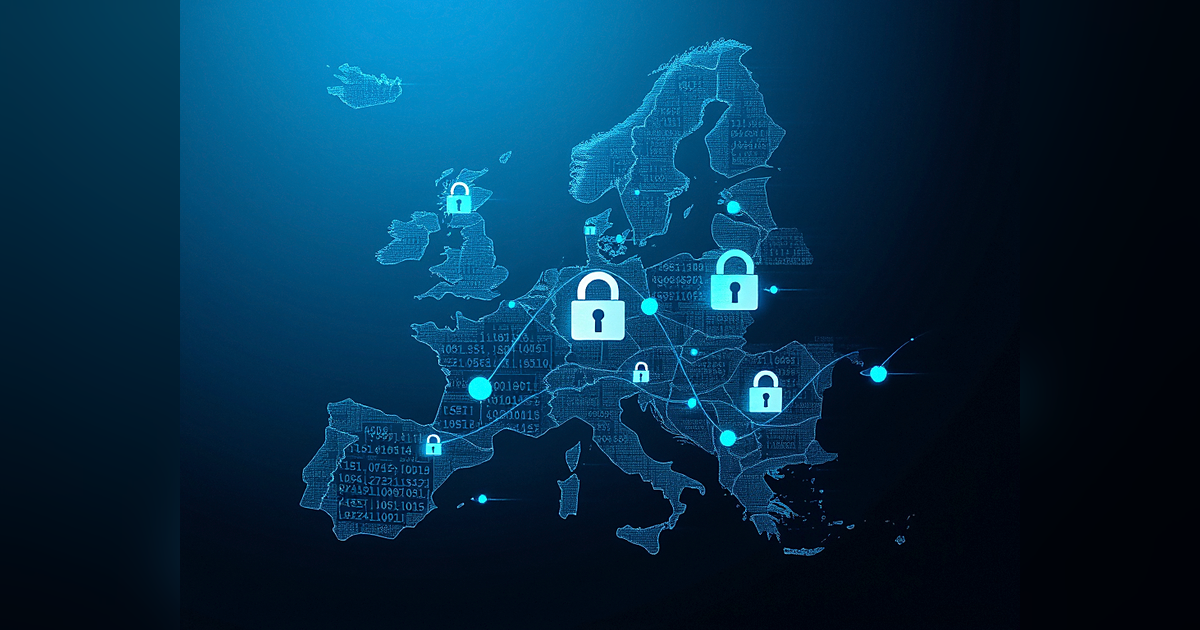
A sophisticated wave of physical-world disruption across the continent has exposed critical national infrastructure fragilities as the European supermarket freezer cyberattack operational technology crisis compromised commercial cold-chain systems across seven European nations. Commercial refrigeration units in approximately 40 Delhaize supermarkets across Belgium and Luxembourg, alongside grocers in Sweden, Ireland, the Netherlands, Estonia, and Finland, were hijacked remotely. Hostile threat actors manipulated industrial evaporator units directly into permanent defrost mode, causing internal freezer temperatures to spike as high as 50 degrees Celsius (122 degrees Fahrenheit). The coordinated intrusion forced retailers to condemn and discard tons of perishable frozen inventory to protect consumer safety.
The cross-border incident occurs less than a month after a nearly identical operational technology assault disabled refrigeration banks in hundreds of French supermarkets, confirming an escalating campaign aimed at commercial supply networks. By weaponizing Internet-connected building management software and third-party remote maintenance portals, unidentified cyber adversaries demonstrated how legacy industrial controls can be converted into single points of commercial failure. With retail associations warning of inventory write-downs, emergency technician inspections, and severe distribution bottlenecks, regulatory scrutiny is intensifying across the continent. For enterprise risk officers, supply-chain logistics underwriters, and corporate technology executives tracking digital operational vulnerabilities, comprehensive European financial news provides critical perspective on industrial cybersecurity, critical entity regulations, and retail enterprise resilience.
The Attack Mechanism: Evaporator Override and Cross-Border Contagion
The technical methods driving the European supermarket freezer cyberattack operational technology incidents reveal vulnerabilities in outsourced facilities management:
- Defrost Function Manipulation: Threat actors gained access to central heating, ventilation, air conditioning, and refrigeration (HVAC-R) software, driving evaporators into sustained thermal heating cycles.
- Mass Inventory Condemnation: In-store refrigeration temperatures reached 50°C, thawing food inventory, triggering thermal fire alarms, and forcing retailers into complete stock write-offs.
- Multi-Country Scope: Intrusions disrupted Delhaize stores in Belgium and Luxembourg, with parallel attacks disabling systems in Sweden, Finland, Estonia, Ireland, and the Netherlands.
- Repeating French Attack Vectors: The operational signature closely matches intrusions carried out across French retail locations weeks earlier, indicating reusable exploits targeting industrial heating and cooling protocols.
Directives, incident mitigation frameworks, and technical standards compiled by the European Union Agency for Cybersecurity require essential service operators to implement robust operational technology safeguards across critical distribution nodes.
Corporate debt covenants, secondary offering allocations, and venture technology valuations directly dictate enterprise software execution. Institutional asset managers evaluating advanced computing multiples and hardware depreciation cycles follow sector trends through the InvestorBytes financial portal.
The IT/OT Divide: Bridging Single Points of Failure in Food Retail
A core vulnerability highlighted by the European supermarket freezer cyberattack operational technology breaches is the organizational gap between corporate information technology and physical operational controllers:
- Single Points of Remote Control: While centralized cloud maintenance portals allow technicians to optimize energy consumption off-site, unsegmented remote access gives adversaries a direct entry point into hundreds of stores simultaneously.
- Lack of Air-Gapping: Store controllers frequently operate on unsegmented networks connected to public corporate internet lines, allowing intruders to move freely from administrative vectors to physical machinery.
- Supply-Chain Blast Radius: Supermarket operators must coordinate with regional distribution centers to replenish thousands of discarded SKUs, stretching logistics channels and technician availability.
- Specialized Expertise Gaps: Industry leaders point out that retail enterprises routinely employ dedicated IT security staff, but maintain few specialists trained to monitor programmable logic controllers (PLCs) or supervisory control and data acquisition (SCADA) networks.
Sovereign bond curves, statutory fiscal thresholds, and debt servicing costs directly shape corporate borrowing conditions across European industry. Economists evaluating European fiscal governance follow sovereign debt trajectories through InvestorBytes macro reports.
Cabinet deliberations and pan-European industrial policy directives continue to guide continental capital allocations, an area examined in European policy updates.
Regulatory Pressure: NIS2, the Cyber Resilience Act, and CER Mandates
The systemic disruption documented during the European supermarket freezer cyberattack operational technology wave accelerates regulatory compliance deadlines:
- The NIS2 Directive Expansion: Under the European Union’s revised NIS2 Directive, large-scale grocery chains and food distributors face mandatory cybersecurity risk-management requirements and strict breach notification timelines.
- The Cyber Resilience Act (CRA): Forthcoming EU legislation enforces “secure-by-design” requirements on hardware and software manufacturers, mandating vulnerability management throughout a device’s commercial operational lifespan.
- Critical Entities Resilience (CER): Complementary frameworks require critical logistics providers to assess physical vulnerabilities—including facility climate management and secondary power systems—against sabotage.
- Financial Parallels with DORA: Legal experts emphasize that food supply networks are now facing the same rigorous third-party vendor audits previously mandated for banking syndicates under the Digital Operational Resilience Act.
Corporate financial controllers and enterprise procurement directors monitoring data center hardware supply chains follow market pricing trends on the InvestorBytes homepage.
The complex relationship between rising industrial electricity rates, hardware depreciation schedules, and corporate operating margins is evaluated in InvestorBytes corporate analysis.
Industrial Telematics, Behavioral Baselines, and Hardware Isolation
Mitigating vulnerabilities identified by the European supermarket freezer cyberattack operational technology campaign requires upgrading store telematics. Facilities operators deploy automated out-of-band temperature loggers, independent circuit breakers, and algorithmic anomaly-detection platforms that flag unusual temperature increases. Technology specialists tracking smart energy management systems follow system architectures through InvestorBytes digital finance.
Concurrently, European public utility providers and regional transmission system operators managing industrial cooling loads face grid-stability challenges during synchronized facility resets. Infrastructure syndicates are deploying real-time telemetry ledgers and smart microgrid interfaces to coordinate on-site renewable energy generation with grid off-take, an operational evolution documented in international capital analyses.
Shifting capital distributions and sovereign regulatory changes continue to influence liquidity across energy and industrial desks tracked in continental market coverage.
Capital Market Implications for Food Retailers, Insurers, and Industrial IoT
The cross-border fallout exposed as the European supermarket freezer cyberattack operational technology pattern expands introduces clear valuation adjustments for global equity and insurance allocators. Supermarket operators face direct revenue losses from condemned stock, emergency labor expenses, and rising operational insurance premiums. At the same time, commercial property and casualty underwriters are revising terms to exclude unsegmented operational technology environments from standard business interruption coverage. Conversely, cybersecurity software vendors providing specialized industrial access management and OT network segmentation platforms are positioned to capture expanding enterprise budgets. Institutional equity research desks continuously evaluate forward price-to-earnings multiples, consumer demand elasticity, and corporate earnings durability through InvestorBytes equity intelligence.
Corporate financial executives, private wealth managers, and institutional asset allocators track macroeconomic risk pricing and market sentiment via the InvestorBytes publication.
As technicians restore Delhaize freezer banks across the continent, the realities exposed by the European supermarket freezer cyberattack operational technology intrusions demonstrate that digital vulnerabilities carry immediate physical consequences. Ensuring network segmentation, enforcing strict identity controls on maintenance vendors, and monitoring operational controls will be essential to protecting food retail supply chains from future disruptions.
Disclaimer:
The information provided in this article is for educational, journalistic, and informational purposes only and does not constitute financial, investment, legal, cybersecurity engineering, or corporate insurance advisory guidance.