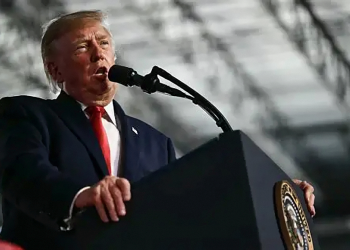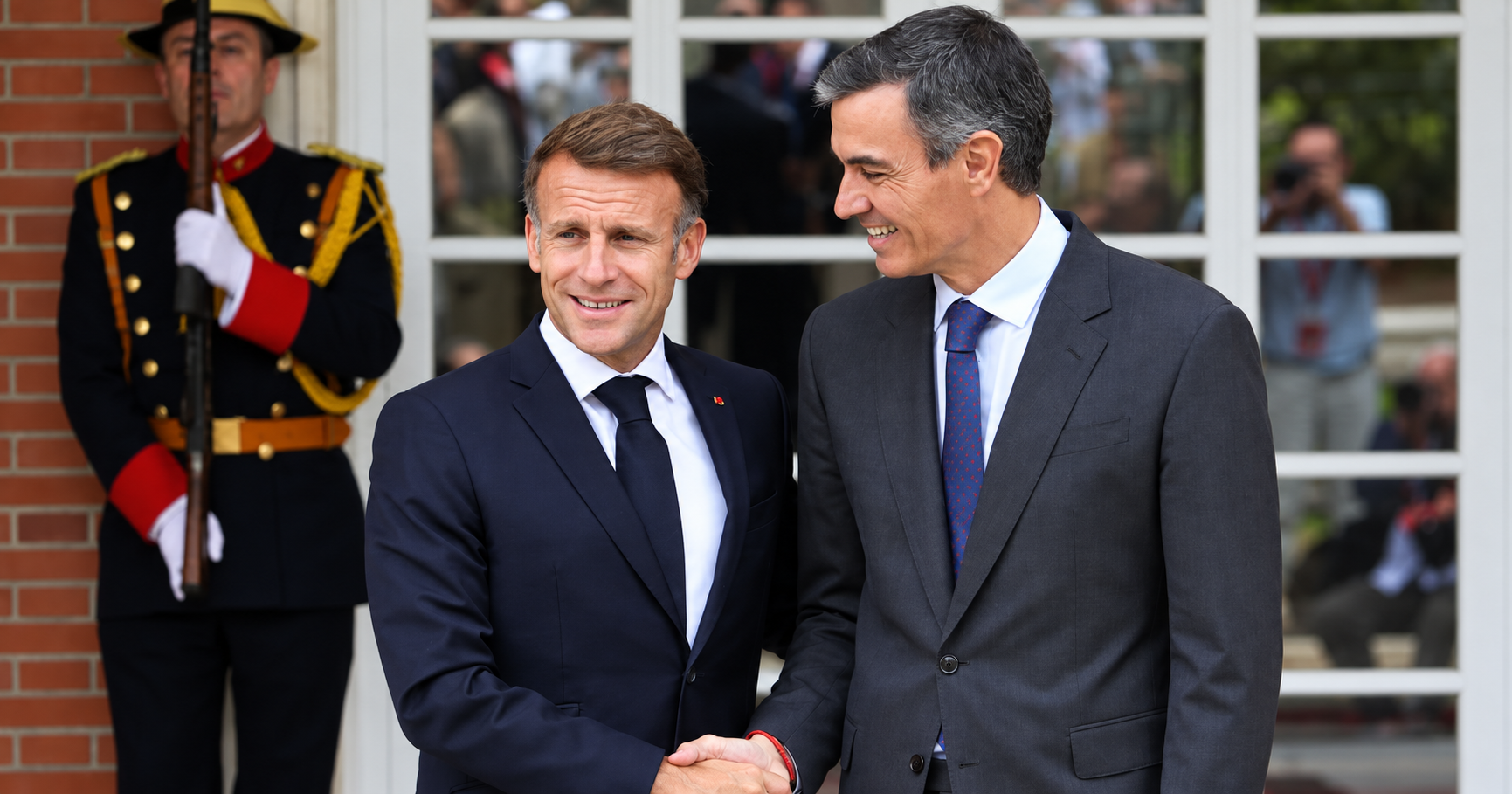
A decisive demonstration of southern European bilateral alignment unfolded in Madrid as the Macron Sanchez Madrid summit concluded with an urgent call for democratic revitalization and joint continental investment. French President Emmanuel Macron met Spanish Prime Minister Pedro Sánchez at the Moncloa Palace on Wednesday during the second day of an official two-day state visit. In a joint press conference broadcast internationally, the two Mediterranean leaders warned of a structural crisis of democratic legitimacy across Western capitals, advocating for massive collective capital deployment to build a “stronger Europe” capable of withstanding the electoral rise of political extremes.
The high-level diplomatic engagement carries significant political weight across the European Union. With major continental elections looming including the French presidential contest on the horizon the joint platform presented by Macron and Sánchez represents a coordinated effort by centrist and social-democratic administrations to counter populist surges across the single market. For sovereign policy directors, international political strategists, and institutional governance consultants evaluating how bilateral diplomatic alliances reshape executive decision-making across member states, comprehensive newsroom reporting on politics provides essential intelligence on European institutional governance.
Pomp, Ceremony, and Strategic Bilateral Dialogue
The formal backdrop framing the Macron Sanchez Madrid summit commenced on Tuesday with extensive ceremonial honors. Accompanied by his wife Brigitte Macron, the French head of state arrived at Madrid’s historic Royal Palace in a ceremonial motorcade escorted by the Spanish Royal Guard on horseback. King Felipe VI and Queen Letizia officially welcomed the French delegation in the palace’s cobbled courtyard amid twenty-one-gun cannon salutes and military band honors, alongside Prime Minister Sánchez.
Following royal protocols, the working sessions shifted to the Moncloa Palace, where discussions centered on countering institutional polarization. Addressing reporters, Macron framed the preservation of European democratic norms not as a passive defense, but as an offensive industrial and economic imperative:
- Confronting Political Extremes: Both executives emphasized that institutional faith cannot be restored through rhetoric alone; tangible public investments in public services, regional reindustrialization, and sovereign defense are essential to counter radical political movements.
- Energy Grid Interconnections: France and Spain reviewed cross-Pyrenean green hydrogen corridors and cross-border electricity interconnectors designed to integrate the Iberian peninsula into central European power markets.
- Strategic Autonomy: The leaders reaffirmed their commitment to pan-European defense readiness, warning against strategic over-reliance on foreign industrial partners during geopolitical volatility.
- Fiscal Integration: Sanchez reiterated Madrid’s backing for mutualized European financing instruments to fund high-priority digital and clean-energy infrastructure projects.
Cross-border infrastructure initiatives, sovereign debt financing, and multi-year public capital programs directly alter regional capital allocation, commercial productivity, and public-sector debt loads. Economists analyzing how shifting fiscal coordination and industrial subsidies shape gross domestic output can follow long-term indicators through dedicated reporting on the wider economy.
Domestic Realities and the Shadow of Upcoming Elections
The political messaging emerging from the Macron Sanchez Madrid summit is directly linked to domestic electoral battles in Paris and Madrid. Facing fractured national parliaments, fiscal deficit pressures, and rising support for populist coalitions, both leaders are utilizing European statecraft to validate their domestic economic platforms.
By positioning European integration as the primary defense against economic volatility and societal division, Macron sought to project authority ahead of contentious domestic political campaigns. Similarly, Sánchez utilized the state visit to demonstrate Spain’s expanding diplomatic influence within the European Council, framing the Madrid-Paris axis as a stabilizing balance to traditional Franco-German dominance.
Shifting electoral poll numbers, sovereign budget deficits, and legislative negotiations continue to drive risk premiums and bond yield spreads across European financial markets.
Clean Tech Corridors, Digital Infrastructure, and Autonomous Rails
The industrial roadmap discussed throughout the Macron Sanchez Madrid summit requires advanced technological integration. Expanding cross-border clean-energy corridors depends on real-time grid automation, smart power-management algorithms, and high-voltage transmission monitoring networks. Technology specialists and systems engineers tracking enterprise clean-tech infrastructure, grid telemetry, and automated industrial networks follow developments via tech.
At the same time, regional energy developers and cross-border engineering consortia executing major infrastructure joint ventures face payment complexities under multi-currency contracts. Forward-looking municipal infrastructure funds and energy treasuries are evaluating programmable liquidity systems and crypto networks to execute instantaneous, milestone-verified settlements for high-value engineering contracts without standard commercial clearing delays.
Balance Sheet Realities for Listed European Equities
The public-private investment mobilization endorsed at the Macron Sanchez Madrid summit establishes clear catalysts for institutional asset managers. Expanding state support for green hydrogen pipelines, interconnector transmission grids, and specialized transportation links directly expands backlogs for European infrastructure contractors and utility operators. Institutional equity research desks continuously evaluate these state-supported order books, concession models, and operating margins across publicly traded utility and industrial stocks.
According to formal diplomatic declarations from the European Council, deepening bilateral industrial treaties between frontline member states remains vital to reinforcing continental competitiveness and political cohesion.
Corporate risk officers and institutional wealth managers also evaluate corporate balance-sheet resilience across broader business & finance channels.
As the joint press conference concluded at Moncloa Palace, the Macron Sanchez Madrid summit demonstrated the strategic resolve of two embattled European leaders. By tying democratic resilience directly to massive public investment in a unified Europe, Macron and Sánchez are attempting to build an economic shield capable of withstanding the rising political tides of our era.
Disclaimer:
The information provided in this article is for educational, journalistic, and informational purposes only and does not constitute political, legal, economic, or investment advice.