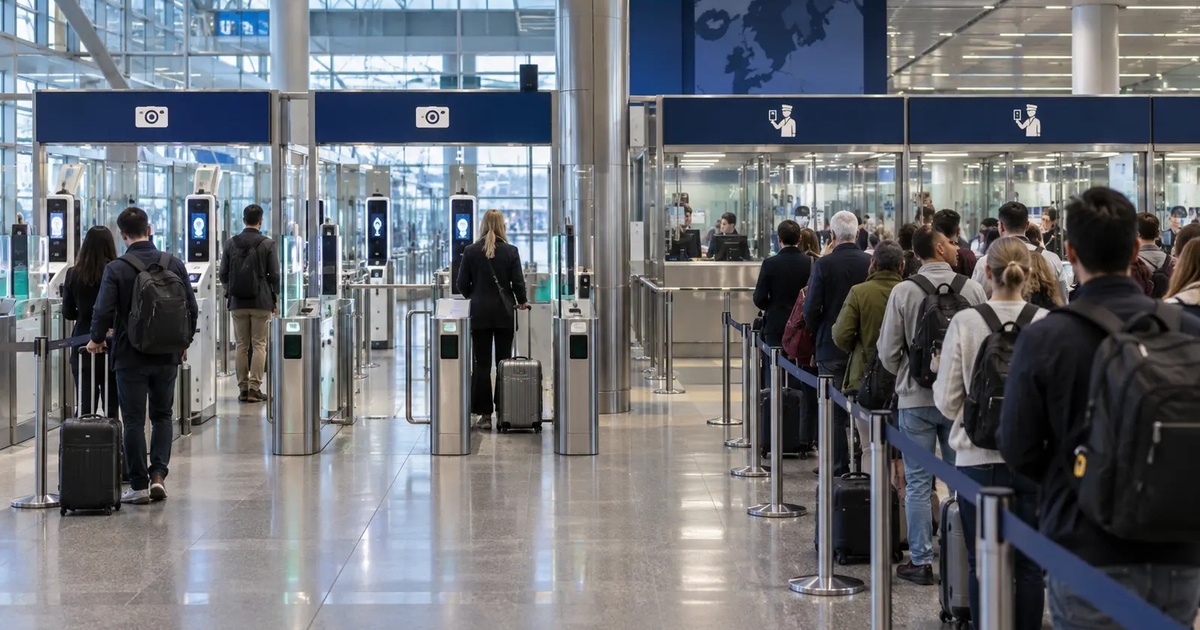
The strategic decision by European Union authorities to temporarily pause EES rollout procedures across major continental hubs marks a significant setback for Europe’s automated border architecture. Confronted by mounting technical failures, software synchronization bottlenecks, and multi-hour airport queues, at least nine prominent Schengen Zone nations have received approval to halt the mandatory enforcement of the Entry/Exit System (EES). The suspension allows national border authorities to delay full deployment until facial recognition terminals and fingerprint capture technologies demonstrate reliable operational throughput.
The implementation of automated border controls directly impacts continental transit velocity, international commercial connectivity, and passenger transport revenues. When digital infrastructure rollouts falter at major transport hubs, operational friction cascades into regional logistics networks. For transport executives, digital policy analysts, and institutional observers evaluating how automated governance intersects with international transit corridors, specialized coverage of tech provides critical perspective on large-scale software deployments.
Why Nine Nations Decided to Pause EES Rollout
The collective move to pause EES rollout involves nine central European travel destinations: France, Germany, Italy, the Netherlands, Belgium, Switzerland, Greece, Portugal, and Malta. Originally initiated in October 2025 to replace physical passport stamping with digital biometric tracking across the 29 Schengen Area countries, the centralized database managed by eu-LISA has struggled under peak international transit volumes.
System Failures: Data Loss and Airport Bottlenecks
Aviation reports indicate that terminal wait times expanded dramatically, in some cases causing passengers to miss connecting departures:
- Central Database Desynchronization: National border posts routinely experienced connectivity dropouts, where biometric scans gathered at airport kiosks failed to synchronize with central eu-LISA repositories.
- File Retrieval Failures: Border control officers frequently found themselves unable to retrieve existing digital records for returning non-EU travelers, forcing passengers to undergo redundant registrations.
- Reversion to Manual Processing: When digital scanners failed, border agents were forced to revert to manual stamping, leading to widespread congestion across understaffed terminals.
The European Commission maintained that it remains in close contact with affected member states, requesting that operational readiness and technical integration challenges be fully resolved before the end of the year.
Prolonged border delays threaten to suppress international business travel and cross-border commercial tourism. Institutional analysts assessing how transit friction and supply chain bottlenecks influence domestic output can evaluate broader macroeconomic metrics through dedicated reporting on the wider economy.
Airline Industry Backlash: Demanding an April 2027 Extension
The decision to pause EES rollout follows intense lobbying from the international aviation sector. While member states previously operated under a temporary 150-day flexibility clause that allowed airports to suspend digital processing during exceptional summer peaks, that formal grace period officially expired on September 6. The end of the initial waiver triggered sharp criticism from low-cost carrier Ryanair, which labeled the system’s management an operational shambles.
Ryanair Chief Operating Officer Neal McMahon formally urged the European Commission to extend the EES derogation until at least April 2027, warning that airlines, airports, and border forces had repeatedly cautioned Brussels about inadequate system readiness. Similarly, the International Air Transport Association (IATA) cautioned that denying airports the ability to switch off malfunctioning digital kiosks would trigger severe logistical disruptions.
Regulatory compliance, border sovereignty, and migration policies remain contentious issues across European parliaments. Analysts monitoring how ministerial oversight and cross-border security policies shape European transport agreements can track legislative debates via politics.
Biometric Frameworks and Digital Verification Standards
Under the statutory framework governing the system, third-country nationals entering the Schengen Area must register digital fingerprints and high-resolution facial scans at designated border checkpoints. Subsequent crossings require quick digital verification against the stored biometric profile, supplemented by standard questions regarding accommodation reservations, financial sufficiency, travel health coverage, and return transit documentation.
While children under 12 are exempt from providing fingerprint data, they remain subject to automated facial imaging. Dual-border checkpoints—such as the Port of Dover, Folkestone Eurotunnel terminal, and St Pancras International in London—conduct juxtaposed French border inspections prior to channel transit, preventing repeat checks on the mainland.
The technical infrastructure required to process millions of biometric identities has also renewed debate over decentralized data security. As corporate travelers and cross-border enterprises manage sovereign data collection and identity requirements, digital asset specialists evaluate how zero-knowledge proofs and crypto networks could streamline permissioned identity verification while reducing database exposure.
Capital Implications for Airline and Travel Equities
The necessity to pause EES rollout carries immediate financial consequences for multinational transport operators. Unscheduled terminal delays reduce aircraft turnaround efficiency, inflate airport handling costs, and depress passenger satisfaction ratings. Equity research analysts closely track these operational headwinds across publicly traded aviation, hospitality, and travel stocks.
According to formal documentation from the European Commission Migration and Home Affairs Directorate, the European Union remains committed to delivering an automated, interoperable digital border framework to replace physical stamps permanently.
How quickly the nine member states resolve their software integration defects will dictate when the system becomes mandatory. Until eu-LISA stabilizes its centralized data repositories, the decision to pause EES rollout provides vital operational relief, ensuring European airport gateways maintain passenger fluidity through the coming winter travel period.
Disclaimer:
The information provided in this article is for educational, journalistic, and informational purposes only and does not constitute travel, immigration, legal, or investment advice.