The strategic expansion of Teledyne space and defence contracts across continental Europe marks an important commercial milestone for high-precision aerospace and military component suppliers. Capitalized at approximately $27.9 billion on the New York Stock Exchange (NYSE: TDY), Teledyne Technologies has secured high-profile hardware roles delivering advanced imaging detectors for the European Space Agency’s (ESA) Sentinel-3C and Fluorescence Explorer (FLEX) Earth observation satellites. Concurrently, the industrial group disclosed a separate $15.4 million contract to supply tailored energetics and propulsion components for next-generation unmanned defense programs across Europe.
These dual wins highlight how advanced microelectronics, optoelectronic focal plane arrays, and specialized energetics serve as mission-critical enablers for sovereign environmental observation and modern military platforms. As institutional buyers prioritize technological sovereignty and cross-border procurement resilience, component providers with deep technical intellectual property are capturing durable market share. For technology executives, defense program managers, and institutional analysts tracking how enterprise hardware contracts alter public capital flows, continuous reporting on tech offers vital clarity on advanced aerospace and defense innovation.
Space Exploration Roles: Sentinel-3C and the FLEX Mission
The Earth observation dimension of the newly awarded Teledyne space and defence contracts directly supports Europe’s flagship Copernicus program. Teledyne Space Imaging is providing high-performance charge-coupled device (CCD) detectors engineered to operate within the harsh vacuum and radiation environments of low-Earth orbit:
- Copernicus Sentinel-3C: The satellite integrates specialized optical detectors within its Ocean and Land Colour Instrument (OLCI), enabling hyperspectral environmental mapping across oceans, inland waterways, soil composition, and atmospheric dynamics.
- Fluorescence Explorer (FLEX): Teledyne sensors will power the high-resolution FLORIS imaging spectrometer, an orbital instrument designed to measure faint fluorescence signals emitted by terrestrial vegetation during photosynthesis.
- Scientific Carbon Tracking: The resulting telemetry will deliver unprecedented clarity on global photosynthetic efficiency, helping researchers track carbon movement between terrestrial ecosystems and the atmosphere amid accelerating climate disruptions.
Developing space-qualified focal plane arrays requires extensive research expenditures, high cleanroom overheads, and lengthy qualification cycles. Observers tracking how public scientific research and multilateral space budgets influence continental economic output can follow structural trends via comprehensive reporting on the wider economy.
Unmanned Defense Systems: The $15.4 Million Energetics Award
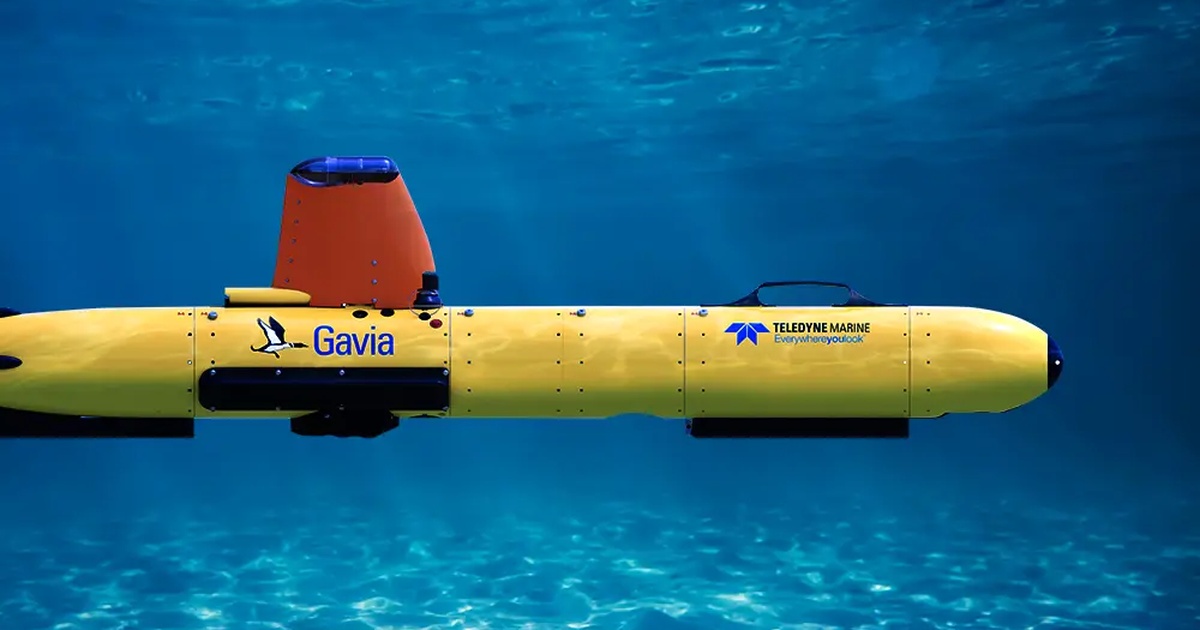
The defense segment of the Teledyne space and defence contracts reflects the rapid operational pivot toward autonomous, uncrewed platforms across the European continent. The $15.4 million award covers specialist energetics, micro-propulsion charges, and precision staging components specifically tailored for autonomous unmanned aerial and maritime systems.
Modern battlefield doctrines emphasize distributed drone swarms, precision-guided munitions, and autonomous intelligence systems. Providing pyrotechnic mechanisms, specialized initiators, and separation actuators for uncrewed architectures allows Teledyne to capture steady recurring demand as European armed forces ramp up stockpiles. The defense win confirms that international military procurement extends far beyond heavy armor, channeling capital into specialized subsystems that power autonomous operation.
Government procurement mandates, NATO capability goals, and pan-European rearmament directives remain heavily debated across sovereign parliaments. Analysts monitoring how executive defense policies and multilateral security initiatives shape industrial supplier selection can follow regulatory updates via politics.
Execution Risks, e2v Asset Integration, and Treasury Operations
Despite positive commercial momentum, fulfilling Teledyne space and defence contracts involves non-trivial execution risks. Equity research analysts point to the operational complexity of integrating legacy acquisitions like Teledyne e2v, alongside potential margin compression if multi-year space imaging programs encounter manufacturing yield bottlenecks or delivery schedule overruns.
Because aerospace and military contracts operate under fixed-margin or milestone-based structures, unanticipated technical complexity can dilute operating returns in the Digital Imaging division. Investors are watching upcoming investor forums, including the Jefferies Global Industrials Conference, for commentary regarding backlog delivery schedules and segment operating margins.
Simultaneously, multinational defense suppliers managing cross-border procurement across fluctuating currency corridors face heightened balance-sheet risks. Corporate finance divisions navigating supply chain settlements increasingly evaluate programmable payment networks and crypto rails to preserve cross-border capital liquidity and mitigate clearing friction during multi-currency program executions.
Valuation Realities for Listed Aerospace and Defense Equities
Securing Teledyne space and defence contracts reinforces the broader narrative that mission-critical sensing, automation hardware, and unmanned military demand can sustain multi-year revenue visibility. With equity analysts modeling a long-term fair value path toward $753 per share, institutional market participants are closely monitoring order book conversions and organic margin expansion. Shifting risk premiums and public defense spending commitments continue to alter capital allocations across broader industrial markets.
Public documentation accessible through the European Space Agency (ESA) Earth Observation Portal indicates that deploying high-reliability sensors remains essential to guaranteeing data continuity across Europe’s long-term environmental monitoring infrastructure.
Equity asset managers continually assess these order book quality metrics and revenue backlogs across publicly traded aerospace, defense, and industrial stocks.
As Europe expands its dual-use infrastructure across orbital Earth observation and autonomous border security, the strategic necessity behind Teledyne space and defence contracts underscores the company’s vital role in Western industrial supply chains. Delivering specialized sensors and defense energetics ensures that Teledyne remains deeply embedded in the continent’s sovereign technology ambitions.
Disclaimer:
The information provided in this article is for educational, journalistic, and informational purposes only and does not constitute financial, investment, legal, or defense procurement advice.