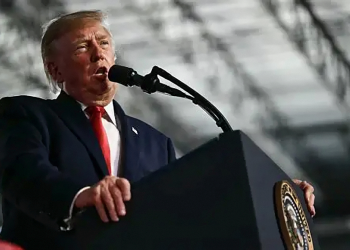
A provocative cultural and diplomatic episode unfolded in Strasbourg this week, providing a symbolic backdrop to how UK Europe future geopolitics is fundamentally changing under the pressure of global economic shifts. The unveiling of Danish artist Jens Galschiøt’s satirical golden sculpture, The Orange Plague, at the European Parliament captured the widening estrangement between Europe and Washington. Depicting a caricature of Donald Trump seated upon the bent back of an overburdened figure, the artwork highlights deep transatlantic friction marked by protectionist trade barriers and rhetoric questioning the utility of traditional collective defense pacts.
Yet, beyond political satire, the display coincides with critical bilateral deliberations between London and Berlin. As senior British and German officials convene for a high-level summit, the shifting geopolitical landscape is prompting a pragmatic re-evaluation of post-Brexit economic and defense agreements. Faced with volatile transatlantic trade tariffs, persistent Russian hybrid warfare against northern European infrastructure, and industrial competition from East Asia, the United Kingdom and the European Union find their strategic interests converging. For institutional asset managers, cross-border corporate counsels, and sovereign policy researchers monitoring post-Brexit realignment, comprehensive European financial news provides critical perspective on international trade diplomacy, single-market regulation, and macroeconomic security.
The Transatlantic Strain: Trade Protectionism and Strategic Drift
The core catalyst reshaping UK Europe future geopolitics is the ongoing transformation of transatlantic trade relations:
- The Tariff Dilemma: Successive rounds of trade barriers and reciprocal tariffs implemented by the United States have pressured export-heavy European manufacturers and British exporters alike.
- Security Disengagement: Rhetorical challenges to transatlantic alliance structures have forced European capitals to confront the vulnerability of relying exclusively on foreign security umbrellas.
- The Strasbourg Symbolism: The controversial Galschiøt installation bearing the inscription “I will do anything to help him. Except stepping down from his back” mirrors European frustration with asymmetric economic pressures.
- European Legislative Focus: Official administrative bodies within the European Parliament are balancing transatlantic diplomatic engagement with the necessity of shielding domestic single-market industries.
Cross-border tariff policies, bilateral trade treaties, and multilateral regulatory alignments directly influence corporate profitability and foreign direct investment flows. Global asset allocators tracking macroeconomic policy shifts and supply-chain realignments follow structural developments through the InvestorBytes financial portal.
The Anglo-German Axis: Resetting Post-Brexit Commercial Ties
A central diplomatic evolution within the UK Europe future geopolitics landscape is the renewed bilateral engagement between London and Berlin:
- Historic Diplomatic Precedents: During its tenure as an EU member, the United Kingdom routinely relied on Germany to counterbalance interventionist economic proposals from Brussels and Paris.
- Pragmatic Summitry: Unlike the contentious renegotiations of the Cameron administration, current bilateral talks focus on tangible cooperation in energy security, defense industrial integration, and high-tech supply chains.
- French Receptivity: Signaling wider continental openness, French financial leadership recently reiterated that European doors remain open for targeted, pragmatic UK collaboration.
- The Growth Imperative: With post-Brexit trading frictions continuing to weigh on British productivity and capital expenditure, expanding market access across the European continent remains an economic necessity.
Sovereign bond spreads, cross-border corporate mergers, and trade dispute arbitrations shape macroeconomic valuations across Europe. Readers assessing how post-Brexit regulatory realignments impact industrial investment follow updates via InvestorBytes macro reports.
Institutional treaty negotiations and international trade diplomacy continue to guide corporate supply chain decisions, an area examined in European policy updates.
Hybrid Threats and European Defense Industrial Integration
The acceleration of UK Europe future geopolitics realignment is equally driven by acute European security threats:
- Infrastructure Sabotage: Suspicious maritime maneuvers targeting subsea telecommunications lines, energy pipelines, and Baltic transit corridors have highlighted shared systemic vulnerabilities.
- Airspace Incursions: Repeated unmanned aerial vehicle (UAV) incursions across eastern NATO borders emphasize the need for unified air defense coverage.
- Defense Industrial Cooperation: British aerospace, electronic warfare, and naval engineering capabilities provide indispensable scale to European collective defense programs.
- Shared Strategic Realities: External security pressures are pushing the UK and the EU toward structured defense integration regardless of past political disputes.
Corporate treasurers and defense sector directors managing multi-jurisdictional government procurement contracts monitor industrial updates on the InvestorBytes homepage.
The interaction between sovereign military budgets and industrial supply-chain resilience is detailed in InvestorBytes corporate analysis.
Financial Telematics, Supply Tracking, and Cross-Border Systems
Executing the practical integration required by UK Europe future geopolitics relies heavily on advanced trade telematics. Multinational supply-chain operators utilize digital customs declarations, automated origin verification, and satellite tracking to minimize border clearance delays. Technology specialists tracking electronic trade networks follow regulatory software advancements via InvestorBytes digital finance.
Concurrently, European corporate syndicates and investment banking consortia managing sterling-euro capital projects face foreign exchange volatility and clearing friction. Financial institutions are assessing programmable liquidity tools and smart-contract settlement ledgers to streamline cross-border enterprise funding, an operational evolution documented in international capital analyses.
Shifting sovereign capital distributions and trade policy modifications continue to influence market liquidity tracked in continental market coverage.
Capital Market Implications for UK and European Listed Assets
The structural trends shaping UK Europe future geopolitics provide vital indicators for equity and fixed-income allocators. Enhanced diplomatic coordination and reduced regulatory friction support valuations across British industrial exporters, financial services platforms, and logistics networks that rely on European trade corridors. Conversely, geopolitical volatility elevates sovereign risk premiums across peripheral debt markets. Institutional equity research desks continuously evaluate corporate export exposure, regulatory compliance costs, and operating margins through InvestorBytes equity intelligence.
Corporate financial executives, sovereign debt traders, and institutional asset managers track European regulatory developments through the InvestorBytes publication.
As European leaders navigate shifting transatlantic ties and eastern security challenges, the trajectory of UK Europe future geopolitics indicates a pragmatic reconciliation. Compelled by the realities of modern geoeconomics, Britain and Europe are moving past past political divisions toward a coordinated economic and security framework.
Disclaimer:
The information provided in this article is for educational, journalistic, and informational purposes only and does not constitute financial, investment, legal, or diplomatic policy advice.