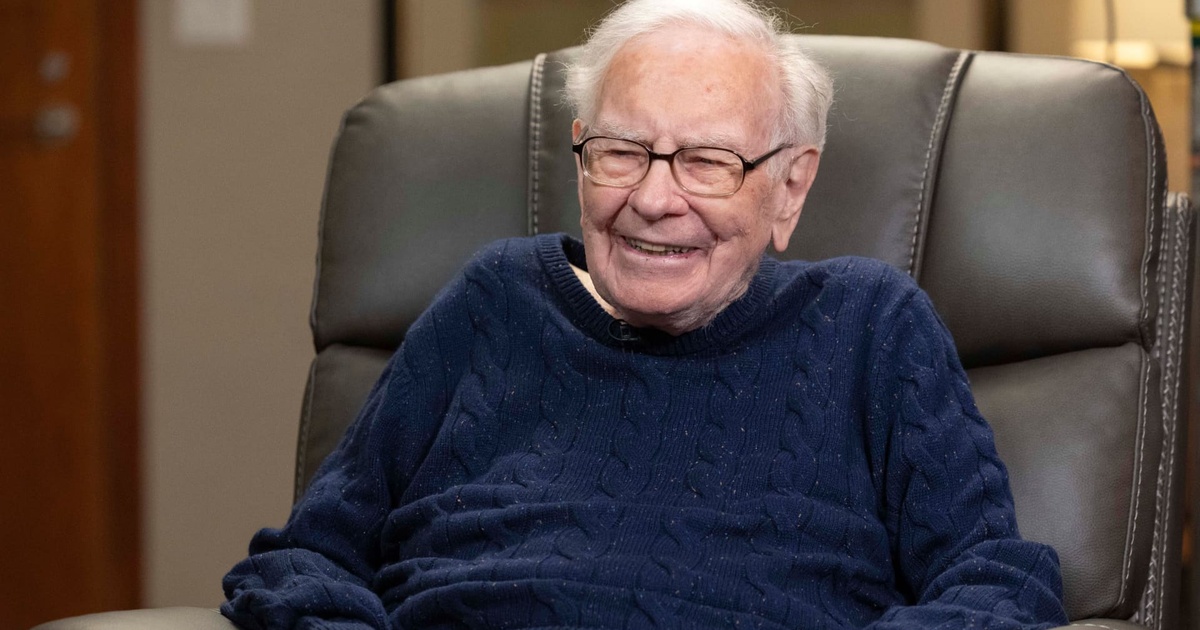
The publication of the official Warren Buffett farewell letter marks the conclusion of the most celebrated executive tenure in modern corporate history. Stepping down from the Chairman role he held at Berkshire Hathaway (NYSE: BRK.A, BRK.B) since 1970, the legendary 96-year-old value investor announced his transition to Chairman Emeritus, passing leadership of the board to his son, Howard Buffett. Yet, beyond the corporate succession details, the Warren Buffett farewell letter delivered a piercing four-word reflection that cuts to the core of personal finance, mortality, and long-term asset accumulation: “Father Time always wins”.
This executive transition carries deep significance for institutional portfolio managers, family offices, and retail investors who have spent decades tracking Omaha’s capital allocation playbook. As Berkshire Hathaway navigates a historic leadership handover, understanding how patient capital structures compound value remains critical. For institutional allocators, treasury strategists, and wealth advisors analyzing how blue-chip leadership changes alter broad capital distributions, continuous reporting across markets provides indispensable clarity on asset class shifts.
Deconstructing the Advice: Why Father Time Always Wins
In the reflective text of the Warren Buffett farewell letter, the Oracle of Omaha anchored his transition in the biological reality of longevity. “Recently, I celebrated my 96th birthday with family and friends, including one of my great-grandchildren, who had just turned one,” Buffett wrote, adding with characteristic wit, “He’s moving a bit faster than I am these days”.
While acknowledging physical mortality, Buffett’s four-word axiom serves equally as a profound mathematical observation on wealth creation. The foundational bedrock of Berkshire Hathaway’s trillion-dollar conglomerate was never short-term timing or hyper-leveraged speculation, but the relentless, geometric power of compounding across multi-decade horizons. Buffett used time as a leverage tool, famously stating in 1996: “If you aren’t willing to own a stock for ten years, don’t even think about owning it for ten minutes”.
The Compounding Engine Over Half a Century
Historical market data highlights the compounding dynamics that shaped Buffett’s career:
- Absolute Capital Expansion: Over the past 50 years, the benchmark S&P 500 index generated a price return exceeding 2,100%.
- Dividend Reinvestment Power: Factoring in the continuous compounding of reinvested dividends, the S&P 500’s total return soared past 4,530% over that exact timeframe.
- Discipline Over Timing: Investors who remained invested through major structural shocks including the 1970s stagflation, the dot-com crash, and the 2008 Great Recession—vastly outperformed traders attempting tactical market timing.
Sustained equity growth remains intrinsically linked to macro productivity, monetary discipline, and demographic trends. Analysts tracking how macroeconomic cycles and national fiscal policies impact long-term corporate earnings can evaluate underlying trends through comprehensive reporting on the wider economy.
Corporate Governance: Howard Buffett and the Road Ahead
The management framework outlined within the Warren Buffett farewell letter provides vital continuity for shareholders. Howard Buffett, who has served as a member of Berkshire Hathaway’s board of directors for 33 years, steps into the Chairman role to safeguard corporate culture. This division of responsibilities ensures that operating subsidiaries spanning freight rail, energy utilities, manufacturing, and commercial reinsurance—maintain decentralized autonomy while operating under long-term capital discipline.
Buffett reiterated his optimism for the conglomerate’s trajectory, noting: “[Father Time] has, however, been generous with me. He has given me the opportunity to see Berkshire reach a point where I am more confident than ever about what lies ahead”.
Corporate tax codes, antitrust enforcement, and regulatory capital requirements will shape Berkshire’s operational subsidiaries in the years ahead. Observers monitoring how legislative updates and executive mandates influence corporate governance can track developments via politics.
Computational Finance, Digital Cash, and Modern Balance Sheets
The principles popularized in the Warren Buffett farewell letter provide a sharp contrast to modern algorithmic trading. Modern quantitative hedge funds and asset managers increasingly rely on artificial intelligence, neural networks, and automated sentiment feeds to execute microsecond arbitrage. To examine how predictive machine learning and high-frequency algorithms are transforming modern portfolio management, finance specialists follow architectural developments through targeted reporting on tech.
Simultaneously, generational perspectives on wealth storage are evolving. While Buffett maintained a lifelong preference for productive cash-generating businesses and avoided non-yielding assets, modern treasuries and younger wealth managers are embracing decentralized financial systems. Institutional allocators increasingly evaluate programmatic networks and crypto rails as sovereign balance-sheet hedges against ongoing fiat currency debasement.
Valuation Realities for Listed Equities
The enduring lesson from the Warren Buffett farewell letter is that patience remains an investor’s greatest competitive edge. Buffett famously asserted that his favorite holding period is forever, demonstrating that enduring competitive moats protect enterprise cash flow far better than short-term price movements. Portfolio managers continually evaluate these cash flow dynamics, return on invested capital, and balance sheet moats across publicly traded dividend and blue-chip stocks.
According to formal documentation accessible through the U.S. Securities and Exchange Commission (SEC), Berkshire Hathaway’s regular 13F and annual reports have consistently demonstrated the virtues of low portfolio turnover and high capital retention.
As the financial world digests the Warren Buffett farewell letter, his core philosophy remains intact. While corporate leadership at Berkshire transitions to a new generation, the timeless reality that time compounds value remains the definitive blueprint for investors seeking lasting financial security.
Disclaimer:
The information provided in this article is for educational, journalistic, and informational purposes only and does not constitute financial, investment, tax, or legal advice.