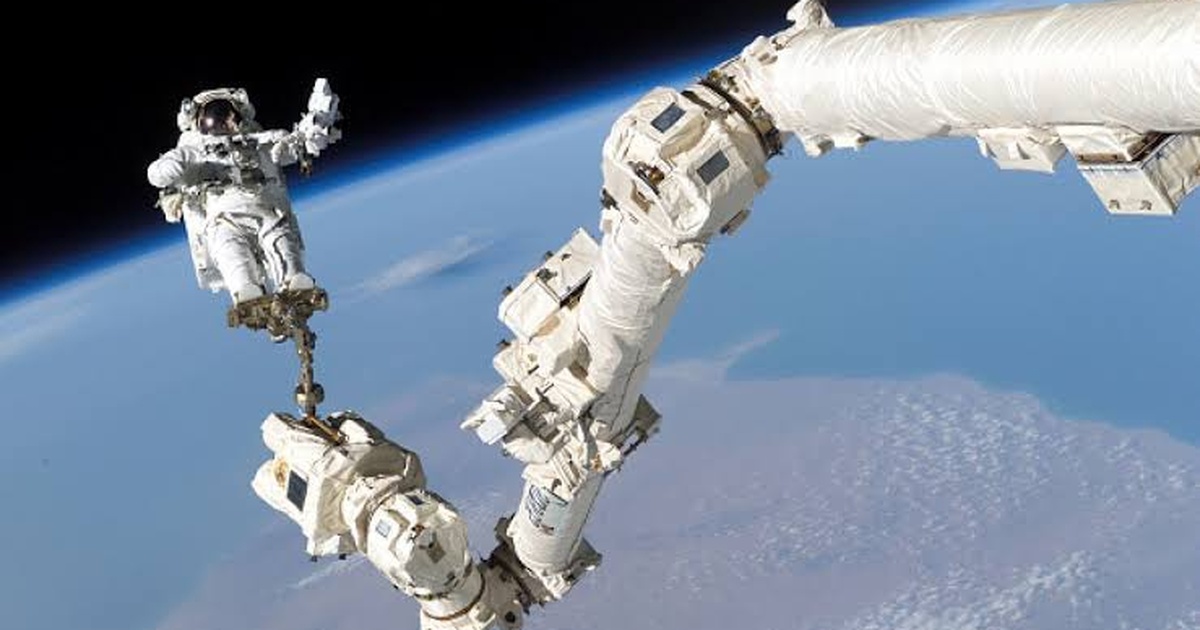
The strategic drive to establish an independent European crewed spaceflight capability has emerged as a central pillar of continental industrial autonomy. Speaking at an international space summit hosted in Paris, French President Emmanuel Macron urged European leaders to assert their collective ambition in orbital human spaceflight, proposing a definitive ten-year roadmap to build and fly an indigenous crew capsule. The initiative marks a major reassessment of European strategic priorities as the United States and China invest heavily in lunar infrastructure, while private commercial aerospace giants expand low-Earth orbit constellations at an unprecedented scale.
Transitioning from passive orbital participation to sovereign launch infrastructure carries profound implications for continental industrial competitiveness, high-tech engineering networks, and sovereign defense posturing. Without sovereign launch architectures, nations risk ceding technical independence to foreign commercial monopolies. For technology executives, public policy strategists, and institutional investors evaluating how deep-tech infrastructure investments alter industrial capabilities, regular coverage across tech provides indispensable clarity on emerging aerospace developments.
Why a European Crewed Spaceflight Capability Is Needed Now
Europe already functions as an established orbital power, operating the world-class Copernicus Earth observation satellite constellation and launching complex payloads aboard its Ariane and Vega rocket families. However, establishing a European crewed spaceflight capability remains the glaring missing piece in its aerospace portfolio. European astronauts must rely entirely on foreign providers; for instance, French astronaut Sophie Adenot traveled to the International Space Station aboard a Crew Dragon capsule manufactured by Elon Musk’s SpaceX.
“Historically, France has been at the forefront of space in Europe because of its deterrence force, and its ballistic missile industry,” observed Xavier Pasco, director of the Foundation for Strategic Research. This defense orientation meant continental programs prioritized unmanned military launchers and Earth monitoring over human capsules. Yet as space travel transforms into a strategic demonstration of industrial and technical power, human spaceflight has acquired crucial symbolic and geopolitical weight.
“Sending people into space, as opposed to robots, has always had a strong symbolic power,” remarked Paul Wohrer, director of the space programme at the French Institute of International Relations (Ifri), noting that human exploration reinforces political messaging and multilateral leadership.
Developing complex life-support, orbital docking, and atmospheric re-entry systems requires sustained sovereign capital deployment. Economists tracking how large-scale industrial subsidies and public procurement initiatives influence continental manufacturing output can monitor fiscal trends through dedicated reporting on the wider economy.
Overcoming Engineering Hurdles: Adapting Ariane 6 for Human Flight
Building a domestic European crewed spaceflight capability is fundamentally a question of financial allocation rather than scientific feasibility. While the heavy-lift Ariane 6 launcher successfully deploys commercial satellites into orbit, human spaceflight introduces rigorous safety envelopes. The rocket was not originally certified for human passengers, meaning substantial capital must be allocated to design abort systems, crew-escape towers, and redundant telemetry controls.
Competing Orbital Demands: Defense vs. Satellite Constellations
Continental aerospace planners face tough trade-offs when balancing limited public resources across competing priorities:
- Communications & Compute Constellations: With SpaceX operating more than 11,000 Starlink satellites in low-Earth orbit, Europe must deploy its own sovereign orbital communication and artificial intelligence data networks to protect civilian connectivity.
- National Security & Defense: European defense agencies require dedicated reconnaissance, missile-tracking, and encrypted military communication satellites amid heightened regional conflict.
- Environmental & Climate Monitoring: Programs like Copernicus consume significant budgets to track oceanic temperatures, atmospheric emissions, and deforestation trends.
Regulatory harmonization remains another active front. As orbit becomes congested with commercial hardware, the European Commission proposed the EU Space Act to standardize orbital traffic management, mitigate space debris, and regulate cybersecurity protocols. Observers tracking how executive mandates and continental regulatory standards govern commercial infrastructure can follow policy updates via politics.
Franco-German Convergence and Trilateral Investment
The realization of a European crewed spaceflight capability requires broad multilateral cooperation among the continent’s major economies. France can no longer finance or direct such massive endeavors alone. Following the geopolitical shifts sparked by Russia’s invasion of Ukraine, Germany has substantially accelerated its aerospace and defense spending. Simultaneously, Italy has expanded its sovereign space budgets, creating an operational triangle of core industrial powers.
Because neither Paris, Berlin, nor Rome can bear the multi-billion-euro financial load individually, the European Space Agency serves as the natural framework for joint execution. Establishing a shared human exploration program offers a unifying platform that pools distributed research centers, component suppliers, and test facilities across the continent.
The funding of these massive aerospace projects also shapes private capital distribution. As sovereign agencies award long-term development contracts, institutional asset allocators closely monitor capital flows across secondary markets.
Enterprise Ramifications for Listed Aerospace Equities
A clear commitment to develop a European crewed spaceflight capability will directly benefit publicly traded aerospace manufacturers, defense contractors, and specialized materials engineering stocks. Long-term procurement programs create steady, high-margin revenue streams for advanced avionics providers, precision sensor manufacturers, and composite materials specialists across Europe.
Furthermore, managing international aerospace supplier networks requires complex cross-border settlements and FX hedging. As global defense and aerospace contractors navigate volatile international currency transfers, corporate finance desks increasingly explore programmable settlement layers and crypto networks to streamline liquidity clearing and reduce counterparty delays.
According to formal documentation from the European Space Agency (ESA), maintaining independent access to space is vital to Europe’s geopolitical freedom of action.
Macron’s ten-year challenge places human spaceflight squarely at the center of Europe’s industrial debate. Achieving a European crewed spaceflight capability will demand disciplined budgetary alignment, but ending reliance on American capsules represents the ultimate test of Europe’s sovereignty in the modern space age.
Disclaimer:
The information provided in this article is for educational, journalistic, and informational purposes only and does not constitute aerospace, financial, investment, or legal advice.